Home Battery Storage Leads: How Installers Find, Qualify and Close Storage Buyers in 2026
Home battery storage leads explained for installers: why homeowners buy batteries, how to qualify and sell solar plus storage, incentives after 25D, and state scenarios.
Updated · 83 min read
In this guide (34 sections)
- What are home battery storage leads?
- Why do homeowners buy home batteries in 2026?
- What incentives apply to home batteries after 25D ended?
- Which types of battery storage leads can you buy?
- How do you qualify a home battery storage lead?
- How does the battery sales process differ from solar-only?
- What does a storage lead cost per sale?
- How should you sell batteries to existing solar owners?
- How does battery lead strategy change by state?
- How should battery lead buying differ by installer size?
- How do batteries compare with generators in a sales conversation?
- How should sales reps talk about battery sizing without overpromising?
- How do you handle storage lead surges after outages?
- What compliance rules apply to battery storage leads?
- What should you ask a storage lead vendor?
- Which metrics show whether storage leads are working?
- What scripts and templates work for battery storage leads?
- What do illustrative storage lead walkthroughs look like?
- How do you troubleshoot a storage lead program that isn't working?
- How should you train reps to sell home batteries?
- Are you ready to buy home battery storage leads?
- How do you design a pilot for home battery storage leads?
- How should storage leads fit into your overall lead mix?
- What mistakes do installers make with battery storage leads?
- What is a 30/60/90-day plan for a new storage lead program?
- Glossary of home battery storage terms for sales teams
- What should a home battery proposal include?
- How do you sell storage to homes with special needs?
- How can installers generate storage leads without buying them?
- What handoff rules keep storage leads from stalling?
- How does post-install service turn battery customers into lead sources?
- How do financing choices change battery lead handling?
- Sources and methodology
- FAQ
Home battery storage leads are homeowners who have asked about a battery for backup power, bill savings or both, either on its own, added to an existing solar system, or paired with new panels. They behave differently from solar-only leads: the motive is often an outage or a rate change, the sale is more technical, and the incentives changed sharply after 2025. This guide covers how to buy, qualify and close them, as of October 2026.
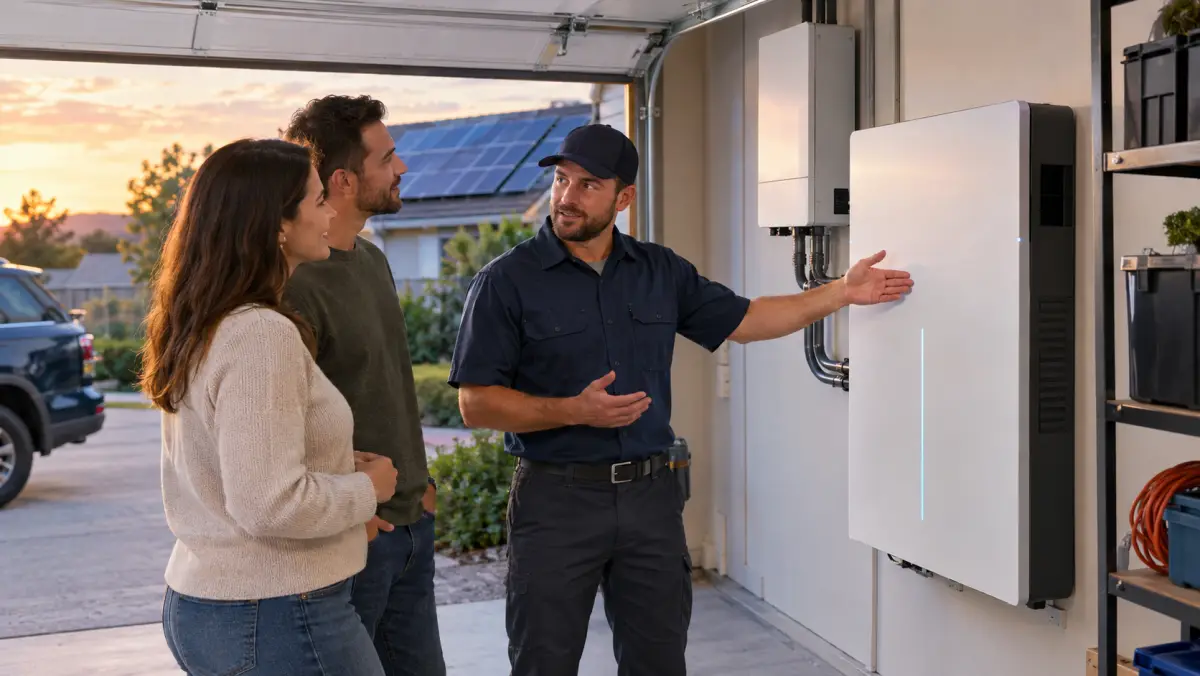
A quick note on words. If you search for "solar battery leads," most of what comes back is about lead-acid batteries, the chemistry, not sales prospects. That is why this guide uses the terms the trade actually uses when it buys prospects: home battery storage leads, solar plus storage leads, battery backup leads and energy storage leads for installers. They all describe the same thing from slightly different angles, and we will be precise about where they differ.
A disclosure too. We sell solar leads, so we have an interest in you buying them. To make up for that, this guide shows the method rather than the pitch: the qualifying questions, the math (labelled as illustrative where we use made-up numbers), the incentives with links to primary sources, and the situations where buying storage leads is the wrong move. We do not publish our own prices; pricing is confirmed by ZIP on your call. If you are new to buying leads in general, start with our main guide on how to buy solar leads and come back here for the storage-specific layer.
Key takeaways
- Storage buyers are usually motivated by one of four things: outages, time-of-use rates, reduced export credits under newer net metering rules, or utility programs that pay batteries to discharge at peak. Your pitch, qualification and lead filters should follow the motive.
- The federal 25D homeowner credit, which covered batteries of at least 3 kWh, does not apply to expenditures made after December 31, 2025, according to the IRS. Leased and PPA batteries are a separate, business-credit question. Talk to your tax advisor about specific projects.
- Existing solar owners are a distinct and often overlooked segment for battery retrofits. They already trust the technology, and their main question is whether storage pays.
- Battery jobs are more technical than solar-only jobs: main panel capacity, critical loads, inverter compatibility and interconnection rules decide whether a lead can close. Qualify for these early.
- Outage-driven demand spikes. Plan staffing, speed to lead and honest messaging before storm season, not during it.
What are home battery storage leads?
Home battery storage leads are records or calls from homeowners who have said they want information about a residential battery, with documented permission to be contacted. They range from people adding storage to existing panels, to new solar-plus-storage shoppers, to backup-only buyers comparing batteries with generators. Each group needs a different filter, script and offer.
The single word "lead" hides a lot of variation, and battery leads add another layer on top. Before you compare vendors or prices, decide which of these you are actually buying.
The four storage lead segments
| Segment | Who they are | What they usually want | Main qualification risk |
|---|---|---|---|
| Solar plus storage (new) | Homeowner with no panels, shopping for a full system with a battery | Lower bills and backup in one project | Roof, shade and budget, same as solar, plus panel capacity |
| Battery retrofit (add-on) | Homeowner who already has solar | Keep power on during outages, or make better use of solar under new rates | Inverter compatibility, existing interconnection terms, warranty of the original system |
| Standalone backup | Homeowner with no solar who wants backup power only | Outage protection, often comparing with a standby generator | Expectations about how long a battery runs whole-home loads |
| Program-driven | Homeowner who heard about a utility or state battery program | Payments or rebates for enrolling a battery | Program eligibility, enrollment deadlines, funding status |
Most lead sellers lump these together as "solar leads with battery interest." That is fine as a starting point, but your close rate and your cost per sale will vary a lot by segment, so you want the segment captured as a field on the lead, not guessed later by your setter.
Solar plus storage leads vs battery backup leads
A solar plus storage lead is a homeowner who is buying panels and a battery as one project. The battery is part of the system design from day one, and the conversation is mostly a solar conversation with a storage chapter. A battery backup lead starts from the opposite end: the homeowner's first concern is keeping the lights, fridge, well pump or medical equipment running when the grid goes down. Solar may or may not be part of the answer.
That difference matters at the first call. Open a backup buyer with "let's look at your electric bill" and you may lose them; they care about the last outage, not the last bill. Open a solar-plus-storage buyer with "how long was your last outage" and you may sound like you are selling fear. Our solar lead call scripts cover first-call structure in general; later in this guide we give storage-specific openers for each segment.
Energy storage leads for installers vs consumer battery inquiries
"Energy storage leads for installers" is the trade phrase for prospects sold to installation companies. It is worth separating from two lookalikes:
- Commercial and industrial storage inquiries. A business asking about peak demand charges or backup for a facility is a B2B sale with a long cycle. That belongs with our guide to commercial solar leads, not here.
- Portable power station shoppers. Some forms capture people looking for plug-in portable batteries for camping or short outages. These are retail product buyers, not installation prospects. Make sure your vendor's forms do not mix them in.
This guide is about residential installed storage: a battery wired into a home's electrical system, usually by a licensed electrician or solar installer, often with a permit and a utility interconnection step.
Why the term "solar battery leads" causes trouble
When we researched search results for this topic, the phrase "solar battery leads" mostly returned pages about lead-acid battery chemistry, not sales prospects. That has two practical consequences. First, if you are buying search ads or doing SEO for your own storage offers, that phrase is a poor target. Second, if a vendor describes their product as "solar battery leads," ask what they mean, because the same words can describe very different traffic sources.
Why do homeowners buy home batteries in 2026?
Homeowners buy batteries in 2026 mainly for four reasons: longer and more frequent outages, time-of-use rates that make evening power expensive, net metering changes that pay less for exported solar, and utility programs that pay batteries to help at peak times. Knowing which motive drove a lead tells you how to open the call and what to propose.
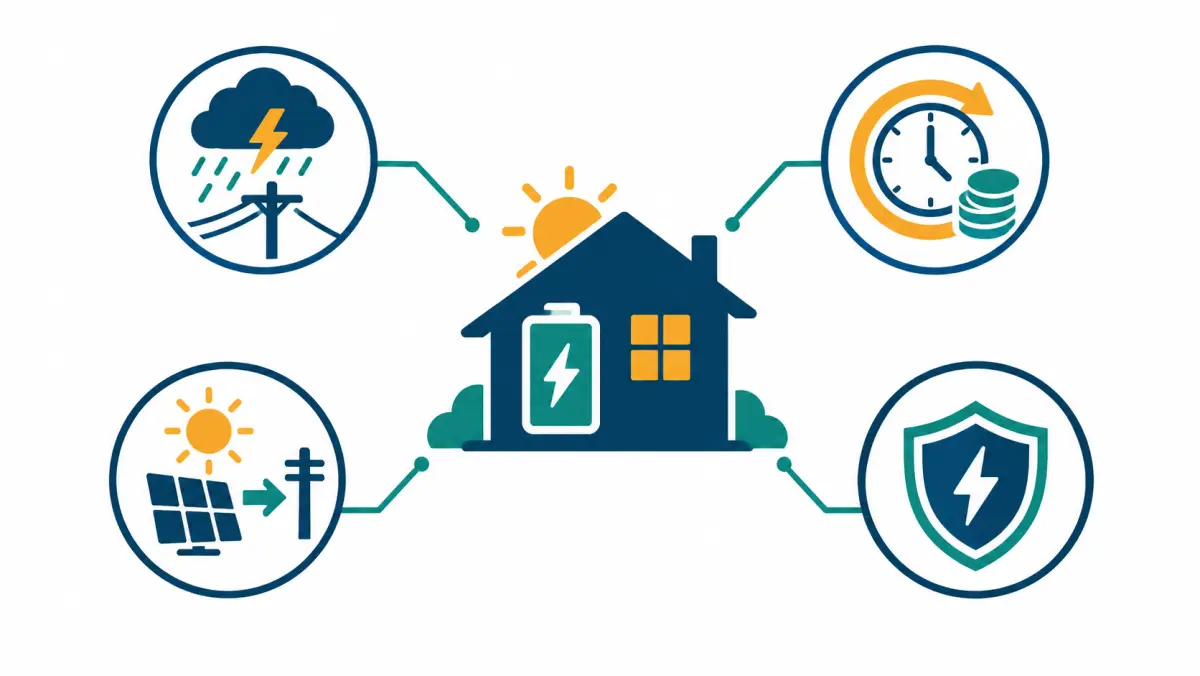
Each motive leads to a different conversation, different sizing, and different objections. Teams that treat every battery lead as "wants backup" end up overselling whole-home systems to people who wanted bill savings, or underselling to people who need a well pump to run for three days.
Motive 1: outages
Outages are the most emotional driver and the easiest to understand. According to the U.S. Energy Information Administration's Today in Energy report published December 1, 2025, U.S. electricity customers averaged about 11 hours of power interruptions in 2024, the most in roughly a decade, and major events such as Hurricanes Beryl, Helene and Milton accounted for most of those hours. The same EIA analysis notes that interruptions not tied to major events usually average around two hours a year.
Two things follow for a lead buyer:
- Outage demand is lumpy. It clusters after storms, heat waves and wildfire shutoffs, and in places hit repeatedly. Lead volume and intent rise right after an event and fade over weeks.
- Averages hide local pain. A national average of 11 hours means little to a homeowner on a rural feeder who lost power for four days. Reports on the same EIA data noted large state differences, with some states far above the national figure. Your territory's outage history, not the national number, sets demand.
Outage-motivated buyers ask: How long will it last? What will it run? Will it switch over automatically? Can it charge from solar during a multi-day outage? Those are sizing and design questions, and they need honest answers.

Motive 2: time-of-use rate design
Many utilities now bill residential customers on time-of-use (TOU) rates, where the price per kilowatt hour depends on the hour. Where evening rates are much higher than midday rates, a battery that charges from solar at midday and discharges in the evening can shift usage away from the most expensive hours.
This buyer is a math buyer. They want to see their rate schedule, their usage pattern, and an estimate of what shifting load would do. They are less interested in "whole-home backup" and more interested in "how many years until this pays back." Sizing for this buyer is often smaller than sizing for an outage buyer, and the right answer may be one battery rather than two.
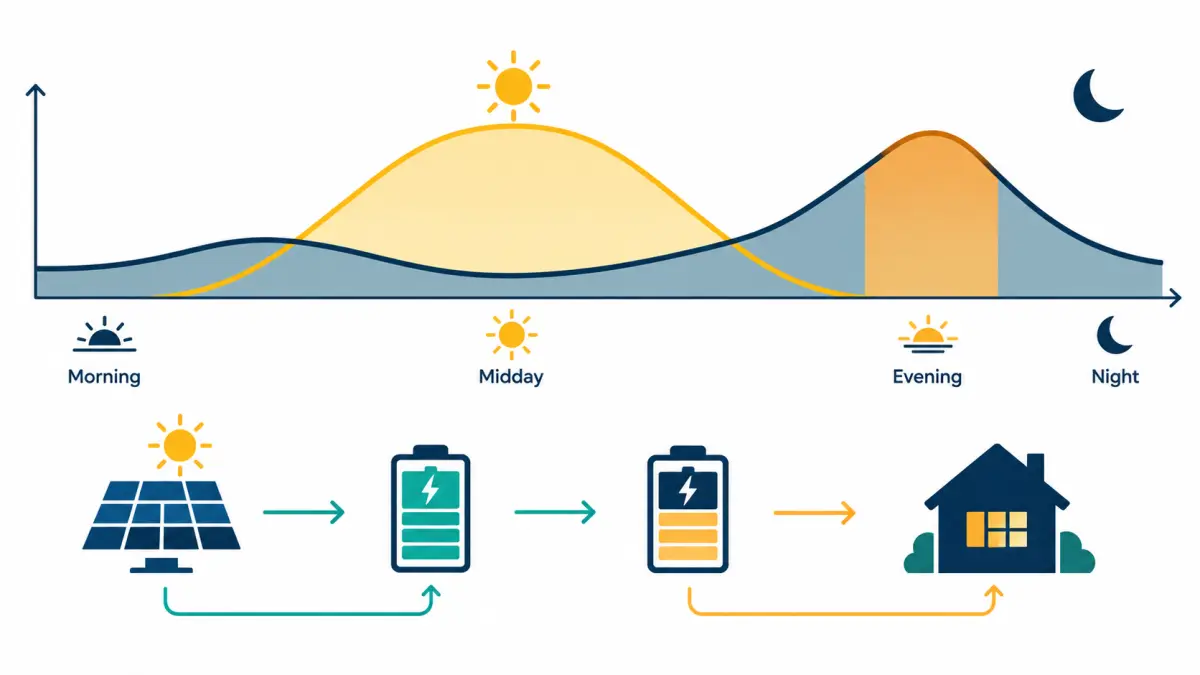
Rate schedules change, and the gap between peak and off-peak prices differs widely by utility. Do not build a pitch on a rate sheet from last year. Pull the current tariff from the utility or the state utility commission before quoting savings, and say in writing that the estimate depends on future rates.
Motive 3: net metering changes
Net energy metering (NEM) rules decide what a solar owner is paid for power sent to the grid. When those credits fall, storing your own solar to use later becomes more valuable relative to exporting it.
California is the clearest example. The California Public Utilities Commission replaced its prior net metering structure with the Net Billing Tariff for new interconnection applications after April 15, 2023 (see the CPUC's NEM revisit page). Lawrence Berkeley National Laboratory's May 2024 brief, One Year In: Tracking the Impacts of NEM 3.0, reported that storage attachment rates on new residential solar in California rose from about 10% to roughly 60% after the change. That is a single state and a single period, but it shows how strongly export rules can move battery demand.
Other states and utilities have revised or are reviewing their own export compensation. When they do, battery interest tends to rise among new solar buyers, and existing solar owners on older, grandfathered terms ask whether a battery would affect their legacy arrangement. That second question is important; we cover it in the retrofit section.
Motive 4: utility and state programs
Some utilities and states pay homeowners to let their battery discharge during grid peaks, often called demand response or virtual power plant programs. Massachusetts is a well-documented case: the Mass Save ConnectedSolutions battery page describes performance payments based on a battery's average contribution during summer events, with a limited number of events per summer. Programs like this make storage more attractive to buyers who care about returns rather than backup.
Program-driven leads are valuable but fragile. Rules, rates and enrollment windows change, budgets run out, and the homeowner may have heard a number from a neighbor that no longer applies. Treat every program detail as something to check on the day you quote.
Secondary motives
Beyond the big four, you will see:
- Energy independence. Some buyers want to rely less on the utility for personal reasons. They tend to be committed but can over-specify.
- Medical equipment and home offices. Buyers who cannot lose power for health or work reasons. Their need is concrete and often urgent.
- Wells and sump pumps. Rural and flood-prone homeowners who lose water or risk basement flooding in outages.
- EV owners. Owners asking whether a battery helps with charging. The honest answer is usually "partly, depending on rates and sizing," and it is worth setting expectations early.
- Generator replacement. Owners of aging standby generators weighing a battery instead. They compare on runtime, fuel, noise and maintenance.
How to capture the motive on the lead
The motive should be a field on every storage lead, captured by the form or the screening agent. A simple four-option question works: "What is the main reason you're interested in a home battery? Backup during outages / Lower my bill / I already have solar and want to use more of it / A utility or state program." Allow "other" with a free-text box. Ask your vendor whether they can add this. Many can, and it is one of the cheapest upgrades you can make to a storage lead program.
What incentives apply to home batteries after 25D ended?
As of October 2026, homeowners who buy a battery outright cannot use the federal 25D credit for expenditures made after December 31, 2025, according to IRS guidance. Batteries owned by a business, including many leased or PPA systems, fall under separate business credit rules. State, utility and program incentives vary widely and change often, so verify each one before quoting.
Incentives are where battery sales conversations most often go wrong. Homeowners arrive with numbers from ads, neighbors and old articles. Your reps need a short, accurate script and a habit of checking sources. Nothing in this section is tax advice; talk to your tax advisor about specific projects.
The federal homeowner credit (25D)
The Residential Clean Energy Credit under Section 25D covered 30% of qualified costs, including battery storage technology with a capacity of at least 3 kilowatt hours, as described on the IRS Residential Clean Energy Credit page. The IRS's FAQs on Public Law 119-21 (Fact Sheet FS-2025-05, dated August 21, 2025) states that the 25D credit will not be allowed for any expenditures made after December 31, 2025. The IRS treats an expenditure as made when installation is completed.
What reps need to know:
- A homeowner who buys a battery in 2026, cash or loan, does not get a federal 25D credit for it.
- A homeowner who installed a qualifying battery in an earlier year may still have unused credit carrying forward. That is a question for their tax preparer, not your rep.
- Ads promising "30% back from the government" on a homeowner-owned battery bought now are out of date. If a vendor's landing page says it, that is a problem for you (see how to vet solar lead providers).
For the fuller story of what the end of 25D did to solar sales, see our guide to solar leads after 25D. This guide does not repeat it; it only covers the storage-specific parts.
Business credits for third-party-owned batteries
When a battery is owned by a company and the homeowner pays through a lease or power purchase agreement, the owner may be able to claim a business investment credit, which is a different section of the tax code from 25D. The IRS describes the technology-neutral investment credit on its Clean Electricity Investment Credit page. Public Law 119-21 also added restrictions involving "prohibited foreign entities" that affect eligibility for some projects.
Published summaries disagree on the details of how long storage remains eligible and how the foreign-entity rules apply to specific equipment. We are not going to pick a number from a secondary source and print it here. The practical guidance for a lead buyer is:
- If you sell third-party-owned storage, your financing partner decides what credit, if any, is reflected in the monthly price. Ask them, in writing, what assumptions they use and what would change them.
- Your reps should never tell a homeowner "you get a tax credit" on a lease or PPA. The homeowner does not claim the business credit; the owner does.
- Expect equipment availability and pricing on TPO products to shift as guidance develops. Recheck before each quarter.
State and utility incentives
State and utility battery incentives come in a few shapes:
| Incentive type | How it works | What to check before quoting |
|---|---|---|
| Upfront rebate per kWh | A payment based on battery capacity, often with income or location tiers | Funding status, waitlists, income documentation, installer enrollment |
| Performance payments (demand response, VPP) | Payments for letting the utility or aggregator dispatch the battery at peak | Event count, payment basis, enrollment deadline, compatible equipment |
| Time-of-use rate access | Battery owners can use rate plans that reward shifting load | Current tariff, eligibility, whether the homeowner must switch plans |
| Low-income or equity programs | Higher incentives for qualifying households or communities | Eligibility proof, program capacity, required program partners |
| Property tax or sales tax exemptions | Battery value excluded from property assessment or sales tax | State statute, local assessor practice |
Two examples with primary sources:
- California SGIP. The CPUC's Self-Generation Incentive Program page describes incentives for storage, including a Residential Solar and Storage Equity budget for low-income customers and several residential budget categories, some of which are marked as available through 2025. Budget status changes, so check the SGIP site before any quote.
- Massachusetts ConnectedSolutions. The Mass Save battery program page describes summer performance payments based on the battery's average contribution during events, for customers of participating utilities, with enrollment through the battery manufacturer or provider.
For other states, start with DSIRE, the incentive database run by the N.C. Clean Energy Technology Center, then confirm on the program administrator's own site. DSIRE is a directory, not the final word; programs change faster than any directory can track.
A rep's incentive script
Keep it short and honest:
"There's no federal homeowner tax credit for batteries installed this year. That ended after 2025. What we can look at is your utility's rate plan and any state or utility programs at your address. Some pay you for letting the battery help the grid in summer, some have rebates with waitlists. I'll check what's open right now and put it in writing, and anything tax-related you'll want to confirm with your tax preparer."
That script does three things: closes the federal question fast, moves to what actually exists, and avoids giving tax advice.
Incentive mistakes that cost deals
- Quoting a program from memory. A rebate that closed last quarter makes your proposal wrong and your company look careless.
- Netting incentives into the price without saying so. If a proposal shows a price "after incentives," list each incentive, its source and the risk it doesn't come through.
- Promising performance payments as guaranteed income. VPP payments depend on events, battery performance and program rules. Present them as estimates.
- Mixing up lease and purchase incentives. Some programs pay the system owner, some the customer. Read who gets the money.
Which types of battery storage leads can you buy?
You can buy battery storage leads in the same formats as solar leads: exclusive real-time leads, shared leads, aged leads, live transfers, inbound calls and booked appointments. What changes is the screening: storage leads need extra fields about existing solar, motive and electrical setup, and the best format depends on how technical your first conversation needs to be.

Format comparison for storage
| Format | Fit for storage | Watch out for |
|---|---|---|
| Exclusive real-time web leads | Strong when your team calls in minutes and has a setter who can talk batteries | Vague battery interest; make the motive a required field |
| Shared leads | Workable for teams with very fast response and good scripts | Several companies calling a backup buyer right after a storm feels like pressure; contact rates drop |
| Aged leads | Useful for retrofit campaigns aimed at people who looked at solar earlier | Consent age and scope; old intent; see aged solar leads |
| Live transfers | Good for small teams that cannot staff fast callbacks | Screening quality on technical questions; see solar live transfer leads |
| Booked appointments | Good when your closers are strong but your setters are thin | Loose definitions of "qualified" on panel and inverter questions; see solar appointments |
For how exclusivity changes contact and close rates in general, see exclusive vs shared solar leads. The storage-specific point is that backup buyers after an outage are often stressed, and being called by four companies in ten minutes can turn them off the category. Exclusive leads, or a single screened transfer, tend to suit that moment better.
Storage-specific lead fields to ask for
A storage lead is only as good as the fields it carries. Ask your vendor which of these they collect, and which are required versus optional:
| Field | Why it matters | Example options |
|---|---|---|
| Existing solar | Splits retrofit from new system leads | Yes / No / Not sure |
| Primary motive | Drives the opener and sizing | Backup / Bills / Use more solar / Program |
| Outage experience | Gauges urgency for backup buyers | None recent / Hours / Days |
| Critical needs | Flags medical, well, sump or work needs | Free text or checkboxes |
| Home ownership | Same as solar; batteries are a homeowner product | Own / Rent |
| Utility name | Decides rate plans and programs | Dropdown by state |
| Interest in solar too | For non-solar homes | Yes / Maybe / Battery only |
| Existing generator | Shapes comparison and site plan | None / Portable / Standby |
| Timeline | Separates research from active buying | ASAP / 1-3 months / Later |
| Financing preference | Cash, loan, lease or unsure | Dropdown |
Every extra required field lowers form completion and raises the cost per lead, so do not demand all ten. For most installers, existing solar, motive, utility and ownership are the core four. Add the rest as optional or have the setter ask.
What a storage lead card might look like (illustrative)
This is a made-up example to show structure, not a real person or our actual delivery format:
| Field | Value |
|---|---|
| Name | Sample Homeowner |
| ZIP | 00000 |
| Owns home | Yes (self-reported) |
| Existing solar | Yes, installed several years ago |
| Primary motive | Backup during outages |
| Outage experience | Lost power for two days last winter |
| Critical needs | Well pump, refrigerator |
| Utility | Sample Electric Co. |
| Interest in more solar | Maybe |
| Timeline | 1-3 months |
| Consent record | Timestamped certificate naming the buyer company |
A setter reading this card knows to open with the outage, ask about the existing inverter, and plan for well pump surge loads. Compare that with a card that says "Battery: yes." The first one saves a call; the second one costs one.
How our offer applies to storage leads
We describe only what we can stand behind. For leads we sell: each exclusive lead is sold to one company, never resold, recycled or sold later as an aged lead. Every lead carries a timestamped consent record (certificate) whose disclosure names your company, and we send it on request. Before delivery, phone numbers are validated, homeowner status is self-reported then checked against property records, leads are duplicate-checked against leads already sent to you, and numbers are scrubbed against the National Do Not Call Registry. Delivery is real time to your CRM, dialer, email or SMS. Replacement credits cover disconnected numbers, wrong contact details or leads outside your filters, within 7 days; a prospect who isn't interested, doesn't answer, doesn't get financing or doesn't buy is not covered. There are no long-term contracts: start with a test batch and scale when the numbers work. Territory availability, including whether storage-specific fields are available in your area, is confirmed by ZIP code on your call.
How do you qualify a home battery storage lead?
Qualify a battery lead on five things: ownership, motive, existing solar and inverter setup, electrical capacity, and budget or financing path. Ownership and motive come from the lead; the technical items need a short setter conversation and photos. A lead that passes all five is worth a closer's time; one that fails on panel capacity or equipment compatibility may still close, but at higher cost.
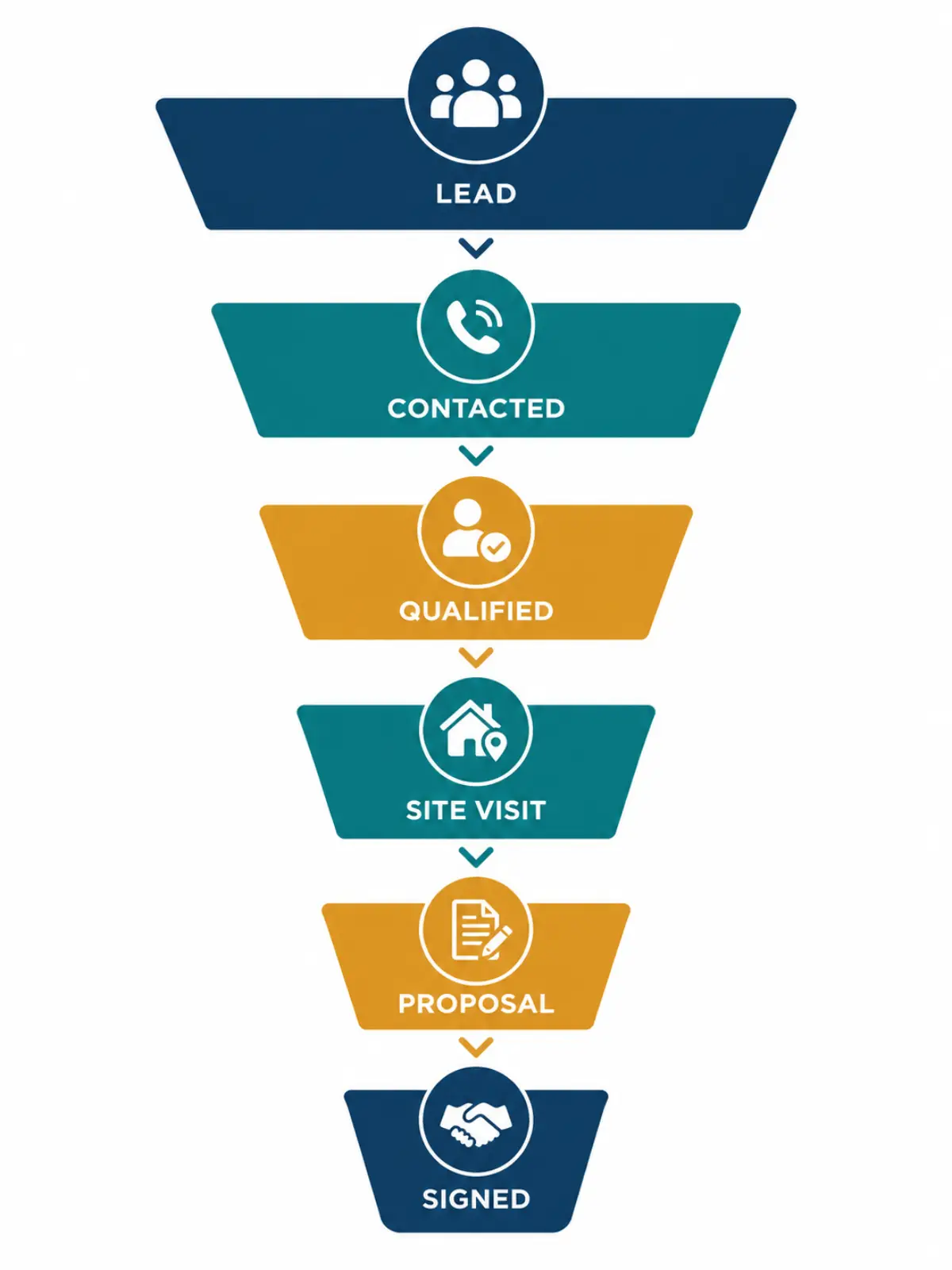
Solar qualification is mostly about the roof, shade, bill and credit. Battery qualification adds the electrical side of the house, which homeowners usually know little about. The trick is getting enough technical information early without turning the first call into an inspection.
The five-gate qualification model
| Gate | Question | Pass | Soft fail (can still close) | Hard fail |
|---|---|---|---|---|
| 1. Ownership | Do you own the home? | Owner, decision-maker on the call or reachable | Owner, spouse not available | Renter, no landlord involvement |
| 2. Motive | What's the main reason for a battery? | Clear motive, matching an offer you sell | Vague ("just looking") | Wants a portable unit or a product you don't sell |
| 3. Existing system | Do you have solar? What inverter? | Compatible or new system | Unknown inverter, needs photo | Equipment you cannot support, with no replacement budget |
| 4. Electrical | How old is the main panel? Any recent upgrades? | Panel has room or upgrade is budgeted | Unknown, needs site visit | Major service upgrade needed, homeowner refuses |
| 5. Money | Cash, loan, lease? Any budget range? | Clear path | Unsure, open to options | No path, not open to financing |
Score each gate pass, soft fail, or hard fail. One hard fail usually means stop or nurture. Two or more soft fails mean the lead needs a technical pre-visit or photo review before a closer goes out.
Setter questions that uncover the technical picture
Homeowners cannot tell you their busbar rating, but they can take photos. A good setter asks for:
- A photo of the main electrical panel with the door open, including the label on the inside of the door.
- A photo of the existing solar inverter label, if they have solar.
- A photo of the utility meter.
- A picture of where they would want the battery, typically a garage wall or exterior wall.
- A recent electric bill, first page and usage history.
Ask for these by text after the call, with a friendly explanation: "These help our designer give you a real answer instead of a guess." Many homeowners will send them the same day. A homeowner who refuses all photos is not necessarily a bad lead, but a site visit will be needed before pricing.
Questions by segment
Retrofit (existing solar):
- When was your solar installed, and who installed it?
- Do you know what kind of inverter you have? A string inverter on the wall, or small units on the roof?
- Are you on your original net metering terms? Has your utility told you anything about how adding a battery affects them?
- During the last outage, did your solar keep working? (Most grid-tied systems without storage shut down in an outage for safety; many homeowners are surprised by this.)
New solar plus storage:
- Is backup a must-have, or would you consider starting with solar only and adding storage later?
- What would you want running in an outage?
- Is your roof in good shape, or is a replacement coming in the next few years?
Standalone backup:
- What do you use today in an outage? Nothing, a portable generator, a standby generator?
- What absolutely has to stay on? Well pump, fridge, medical device, heat, home office?
- How long were your longest outages in the last few years?
Program-driven:
- Which program did you hear about, and where?
- Who is your utility?
- Is getting the program payment a must for you to go ahead?
Expectation-setting questions
Battery buyers sometimes expect a single battery to run a whole house, central air included, for days. Getting this out early prevents an angry homeowner at the proposal stage. Two useful questions:
- "If the power went out tonight, what are the three things you'd most want running?"
- "Would you rather have more of the house covered for a shorter time, or the essentials covered for longer?"
These questions do two jobs: they feed sizing, and they teach the homeowner that a battery is a budget of energy, not a magic switch.
Disqualifiers and redirects
Not every disqualified storage lead is a waste. Some can be redirected:
| Situation | Redirect |
|---|---|
| Renter | Explain batteries are installed by owners; offer to contact landlord only with permission |
| Wants portable power station | Polite exit; not an installation lead (and a sign to check the vendor's forms) |
| Main panel needs major upgrade, no budget | Nurture; revisit if they plan electrical work |
| Inverter unsupported by your products | Quote a replacement inverter if sensible, or refer out |
| Interested only in a program that is closed | Nurture; put on a list for the next program window if consent allows |
| Commercial property | Route to your commercial team or partner |
A qualification scorecard you can paste into your CRM
| Field | Score |
|---|---|
| Owner confirmed | 0 or 2 |
| Decision-maker(s) available | 0, 1 or 2 |
| Motive clear and matches offer | 0, 1 or 2 |
| Existing system known or new build | 0, 1 or 2 |
| Panel photo received | 0 or 1 |
| Inverter photo received (retrofit) | 0 or 1 |
| Bill received | 0 or 1 |
| Financing path | 0, 1 or 2 |
| Timeline within 3 months | 0 or 1 |
This is a starting template, not a validated model. Set your own threshold after you see which scores actually closed in your first 50 to 100 storage leads. The point is consistency: every setter scoring the same way so you can compare sources fairly.
Speed still matters, but differently
Storage leads respond to speed the same way solar leads do: the first relevant conversation usually wins. Our solar speed to lead guide covers the evidence and the mechanics. For storage, add one wrinkle: after a major outage, many homeowners are still without power or dealing with damage when they fill out a form. Calling within minutes is still right, but the tone should be "here when you're ready," and texting a short note first can be kinder than a cold call to someone sitting in a dark house.
How does the battery sales process differ from solar-only?
The battery sales process adds load analysis, electrical review and backup design to the usual solar steps. A typical flow runs: first call and motive, photo collection, remote design or pre-visit, site visit focused on the electrical panel, proposal with clear backup scope, financing, permitting and interconnection, installation, and commissioning with homeowner training.
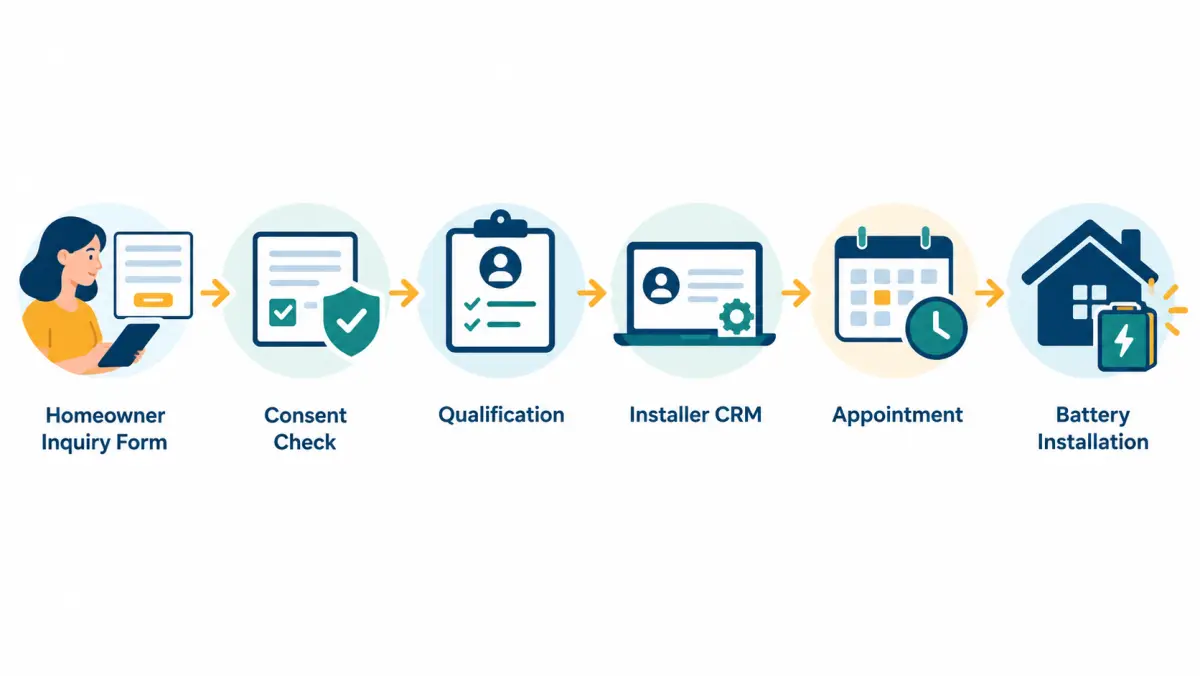
Step by step
1. First call (setter). Confirm consent context ("you asked about a home battery on [site] earlier today"), motive, ownership, segment, and the photo request. Book the next step.
2. Photo and bill review (designer or technical setter). Check panel capacity, inverter compatibility, meter location, battery placement options and usage pattern. Flag anything needing a site visit.
3. Pre-proposal call (closer). Walk through the critical loads conversation: what must run, for how long. Share a rough range only if your company policy allows; otherwise move to the site visit.
4. Site visit. Electrical focus: main panel, service size, space for a critical loads subpanel if needed, conduit runs, wall space, clearances required by code and manufacturer, and any existing generator interlock or transfer switch.
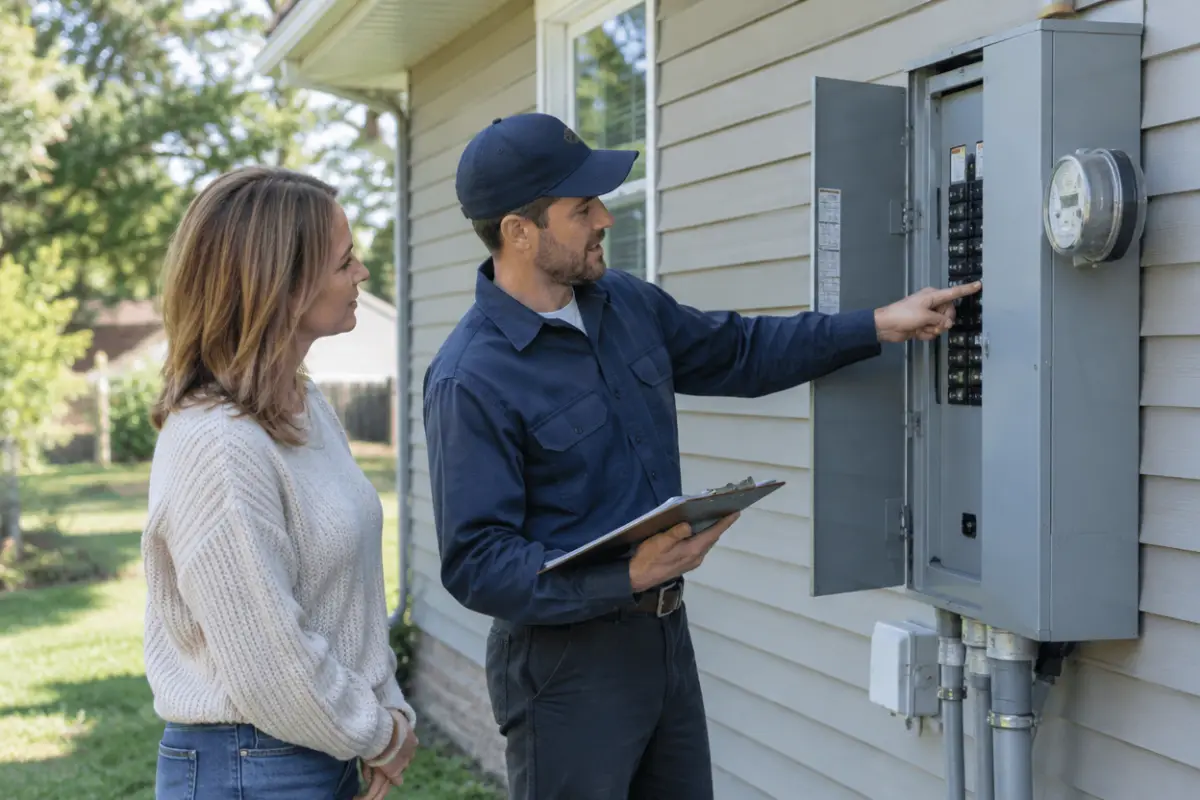
5. Proposal. State exactly what will be backed up, what will not, and how long the design is expected to run under named assumptions. Include rate and program assumptions with sources and dates.
6. Financing. Cash, loan, lease or PPA. Be clear on who owns the equipment and what that means for any incentive.
7. Permits and interconnection. Many utilities require notification or approval when storage is added, especially to an existing solar system. Timelines vary.
8. Installation and commissioning. Configure operating modes (backup reserve, self-consumption, TOU), enroll in any program the homeowner chose, and test a simulated outage with the homeowner present.
9. Training and follow-up. Show the app, explain the backup reserve setting, and schedule a check-in after the first billing cycle and first outage.
Writing a backup scope homeowners understand
The biggest source of post-sale complaints on battery jobs is mismatched expectations about what runs in an outage. Put a plain-language table in every proposal:
| Will run in an outage | Will not run in an outage | Depends on settings and usage |
|---|---|---|
| Refrigerator, lights on backed-up circuits, internet, outlets on backed-up circuits | Circuits not wired to the backup panel | Central air, electric water heater, well pump surge, EV charging |
Then add one sentence on duration: "Runtime depends on how much power you use and whether solar can recharge the battery during the outage. Our estimate assumes [named loads] and [named conditions]." Avoid quoting hours as a promise.
Objections you will hear, and honest answers
| Objection | Honest answer |
|---|---|
| "A generator is cheaper." | "It can be, upfront. The trade-offs are fuel, noise, maintenance and whether you also want bill savings. Let's compare both for your situation." |
| "I heard there's a 30% tax credit." | "That federal homeowner credit ended after 2025. Let's look at what's available at your address now." |
| "Will it run my whole house for days?" | "Usually not on one battery, especially with central air. We'll design for what matters most and show you the trade-offs." |
| "My solar installer went out of business." | "We can review your system. Adding storage may involve your inverter, so we'll check warranty and compatibility first." |
| "Batteries are dangerous." | "Installed batteries go through code and listing requirements, and we'll show you the certifications and clearances for the unit we propose." |
| "I'll wait for prices to drop." | "That's a fair choice. If outages or rates are costing you now, we can show what waiting costs, and if it doesn't add up, waiting is fine." |
The last answer matters. Pushing a homeowner who should wait is how you get cancellations and bad reviews. Our solar lead call scripts guide has more on structure and tone.
Who should run each step
Small companies blur roles; that is fine as long as someone owns each step. A common split:
- Setter: first call, motive, photos, booking.
- Designer or technical setter: photo review, preliminary design.
- Closer: site visit (or with a technician), proposal, financing.
- Project coordinator: permits, utility, scheduling.
- Installer and electrician: installation, commissioning, training.
The most common gap is the second role. Without someone who can read a panel photo, closers walk into homes with unsupported equipment and lose the day.
What does a storage lead cost per sale?
A storage lead's cost per sale equals what you pay per lead divided by the share of leads that become signed jobs. Because battery jobs add technical steps, more leads drop out between contact and contract, so close rates can be lower than solar-only even when intent is higher. Always judge storage sources on cost per signed job and gross profit per job, never on price per lead.
We do not publish our prices, and we will not quote market price ranges for storage leads here because we could not find a dated public source that separates battery leads from solar leads reliably. For solar lead pricing context with sources, see how much do solar leads cost. For the general ROI method, see solar lead ROI, and to run your own numbers, use the solar lead cost calculator.
The formula
Cost per sale = cost per lead ÷ (contact rate × qualification rate × sit rate × close rate)
Every rate here is something you measure in your own CRM. The storage-specific parts are the qualification rate (technical fails show up here) and the sit rate (people who wanted a quick number may not book a site visit).
Illustrative example: three segments, same lead price
This is an illustrative example with made-up numbers to show how the math works. It is not a forecast, a benchmark or our pricing.
| Step | Retrofit | New solar + storage | Standalone backup |
|---|---|---|---|
| Lead cost (illustrative) | $X | $X | $X |
| Contact rate | 70% | 60% | 65% |
| Qualified after technical review | 60% | 70% | 50% |
| Sit rate | 70% | 65% | 60% |
| Close rate | 35% | 25% | 30% |
| Leads per sale | 1 ÷ (0.70 × 0.60 × 0.70 × 0.35) ≈ 9.7 | 1 ÷ (0.60 × 0.70 × 0.65 × 0.25) ≈ 14.7 | 1 ÷ (0.65 × 0.50 × 0.60 × 0.30) ≈ 17.1 |
Read the bottom row as "how many leads you'd need per signed job." In this made-up case, the retrofit segment needs fewer leads per sale, even though fewer pass technical review, because existing solar owners close at a higher rate. Your numbers will differ. The value of the exercise is seeing which step to fix. If your standalone backup leads fail technical review half the time, the fix may be better screening fields, not cheaper leads.
Revenue per job changes the answer
Cost per sale only matters relative to what each job earns. A retrofit battery job and a new solar-plus-storage job have very different contract values and gross margins. In illustrative terms: if a retrofit job earns gross profit G1 and a new system earns G2, the right comparison is cost per sale ÷ gross profit per job for each segment. A segment with a higher cost per sale can still be the better buy if each job earns much more.
Also count:
- Labor intensity. Battery retrofits may need an electrician's day plus a utility process. Count that in gross profit.
- Cycle time. Interconnection and permit waits tie up cash and crews.
- Cancellation rate. Storage jobs can cancel when the homeowner sees the panel upgrade cost. Track cancellations by source.
- Upsell value. Some retrofit leads add panels; some backup leads become full solar-plus-storage projects.
Illustrative example: post-outage surge
Suppose (illustrative) a storm causes multi-day outages in your territory. Storage inquiries jump for three weeks. Your team of two setters can make about the same number of first calls per day as before. If lead volume triples and setter capacity doesn't, your speed to lead slips from minutes to hours, contact rates fall, and you end up paying for leads your team never reached in time. The right move is usually to cap daily volume with your vendor at what your team can call fast, rather than buying everything that comes in. Most vendors allow daily caps; ask.
When storage leads are the wrong buy
Buying storage leads is a poor choice when:
- You do not have, or cannot hire, someone who can review panel and inverter photos.
- Your territory has low outage frequency, flat rates, generous export credits and no battery programs. Demand will be thin and expensive.
- Your equipment lineup does not support common inverters in your area, so retrofit leads will mostly fail.
- Your permitting and interconnection timelines are so long that homeowners cancel before install.
- You cannot respond quickly after outage events, which is when demand peaks.
In those cases, focus on solar-only leads with an optional storage add-on in the proposal, and revisit storage later. Our residential solar leads page covers the solar-only side.
How should you sell batteries to existing solar owners?
Existing solar owners are often the best storage prospects because they already trust solar and know their production. The sale hinges on three checks: inverter compatibility, how adding storage affects their current interconnection or net metering terms, and warranty implications. Answer these clearly and the rest of the conversation is about backup scope and price.
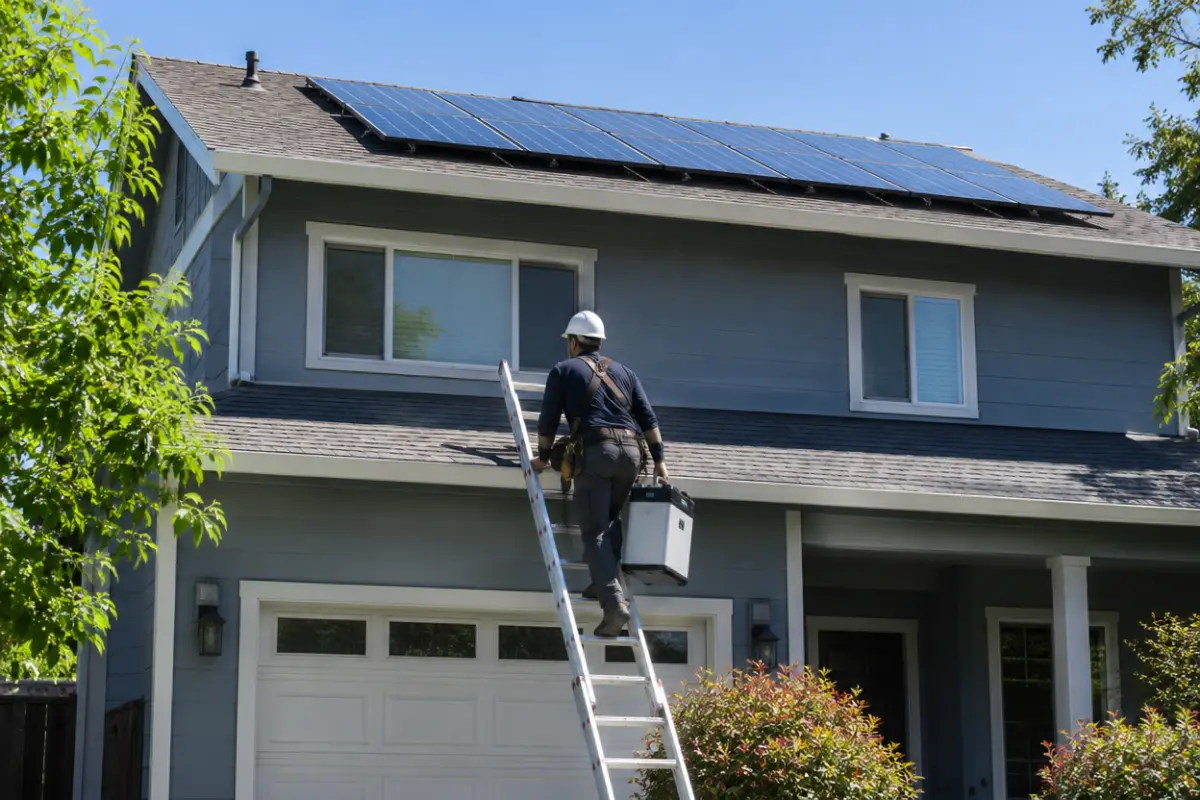
Why retrofit leads matter
Every home that installed solar without storage in past years is a potential retrofit. Many of those owners learned in their first outage that a grid-tied system without a battery usually shuts down when the grid does. That moment often turns a satisfied solar owner into a battery prospect.
Retrofit owners come from three places: your own past customers, other installers' customers (including orphaned customers of companies that closed), and lead vendors who capture "already have solar" on their forms.
Your own past customers come first
Before buying retrofit leads, work your own customer list. You have the relationship, the system data and, in many cases, the right to contact them about their system. Check what consent you have for marketing calls and texts before you run a campaign; existing business relationship rules are narrower than many people think. Our TCPA compliance guide covers the basics, and you should confirm with counsel.
A simple retrofit campaign to past customers:
- Segment by install year and inverter type.
- Send an email explaining what storage could add for their system specifically.
- Offer a free compatibility check based on monitoring data you already have.
- Follow with a call to those who reply or click, within your consent scope.
The three retrofit checks
Inverter compatibility. Options generally include AC-coupled batteries (which work alongside an existing inverter), DC-coupled systems (which may need a new hybrid inverter), or full replacement. Each has cost, efficiency and warranty implications. The right answer depends on the existing equipment, so get the inverter photo before quoting.
Interconnection and net metering terms. Some utilities treat adding storage as a system modification that requires a new application. In some places, that may affect whether a customer keeps legacy export terms. Rules are utility-specific and change. Check with the utility or the state commission, and never tell a homeowner "this won't affect your net metering" without having checked.
Warranty. Adding equipment to an existing system can affect the original installer's or manufacturer's warranty. If you did not install the original system, explain that you will check and put the answer in writing.
Retrofit opener script
"Hi [name], this is [rep] with [company]. You asked about adding a battery to your solar earlier today. Thanks for reaching out. First question, during your last outage, did your solar keep running? [Listen.] That's really common; most solar systems shut off when the grid goes down for safety. Adding a battery is how you keep some power on. To give you a straight answer on what's possible with your system, could you text me a photo of your inverter label and your electrical panel? It takes two minutes and saves us both a lot of guessing."
Orphaned solar owners
Homeowners whose original installer is no longer in business are a special case. They often have unanswered service questions and some frustration. Treat the first call as service-first: offer a system check, monitor review, or warranty clarification. Battery interest often follows trust. Avoid criticizing the previous installer; the homeowner chose them.
What to watch with retrofit lead vendors
- Ask whether "has solar" is self-reported or checked against any data. Self-reported is common; just know which you are getting.
- Ask whether retrofit leads are sold to the original installer too. If you are paying for exclusivity, confirm it in writing.
- Watch for forms that pitch "upgrade your solar for free." That language attracts the wrong buyer and may misdescribe the offer.
How does battery lead strategy change by state?
Battery lead strategy changes by state because the four motives vary by state: outage history, rate design, export compensation and program incentives. A state with frequent long outages favors backup messaging; a state with low export credits and steep evening rates favors savings messaging. Check your utility's current tariff and program pages before setting filters or scripts.
The scenarios below are illustrative patterns, not forecasts. Rules change, and conditions inside a state vary by utility, so treat each as a starting hypothesis to test with a small batch. For lead pricing differences by state, see solar lead cost by state; this section is about storage strategy, not price.
California
What drives demand. Export compensation under the Net Billing Tariff for newer systems (see the CPUC NEM revisit page), time-of-use rates, and outages including utility public safety power shutoffs in wildfire-risk areas. LBNL's May 2024 brief reported storage attachment on new residential solar rising to around 60% after the tariff change (LBNL).
Lead mix to test. New solar-plus-storage leads in most territories; retrofit leads from homeowners on older net metering terms who are now worried about outages; program-driven leads where SGIP equity budgets apply (CPUC SGIP).
Qualification focus. Whether adding storage affects a retrofit customer's legacy terms (check the utility's rules), panel capacity in older homes, and wildfire-zone access for crews.
Messaging. Savings first for new systems, with backup as the second benefit. For retrofit owners in shutoff-prone areas, backup first.

Illustrative scenario. A three-crew installer in inland California buys exclusive leads with a required "existing solar" field. After 60 days, the team sees retrofit leads closing at a higher rate than new-system leads but taking longer because of utility review. It shifts budget toward retrofit leads and hires a part-time project coordinator to shorten the utility step. (Illustrative.)
Texas
What drives demand. Outage memory, especially since the February 2021 winter storm, plus summer heat and storm outages. Texas has a mix of deregulated retail electricity markets and areas served by co-ops and municipal utilities, so rate design and buyback plans differ by address. Check the Public Utility Commission of Texas and the homeowner's retail plan.
Lead mix to test. Battery backup leads and solar-plus-storage leads in suburban areas around large metros; standalone backup leads in rural areas comparing batteries with standby generators.
Qualification focus. Retail electricity plan and buyback terms (they vary by provider), whether the homeowner is in a co-op or municipal territory, and generator comparisons.
Messaging. Backup and resilience first; savings as a function of the homeowner's specific plan.
Illustrative scenario. A small installer in a Texas suburb sees most storage leads arrive in two waves: after summer heat events and after winter cold snaps. Rather than buying evenly across the year, it raises daily caps for two-week windows after events and keeps a baseline the rest of the year. (Illustrative.)
Florida and the Gulf Coast
What drives demand. Hurricane outages. The EIA's December 2025 Today in Energy report attributed most of the hours customers spent without power in 2024 to major events including Hurricanes Beryl, Helene and Milton.
Lead mix to test. Battery backup leads, often comparing with generators; solar-plus-storage leads among homeowners interested in both bills and storms.
Qualification focus. Flood zones and equipment placement, wind ratings and code requirements for exterior equipment, homeowner association rules, and insurance questions (refer to the homeowner's insurer).
Messaging. Resilience, with careful, honest runtime estimates. Hurricane-related outages can last longer than a battery can run without solar recharge, and solar output may be low after a storm.
Seasonality. Plan for demand before and after hurricane season. Buying heavily after a storm when your crews are booked months out creates frustrated leads.
The Carolinas and the Southeast
What drives demand. Storm outages. Reports on the EIA's 2024 reliability data, such as Utility Dive's coverage, noted that South Carolina customers averaged far more outage hours than the national figure in 2024. Rate design and export terms vary by utility; check the North Carolina Utilities Commission and South Carolina Public Service Commission for current tariffs.
Lead mix to test. Backup leads and solar-plus-storage leads, especially in areas hit by recent storms; rural standalone backup where wells are common.
Qualification focus. Well pump loads and surge requirements, rural service and panel age, utility program enrollment where applicable.
Massachusetts and New England
What drives demand. Performance payment programs such as Mass Save ConnectedSolutions, winter storm outages, and high electricity prices relative to the national average (see EIA state electricity profiles).
Lead mix to test. Program-driven leads, retrofit leads among existing solar owners, and new solar-plus-storage leads.
Qualification focus. Utility territory (program participation depends on the utility), compatible equipment for the program, enrollment timing before the summer season.
Messaging. Program value plus backup. Be precise that payments depend on program rules and battery performance.
Illustrative scenario. A New England installer runs a spring campaign to existing solar customers explaining program enrollment and backup. It times the campaign so installs can finish before the summer enrollment window, using the program's published deadline as the planning anchor. (Illustrative.)
Hawaii
What drives demand. High electricity prices (see EIA state profiles), limited export options for new solar customers on many programs, and island grid constraints. Coverage of the EIA's 2024 data also noted Hawaii customers experienced the most interruptions per customer of any state that year. Program and tariff details are set by the Hawaii Public Utilities Commission.
Lead mix to test. Solar-plus-storage as the default; retrofit storage for older systems.
Qualification focus. Current program options for export or self-supply, equipment approvals, shipping and lead times for equipment.
Arizona and Nevada
What drives demand. Time-of-use rates, summer peak pricing, and export rules that have changed over time. Check the Arizona Corporation Commission and the Public Utilities Commission of Nevada for current tariffs.
Lead mix to test. Solar-plus-storage leads aimed at savings; retrofit leads for owners whose export terms changed.
Qualification focus. Rate plan, summer evening usage (air conditioning), and how the utility treats storage additions.
Messaging. Savings first, with clear assumptions about rates. Backup is a secondary benefit for most buyers here, though heat-wave outages raise it.
Colorado and the Mountain West
What drives demand. Wildfire-related shutoffs in some areas, winter storms, and TOU rates in parts of the state. Check the Colorado PUC and Utah PSC.
Lead mix to test. Backup leads in foothill and mountain communities; solar-plus-storage in metro areas with TOU rates.
Qualification focus. Access, snow load and placement, heating type (electric heat changes backup sizing a lot).
Mid-Atlantic and Northeast states
What drives demand. Storms, aging infrastructure in some areas, and state programs. Programs and export rules vary across states such as New Jersey (NJ BPU), New York (NYSERDA and NY DPS), Maryland (PSC), Pennsylvania (PUC) and Connecticut (PURA).
Lead mix to test. Program-driven leads where storage incentives exist; retrofit leads in older solar markets.
Qualification focus. Program eligibility and installer enrollment, older housing stock with smaller service panels.
Midwest and lower-incentive markets
What drives demand. Storm outages, rural reliability, and individual motives like wells and sump pumps. Where export credits are still generous and rates are flat, the savings case for storage is weaker.
Lead mix to test. Small batches of backup leads, especially rural, compared against generator buyers. Solar-only leads with an optional battery add-on may be the better default.
Qualification focus. Sump pump and well loads, rural service, generator comparison.
Messaging. Backup and peace of mind; honest about savings.
A state-by-state planning table
| Region | Lead motive to emphasize | Main qualifier | Primary source to check |
|---|---|---|---|
| California | Savings + backup | Legacy terms, panel | CPUC NBT and SGIP pages |
| Texas | Backup | Retail plan, co-op/muni | PUCT, retail plan |
| Florida/Gulf | Backup | Placement, code, HOA | State commission, local code |
| Carolinas | Backup | Wells, rural service | NCUC, SC PSC |
| Massachusetts/New England | Program + backup | Utility, enrollment timing | Mass Save program page |
| Hawaii | Savings/self-supply | Program options | Hawaii PUC |
| Arizona/Nevada | Savings | Rate plan | ACC, PUCN |
| Colorado/Mountain West | Backup + TOU | Heating type, access | Colorado PUC |
| Mid-Atlantic/Northeast | Program + backup | Program eligibility | State commission, NYSERDA |
| Midwest | Backup | Wells, sump pumps | State commission, DSIRE |
Treat every row as something to verify for your utility and ZIP. Two neighboring utilities can have very different rules.
How should battery lead buying differ by installer size?
Battery lead buying should match your team's technical capacity and speed. Solo electricians and small crews do best with fewer, well-screened leads or appointments; mid-size installers can run exclusive real-time leads with a technical setter; regional companies can test every format and segment with proper attribution. The constraint is rarely lead supply; it is people who can review panels and design backup.
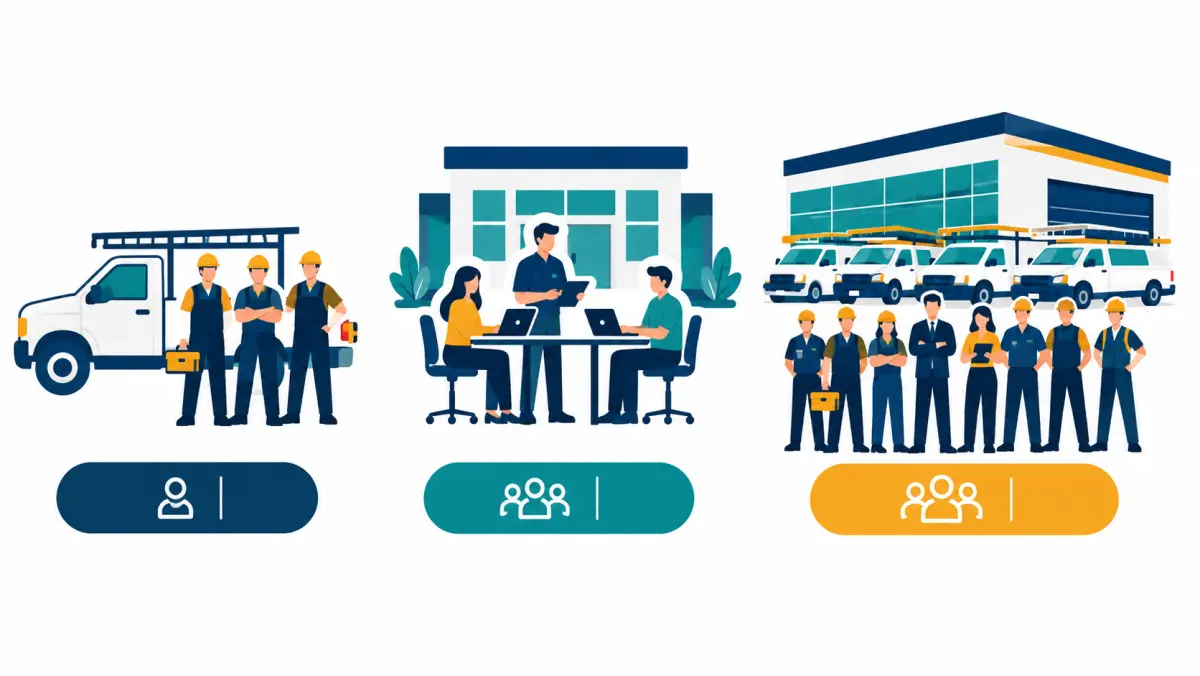
Solo electrician or one-crew installer
Typical situation. The owner sells, designs and often installs. Time is the scarcest resource. Battery jobs fit well because electrical skill is the core competency, but every unqualified lead costs the owner personally.
What to buy. Small batches of exclusive leads with strict filters (owners, specific ZIPs, required motive and existing-solar fields), or booked appointments if a vendor offers storage-qualified appointments in your area. Live transfers can work if you can reliably answer during working hours.
What to avoid. Shared leads and large aged lists. You cannot dial fast enough to compete, and you cannot afford the hours.
Process. Use the photo request on every lead before driving out. Batch site visits by area.
Illustrative scenario. A licensed electrician adds storage to a residential service business. He buys a small test batch of exclusive battery leads in a tight radius, requires panel photos before any visit, and declines leads needing major service upgrades unless the homeowner accepts the upgrade budget on the phone. After the test, he compares cost per signed job with his referral jobs and decides to keep a small monthly batch. (Illustrative.)
Small installer (two to five crews)
Typical situation. An owner plus one or two salespeople, maybe a setter, an office manager handling permits. Solar is the core; storage is growing.
What to buy. Exclusive real-time leads with storage fields, plus a retrofit campaign to past customers. Test live transfers for after-hours coverage if your setter works days only.
Key hire. A technical setter or designer who can read panel and inverter photos. Without this, closers waste site visits.
Process. Separate storage leads into their own CRM pipeline so you can measure them apart from solar-only. Set a weekly review of storage cost per sale.
Illustrative scenario. A four-crew installer finds its closers spend half their week on battery site visits that end in "your panel needs an upgrade." It adds a 15-minute photo review between setting and visiting, and moves the panel upgrade conversation to the setter call. Site visits fall, close rate per visit rises, and overall cost per sale improves. (Illustrative.)
Mid-size installer (five to fifteen crews)
Typical situation. Dedicated setter team, multiple closers, a design department, a permitting team. Can handle volume.
What to buy. A mix: exclusive leads as the core, appointments to fill closer calendars, live transfers for overflow, aged leads for retrofit and nurture campaigns within consent scope. Use multiple vendors with clear attribution.
Key system. Source-level reporting for storage: contact rate, technical pass rate, sit rate, close rate, cancellation rate and gross profit per job, all by vendor and segment.
Process. Run storage-specific scripts and a storage training module. Assign one closer as the storage specialist for complex retrofits.
Illustrative scenario. A mid-size installer runs three vendors for 90 days. One delivers the cheapest storage leads, but technical pass rate is low because "existing solar" is optional on its form. Another costs more per lead but requires motive and existing-solar fields. Cost per signed job favors the second vendor. The company asks the first vendor to make the fields required; when it cannot, budget moves. (Illustrative.)
Regional or multi-state installer
Typical situation. Several markets with different rules, central marketing and sales operations, finance partners for TPO.
What to buy. Market-specific mixes. Program-driven and retrofit leads in program states; backup leads in storm states; savings-led solar-plus-storage where export credits are low.
Key system. A rules matrix by market: incentives, utility processes, equipment approvals and scripts, with an owner and a review date for each.
Process. Central compliance review of every vendor's capture pages and consent language. Market-level P&L for storage.
Battery-only retrofit specialist
Typical situation. A company focused on adding storage to existing solar, often servicing other installers' systems.
What to buy. Retrofit leads with required existing-solar and inverter fields, plus outreach to orphaned solar owners. Partnerships with solar installers who do not offer storage can be a strong lead source.
Key skill. Deep inverter compatibility knowledge and fast utility paperwork.
Decision matrix
| Team profile | Best lead formats | Must-have field | Biggest risk |
|---|---|---|---|
| Solo/one crew | Small exclusive batches, appointments | Existing solar, panel photo | Owner's time |
| Two to five crews | Exclusive + past customers | Motive, existing solar | No technical reviewer |
| Five to fifteen crews | Mixed, multi-vendor | All core four | Attribution gaps |
| Regional | Market-specific | Utility | Rules drift by market |
| Retrofit specialist | Retrofit leads, partnerships | Inverter type | Compatibility surprises |
How do batteries compare with generators in a sales conversation?
When a backup buyer compares a battery with a standby generator, the honest comparison covers upfront cost, runtime, fuel, noise, maintenance, bill savings and permits. Generators usually win on long outage runtime when fuel is available; batteries win on silence, no fuel, automatic operation, and potential bill savings when paired with solar. Let the homeowner's priorities decide.
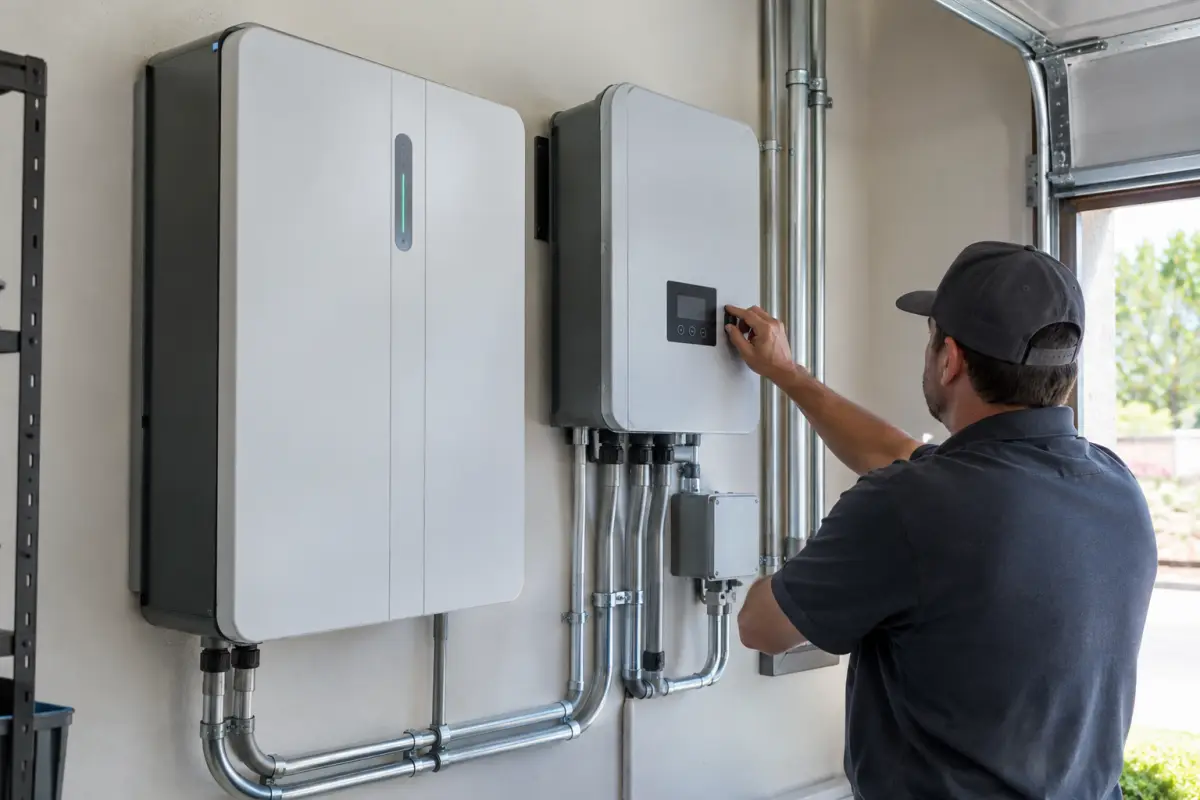
Many standalone backup leads are really "battery or generator?" leads. Your rep's credibility depends on comparing fairly. A rep who trashes generators to a homeowner whose neighbor's generator ran all through the last storm loses the room.
A fair comparison table
| Factor | Standby generator | Home battery | Battery + solar |
|---|---|---|---|
| Runtime in long outages | Long, as long as fuel lasts | Limited by stored energy | Can recharge daily if sun is available |
| Fuel | Natural gas or propane | None | None |
| Noise | Audible when running | Quiet | Quiet |
| Maintenance | Regular service | Minimal | Minimal plus solar cleaning as needed |
| Bill savings | None | Some, depending on rates | Most potential |
| Automatic switchover | With transfer switch | Yes, with proper design | Yes, with proper design |
| Exercise runs | Periodic | No | No |
| Space and placement | Outdoor pad, clearances | Wall or floor, indoor or outdoor per listing | Plus roof or ground space |
We left prices out on purpose; they vary too much to summarize without a dated source. Give the homeowner real quotes.
Hybrid answers
Some homeowners want both: a battery for daily savings and short outages, plus a generator for rare long outages. If your company can design that, say so. If not, be honest that the homeowner might want both and refer them.
Script for the generator comparison
"Generators are a good choice for some people, especially if you need whole-home power for days and have natural gas. Batteries make more sense if you care about quiet, no fuel, and lowering your bill too, especially with solar. Can I ask what matters most to you, runtime, cost or the bill?"
How should sales reps talk about battery sizing without overpromising?
Reps should talk about sizing in terms of what the homeowner wants to run and for how long, not in kilowatt hours first. Explain that a battery is a store of energy with a limit on how much power it can deliver at once, give an example in plain terms, and leave the final numbers to the designer. Never promise a runtime as a guarantee.
The two numbers homeowners need to understand
Every battery has two key ratings:
- Energy capacity (kWh): how much electricity it can store. Think of it as the size of the gas tank.
- Power output (kW): how much it can deliver at once. Think of it as how many things can run at the same time.
A homeowner who wants to run central air, a well pump and an electric range at once needs enough power output, not just storage. A homeowner who wants a fridge and lights for two days needs enough capacity, not a huge power output.
Plain-language sizing conversation
"Think of the battery like a fuel tank and a hose. The tank size decides how long things run; the hose size decides how many things can run at once. If you want your well pump and air conditioning to start at the same time, we need a bigger hose. If you want the fridge and lights for a couple of days, we need a bigger tank. Our designer will size both based on what you told me matters."
Critical loads vs whole-home backup
| Approach | What it means | Who it suits |
|---|---|---|
| Critical loads panel | Selected circuits move to a backup subpanel | Budget-conscious backup buyers; essentials only |
| Whole-home backup | The whole house is backed up, with load management | Buyers who want automatic coverage; usually larger systems |
| Smart load management | Devices or panels shed big loads automatically during outages | Buyers who want broad coverage without oversizing |
Your designer chooses the approach. The rep's job is to learn priorities and set expectations.
Phrases to avoid
- "It will run your whole house." (Unless the design and the conditions support it, and even then, say "under these assumptions.")
- "You'll never lose power again."
- "It pays for itself in X years." (Unless backed by a written estimate with named assumptions.)
- "The battery charges from the grid for free."
- "The government pays for it."
These phrases create complaints and can amount to misleading claims. Federal and state consumer protection rules apply to sales statements as well as ads; confirm with counsel which apply to your scripts.
How do you handle storage lead surges after outages?
Handle outage surges by planning before storm season: set daily lead caps your team can call within minutes, prepare respectful scripts for homeowners still affected, confirm crew lead times so you can be honest about install dates, and review ad and form messaging so it informs rather than scares. Buying more leads than you can work wastes money and goodwill.
Outage surges are the biggest operational challenge in battery lead programs. Demand rises fast, homeowners are stressed, and every installer in the area is chasing the same people.
Pre-season checklist
- Agree daily and weekly caps with each vendor, and how quickly they can change.
- Confirm how many first calls each setter can make per day while keeping response time low.
- Line up overflow coverage: a live transfer source, an answering service, or extra setter hours.
- Update scripts with a post-outage opener.
- Publish your current install lead time internally so reps quote it honestly.
- Review every vendor's ad and landing page language for storm-related claims.
- Prepare a nurture sequence for leads who want to wait until life settles down.
- Check equipment supply with your distributor.
Post-outage opener
"Hi [name], this is [rep] from [company]. You reached out about a home battery. First, I hope you and your family are okay and your power is back. [Listen.] We're not going anywhere, so if now isn't a good time, I can text you and we'll pick it up whenever you like. If you do have a few minutes, I'd like to understand what you went through so we can design something that actually helps next time."
Ethical messaging after disasters
After a disaster, some ads and scripts lean hard on fear. That approach can backfire with homeowners and attract regulatory attention. Good practice:
- Describe what a battery can and cannot do in plain words.
- Do not claim affiliation with utilities, emergency agencies or government programs you are not part of.
- Do not use deadlines that are not real.
- Be honest about install lead times; a homeowner who expects a battery before the next storm and gets one months later will feel misled.
Federal and state laws on deceptive practices apply to advertising and sales. This is not legal advice; confirm with counsel.
Capacity math for a surge (illustrative)
Illustrative: if a setter can make about N quality first calls per day, and you want every new lead called within 5 minutes during working hours, your daily cap should be close to the number of setters × N, minus time for follow-ups. If a storm triples leads, you either add setter hours or hold the cap. Buying past capacity raises cost per sale because uncalled leads decay.
What compliance rules apply to battery storage leads?
Battery storage leads fall under the same calling and texting rules as solar leads: the TCPA, the FTC's Telemarketing Sales Rule, the National Do Not Call Registry, and state telemarketing laws. Battery-specific risk comes from claims about backup, savings and incentives. Keep consent records, scrub against do-not-call lists, and review claims with counsel.
Consent and calling
The FCC's one-to-one consent rule, which would have required consent to name each seller individually, was vacated by the Eleventh Circuit on January 24, 2025. That does not remove the need for valid consent under the TCPA for autodialed or prerecorded calls and texts, or the need to follow state laws, some of which are stricter. Our TCPA compliance guide covers this in more detail, and the FTC's Telemarketing Sales Rule guidance is the primary federal resource for telemarketing. Confirm with counsel.
For every storage lead you buy, you should be able to produce:
- The consent text the homeowner saw.
- A timestamp and the page URL.
- Evidence the disclosure covered your company.
- The phone number consented.
Claims specific to storage
| Claim type | Risk | Safer approach |
|---|---|---|
| Backup duration | Promising hours or days that depend on usage | Give estimates with named assumptions |
| Savings | Rates change; programs change | Show assumptions, sources and dates |
| Incentives | 25D ended; programs close | Name the program, link the source, say it may change |
| Safety | Overstating or dismissing risk | Point to listings, codes and manufacturer documentation |
| Program payments | Not guaranteed | Present as estimates subject to program rules |
Data handling
Storage leads may include notes about medical equipment or health needs. Treat those notes carefully: limit who sees them, do not share them with vendors or partners without reason, and follow your privacy policy. This is not legal advice; confirm with counsel what applies to your business.
What should you ask a storage lead vendor?
Ask a storage lead vendor how they define a battery lead, which storage fields they collect and require, how they capture consent and name your company, whether leads are exclusive, how they handle replacements, what their ads and landing pages say about incentives and backup, and whether they can cap volume during outage surges.

Our general guide to how to vet solar lead providers covers vendor due diligence. These are the storage additions.
Storage vendor questionnaire
Definition and segmentation
- What counts as a "battery lead" in your system? Interest checkbox, dedicated form, or screened call?
- Do you separate retrofit, new solar-plus-storage and standalone backup leads?
- Which storage fields are required on the form?
Traffic and messaging 4. Can we see the live landing pages and ads that generate storage leads? 5. Do any ads mention a federal tax credit for homeowner-owned batteries? 6. Do any ads promise specific backup durations or savings? 7. How do you avoid capturing portable power station shoppers?
Consent and exclusivity 8. Does the consent disclosure name our company? 9. Are leads exclusive? In writing? 10. Are retrofit leads also sold to the original installer or anyone else?
Volume and timing 11. Can we set daily caps, and how fast can you change them? 12. What happens to volume after major outages? 13. What hours do leads arrive, and can we pause after hours?
Quality and replacement 14. What do you verify before delivery? 15. What is your replacement policy and window? 16. Can you report technical pass rates by source if we share outcomes?
Red flags
- "Battery leads" that are just solar leads with a pre-ticked battery box.
- Ads promising "free batteries" or "government-paid backup."
- No ability to show the capture page.
- Refusal to put exclusivity in writing.
- Pressure to buy large volumes right after a storm.
A sample storage section for your vendor brief
"We buy residential storage leads in [ZIPs]. Required fields: homeowner status, existing solar (yes/no/unsure), primary motive (backup/bills/use more solar/program), utility name. Optional: outage experience, critical loads, generator, timeline, financing preference. Ads must not mention a federal homeowner tax credit for batteries or promise backup durations. Consent must name [company]. Daily cap: [number], adjustable within [hours]. Replacement for disconnected numbers, wrong contact details, or leads outside filters."
Which metrics show whether storage leads are working?
Track storage leads separately from solar-only, by source and segment: speed to first call, contact rate, technical pass rate, photo return rate, sit rate, close rate, cancellation rate, cost per signed job, gross profit per job and days from lead to install. The technical pass rate and cancellation rate are the storage-specific signals most teams miss.
Storage dashboard
| Metric | Definition | Why it matters for storage |
|---|---|---|
| Speed to first call | Minutes from lead arrival to first dial | Decay is fast, especially after outages |
| Contact rate | Leads with a live conversation ÷ leads | Shows vendor phone quality and your speed |
| Photo return rate | Leads who sent panel/inverter photos ÷ contacted | Predicts sit and close |
| Technical pass rate | Leads passing electrical and compatibility review ÷ contacted | Storage-specific failure point |
| Sit rate | Site visits held ÷ booked | Shows booking quality |
| Close rate | Signed ÷ sits | Closer and offer fit |
| Cancellation rate | Cancelled ÷ signed | Upgrade surprises, long waits |
| Cost per signed job | Spend ÷ signed jobs | Core economics |
| Gross profit per job | Contract value minus job costs | Makes cost per sale meaningful |
| Lead to install days | Days from lead to commissioning | Cash and satisfaction |
Reading the dashboard
- Low contact rate, normal elsewhere: speed or phone quality. See solar speed to lead.
- Normal contact, low technical pass: vendor fields or targeting. Tighten required fields.
- High technical pass, low sit: booking process or pricing expectations set too early.
- Good close, high cancellation: panel upgrade or interconnection surprises after signing. Move those checks earlier.
- Good everything, poor gross profit: pricing or labor estimates for storage jobs need review.
Review cadence
Look at speed, contact and photo return weekly, because those move fast and are easy to fix. Look at sits, closes, cancellations and gross profit monthly, because storage jobs take longer to move from lead to contract and a weekly view of those numbers mostly shows noise. Keep the same definitions for every source so comparisons stay fair.
Sample size
Do not judge a storage source on ten leads. Batteries are lower volume than solar in many markets, so give a test enough leads to see past noise, and compare sources over the same period. A test of 50 to 100 leads per source is a reasonable starting point for many installers, but the right number depends on your volume and close rate.
What scripts and templates work for battery storage leads?
Battery storage scripts work best when they open with the homeowner's stated motive, ask for photos early, set expectations about backup and incentives, and book a specific next step. Texts and emails should be short, factual and free of fear tactics. Below are openers, text templates, email templates and voicemail scripts you can adapt.
These templates are starting points. Review them with your compliance advisor before use, and only text or call within the scope of the consent you hold.
First-call openers by motive
Backup motive:
"Hi [name], it's [rep] with [company]. You asked about a home battery for backup. Can I ask what happened during your last outage? [Listen.] Got it. The goal is to keep what matters running next time. Two quick questions and then I'll ask for a couple of photos so we can give you a real answer."
Bill motive:
"Hi [name], it's [rep] with [company]. You asked about a battery to lower your bill. Do you know if you're on a time-of-use plan, where evening power costs more? [Listen.] Here's how a battery can help with that, and here's what I'd need to check whether it makes sense for you."
Existing solar motive:
"Hi [name], it's [rep] with [company]. You mentioned you already have solar and want to get more out of it. Has anything changed with how your utility credits you for extra power? [Listen.] A battery can store some of that power for the evening. To check compatibility, I'll ask for a photo of your inverter."
Program motive:
"Hi [name], it's [rep] with [company]. You asked about a battery program. Which one did you hear about? [Listen.] Programs change, so I'll check what's open for your utility today and send it to you in writing."
Text templates
After first missed call:
"Hi [name], [rep] from [company] here about the home battery info you requested. When's a good time for a quick call? Reply STOP to opt out."
Photo request:
"Thanks for talking today, [name]. To check what's possible, please text photos of: 1) your electrical panel with the door open, 2) your solar inverter label (if you have solar), 3) the wall where you'd like the battery. Reply STOP to opt out."
Post-outage gentle check-in:
"Hi [name], [rep] from [company]. Hope your power's back and everyone's okay. No rush on the battery questions. Reply when it's a good time. Reply STOP to opt out."
Site visit reminder:
"Reminder: [designer] from [company] will visit [day] at [time] to look at your electrical panel and battery location. Reply C to confirm or R to reschedule. Reply STOP to opt out."
Email templates
Retrofit compatibility email (to past customers, within consent):
Subject: Can your solar keep running in an outage?
Hi [name],
Most grid-tied solar systems shut off during outages for safety. Adding a battery is how you keep some power on.
We installed your system in [year] with a [inverter type] inverter. We can check whether a battery can be added and what it would back up, at no charge.
Reply to this email or book a time here: [link].
[Rep], [company]
Incentive clarification email:
Subject: Battery incentives at your address
Hi [name],
As promised, here's what we found for your address as of [date]:
- Federal homeowner credit (25D): ended for expenditures after December 31, 2025, per the IRS.
- [Program name]: [status], source: [link].
- Utility rate plan options: [plan names], source: [link].
Programs change, so we'll recheck before you sign. For anything tax-related, please check with your tax preparer.
[Rep]
Nurture email (for "not now" leads):
Subject: When you're ready to talk batteries
Hi [name],
You mentioned you'd like to wait on a battery. No problem. A few things that might be useful in the meantime:
- What a battery can and can't back up: [link to your page]
- How to check if your utility has a battery program: [DSIRE or utility link]
If anything changes, reply here and we'll pick up where we left off.
[Rep]
Voicemail
"Hi [name], this is [rep] with [company] returning your request about a home battery. I'll text you too. Call or text me back at [number] whenever it's convenient. Thanks."
Keep voicemails short and do not include pricing or incentive claims.
Closer script: proposal walkthrough
"Here's what we designed. These circuits stay on in an outage: [list]. These won't: [list]. With your typical usage, our estimate is [range] under these assumptions: [list]. If the sun is out during a long outage, the panels can recharge the battery. Savings depend on your rate plan; here's the plan we assumed and where it came from. There's no federal homeowner credit for this installation year. [Program] is open as of [date]; here's the link. What questions do you have?"
What do illustrative storage lead walkthroughs look like?
The walkthroughs below are illustrative composites, not real clients or results. Each shows a common storage lead situation, what went wrong or right, and the decision that followed. Use them as training cases for setters and closers, and as a checklist for diagnosing your own program.
Walkthrough 1: the "whole house for three days" expectation
A homeowner after an ice storm asks for a battery to run the whole house, including electric heat, for three days. The setter books a site visit without discussing loads. At the proposal, the designer explains that meeting that goal would need a very large system. The homeowner feels misled and cancels.
Fix. The setter now asks "what are the three things you'd most want running?" and explains the tank-and-hose idea on the first call. The site visit covers critical loads versus whole-home options. Fewer sits, but far fewer cancellations. (Illustrative.)
Walkthrough 2: the incompatible inverter
A retrofit lead with an older inverter goes to a site visit. The closer learns the inverter is not compatible with the company's battery line and is near end of life. The homeowner is not ready to replace it.
Fix. Inverter photo required before visits. Leads with incompatible inverters get a call from the designer explaining options (AC-coupled battery, inverter replacement, wait). (Illustrative.)
Walkthrough 3: the program that closed
A rep quotes a utility battery rebate from a training sheet. The homeowner signs. The program had closed for new reservations weeks earlier. The company covers part of the gap to keep the customer.
Fix. Program status is checked on the administrator's site on the day of the proposal, with a link and date in the proposal. Training sheets carry a "last checked" date and an owner. (Illustrative.)
Walkthrough 4: the outage surge overspend
After a hurricane, a company tells its vendor to send "everything." Leads triple; setters fall behind; most leads are first called the next day. Cost per signed job doubles compared with the prior month.
Fix. Daily caps tied to setter capacity, an overflow live transfer source for peak days, and a gentle text-first approach. (Illustrative.)
Walkthrough 5: the retrofit program from past customers
A company with several years of past solar customers runs an email-and-call campaign within consent scope. Using monitoring data, it identifies systems with compatible inverters and emails them first. Response is strong, and the cost per signed job is lower than bought leads.
Lesson. Before buying retrofit leads, mine your own customer list. Then use bought leads to fill the gap. (Illustrative.)
Walkthrough 6: the generator comparison won by honesty
A rural homeowner with a well asks whether a battery can replace a generator. The rep explains that for multi-day outages with heavy loads, a generator may run longer, and suggests a battery plus solar for daily savings and short outages, with the existing portable generator as a fallback for long events. The homeowner appreciates the candor and signs a smaller system.
Lesson. A fair comparison closes more deals than a one-sided pitch, and it produces fewer cancellations. (Illustrative.)
Walkthrough 7: the vendor with a pre-ticked box
A company buys "battery leads" from a new vendor. Setters find many homeowners do not remember asking about a battery. A review of the vendor's form shows the battery interest box was pre-ticked.
Fix. The company requires the vendor to show live capture pages and to make battery interest an active choice. When the vendor refuses, the company stops buying. (Illustrative.)
Walkthrough 8: the outage-week backlog that turned into booked consults
A mid-size installer buys exclusive storage leads in a region that loses power during a regional storm. Over the next four days, inbound battery requests jump well above what the two setters can reach on the same day. By day three, the oldest uncalled leads are already cold, and several homeowners tell setters they "already talked to someone."
What the manager changes. The team stops working the queue in arrival order and sorts it instead. Homeowners who mention medical equipment, a well pump or a home office move to the top, because those needs are specific and less likely to fade when the lights come back. Existing solar owners go next, since an add-on conversation is shorter and the site data is already on file. Everyone else gets a same-day text that confirms the request, names a setter and offers two call windows.
What the setters say. The first line on every call acknowledges the outage without leaning on fear: "I know this week has been rough. I'm calling about the backup power request you sent. Can I ask a couple of questions so we only quote what you actually need?" Setters then confirm ownership, ask which circuits mattered most during the outage, and book a design consult with the bill and panel photos requested in advance.
What the closer avoids. No one promises a delivery or install date until the operations lead confirms equipment and permit timing in writing. Proposals list the loads the battery is sized to cover and say plainly which loads it will not run.
How they judge it. The manager compares the outage cohort with the prior month's cohort on three numbers: speed to first contact, booked-to-sat rate and cancellation rate after signing. If cancellations rise, the team reviews whether sizing or timing promises drifted during the rush.
Lesson. Surges reward triage and honest timelines more than raw dial volume. A sorted queue and a written handoff rule protect both close rate and reviews. (Illustrative.)
How do you troubleshoot a storage lead program that isn't working?
Troubleshoot a storage lead program by finding the step where leads drop out. Compare each metric with your solar-only baseline and by vendor: contact, photo return, technical pass, sit, close and cancellation. Most problems trace to one of four causes: slow response, weak storage fields, missing technical review, or expectation gaps about backup and incentives.
Symptom and cause table
| Symptom | Likely causes | First thing to try |
|---|---|---|
| Homeowners don't remember asking about batteries | Pre-ticked boxes, co-registration, vague forms | Review live capture pages; require active battery choice |
| Low contact rate | Slow first call, bad numbers, shared leads | Measure speed; check phone validation; test exclusive |
| Few photos returned | Request unclear or too early | Explain why photos help; send example images |
| Many technical fails | Missing fields, wrong targeting | Make existing solar and motive required; adjust ZIPs |
| Many sits, few closes | Pricing surprise, expectation gap | Set budget and backup scope earlier |
| High cancellations | Panel upgrade or utility surprises | Move electrical review before signing |
| Long lead-to-install times | Permit and utility queues, equipment | Track by step; add coordinator time |
| Good results, falling margins | Labor underestimated on retrofits | Review job costing for storage |
A one-week diagnostic
- Day 1: Pull the last 60 to 90 days of storage leads by source and segment.
- Day 2: Calculate each funnel rate; compare with solar-only.
- Day 3: Listen to ten first calls per source.
- Day 4: Review vendors' live capture pages and ads.
- Day 5: Review ten lost and ten cancelled deals for patterns.
- Day 6: Pick one fix per stage and assign an owner.
- Day 7: Set a date to re-measure.
How should you train reps to sell home batteries?
Train reps on battery basics (energy versus power, critical loads, retrofit compatibility), your local rate and program rules with sources, honest scripts by motive, and the photo-first process. Use role-plays based on real objections and illustrative cases, and refresh incentive and program training every quarter because those details change.
A four-session training plan
Session 1: How batteries work for homeowners. Energy vs power, backup vs self-consumption vs TOU modes, why grid-tied solar shuts down in outages, critical loads vs whole home.
Session 2: Your market. Current utility rate plans, export rules, programs and their status, all with links and a "last checked" date.
Session 3: Scripts and objections. Openers by motive, photo requests, generator comparison, incentive script, and the objection table. Role-play each.
Session 4: Process and compliance. CRM fields, scoring, handoff to designer, consent records, claims to avoid.
Certification checklist for reps
- Can explain energy versus power in one minute.
- Can state the 25D status correctly and redirect to current programs.
- Can explain why most grid-tied solar shuts down in outages.
- Can run the critical loads question.
- Can request photos and explain why.
- Can compare batteries and generators fairly.
- Knows which claims to avoid.
- Knows how to log motive, segment and scores in the CRM.
Are you ready to buy home battery storage leads?
You are ready to buy home battery storage leads when you can answer yes to a short list: you sell and install storage you can support, someone can review panel and inverter photos within a day, your team can call new leads within minutes, you know your market's current rates and programs, and your CRM can track storage separately. If several answers are no, fix those first.
Readiness checklist
Product and install
- We have a battery lineup we can install, service and warranty.
- We know which common inverters in our area our products support.
- We can handle panel upgrades or have a partner who can.
- We know our typical permit and utility timelines for storage.
People
- A setter trained on storage openers and photo requests.
- A technical reviewer who can read panel and inverter photos.
- A closer who can explain backup scope and run a generator comparison.
- A coordinator for permits and utility paperwork.
Market knowledge
- Current utility rate plans, with links and a "last checked" date.
- Current state and utility battery programs, with links and dates.
- Our market's outage seasons and storm patterns.
- A clear, accurate answer on the federal homeowner credit.
Systems
- A separate storage pipeline and scorecard in the CRM.
- Source and segment tracking from lead to install.
- Consent records stored and retrievable.
- A daily cap and overflow plan for surges.
What to do if you are not ready
If the product, people or systems lines are mostly unchecked, start by offering storage as an optional add-on to solar-only leads and working your past customers. That builds the skills and data you need. When the checklist is mostly complete, run a pilot as described above.
Questions to answer in writing before your first batch
- Which storage segment are we targeting first, and why?
- What is our target cost per signed job and gross profit per job for that segment?
- Who reviews photos, and how fast?
- What will make us stop the test?
- Who owns incentive and program rechecks, and how often?
Writing these down sounds like overhead, but it is what makes the pilot result readable. Without a written target and stop rule, most teams keep buying on hope or stop on one bad week.
How do you design a pilot for home battery storage leads?
Design a storage lead pilot with a fixed budget, a defined territory, one or two vendors, required storage fields, a technical reviewer in place, and success measured as cost per signed job and gross profit per job. Run it long enough to get past early noise, and decide in advance what results would make you scale, adjust or stop.
Pilot plan template
| Element | Your decision |
|---|---|
| Goal | e.g. "Find out whether retrofit storage leads beat our current solar-only cost per signed job" |
| Territory | ZIPs where you can install within your normal lead time |
| Segments | Retrofit, new solar-plus-storage, standalone backup, program |
| Vendors | One or two, with comparable fields |
| Lead format | Exclusive real-time, appointments, transfers |
| Required fields | Existing solar, motive, utility, ownership |
| Volume | Enough leads per vendor to see a pattern; capped to setter capacity |
| Duration | Long enough for leads to reach sits and closes; storage cycles can be longer |
| People | Named setter, technical reviewer, closer |
| Success threshold | Target cost per signed job and gross profit per job |
| Stop rule | e.g. "If technical pass rate stays below X after field changes, stop" |
Running the pilot
- Brief vendors with the storage section of your brief.
- Build a separate CRM pipeline for storage with the scorecard fields.
- Train the setter and closer on storage scripts.
- Review weekly: speed, contact, photos, technical pass.
- Review monthly: sits, closes, cancellations, cost per signed job.
- At the end, compare with solar-only results and with your stated thresholds.
Decision rules after the pilot
- Scale if cost per signed job and gross profit per job beat your thresholds and your team can handle more volume.
- Adjust if one segment or vendor works and another doesn't; move budget, fix fields, retest.
- Stop if technical pass rate or close rate stays poor after fixes, or if your install capacity cannot keep up.
Our buy solar leads guide covers building a broader lead buying program; this pilot is the storage layer on top.
How should storage leads fit into your overall lead mix?
Storage leads should be a measured slice of your lead budget, sized to your technical capacity and your market's storage demand. In high-demand markets they may be the core of your new-system leads; in low-demand markets, solar-only leads with an optional battery offer may work better. Your own past customers and referrals should come before bought retrofit leads.
A layered approach
- Owned retrofit: your past solar customers, within consent scope.
- Referrals: satisfied battery customers are strong referrers after outages, when neighbors notice which house has lights.
- Bought storage leads: exclusive real-time leads with storage fields, segmented.
- Appointments and transfers: to fill closer calendars or cover gaps.
- Aged leads: for nurture and retrofit campaigns where consent allows, as covered in our aged solar leads guide.
Illustrative budget split by market type
These are illustrative starting points to test, not recommendations or benchmarks.
| Market type | Storage share of lead budget (illustrative starting point) | Rationale |
|---|---|---|
| High storage demand (low export credits, high TOU spreads, programs) | Larger share | Storage is part of most new systems |
| Storm-prone, moderate rates | Moderate share, seasonal | Backup demand clusters around events |
| Low storage demand (generous export, flat rates, few outages) | Small share | Solar-only with optional battery may be enough |
Adjust after measuring cost per signed job and gross profit per job by segment.
Referral program for battery customers
Battery customers have a natural referral moment: the first outage after install. Neighbors notice. A simple program:
- Send a short message after a known outage: "Hope your battery did its job. If any neighbors ask, here's a link they can use."
- Offer a referral thank-you consistent with local rules.
- Ask for a review describing their real outage experience, not a scripted one.
What mistakes do installers make with battery storage leads?
The most common mistakes with battery storage leads are buying them without a technical reviewer, treating all battery leads as backup buyers, quoting outdated incentives, overpromising runtime, ignoring retrofit compatibility, buying past team capacity after outages, and judging sources on price per lead rather than cost per signed job and gross profit.
The list
- No technical review before site visits. Closers drive to homes with incompatible equipment or panels that need major work.
- One script for all motives. Backup, savings, existing-solar and program buyers want different conversations.
- Outdated incentive claims. The 25D credit ended for expenditures after 2025; programs open and close.
- Runtime promises. Leads to cancellations and complaints.
- Skipping the inverter photo on retrofits. The most common retrofit surprise.
- Assuming existing net metering terms survive a battery addition. Check with the utility.
- Buying everything after a storm. Uncalled leads decay; cost per sale jumps.
- Not separating storage in the CRM. You cannot improve what you cannot see.
- Ignoring past customers. The cheapest retrofit leads are often already in your CRM.
- Letting vendors pre-tick battery interest. Inflates "battery leads" with people who never asked.
- Underestimating retrofit labor. Hurts gross profit even when close rates look good.
- Fear-based messaging. Damages trust and may create legal risk.
What is a 30/60/90-day plan for a new storage lead program?
A 30/60/90-day plan for storage leads covers setup in the first month (fields, scripts, reviewer, CRM pipeline, vendor brief), a measured pilot in the second (weekly funnel reviews and fixes), and a decision in the third (scale, adjust or stop based on cost per signed job and gross profit). Keep compliance reviews running throughout.
Days 1 to 30: set up
- Define storage segments and required fields.
- Write the storage section of your vendor brief.
- Review vendors' capture pages and ads.
- Build a storage pipeline and scorecard in the CRM.
- Assign a technical reviewer.
- Train setters and closers (sessions 1 to 3).
- Check current incentives and rate plans with sources and dates.
- Start your past-customer retrofit campaign within consent scope.
Days 31 to 60: pilot
- Start the first vendor test batch with daily caps.
- Weekly review: speed, contact, photo return, technical pass.
- Listen to calls; refine scripts.
- Fix one bottleneck per week.
- Session 4 training (process and compliance).
Days 61 to 90: decide
- Monthly review: sits, closes, cancellations, cost per signed job, gross profit.
- Compare with solar-only.
- Scale, adjust or stop each vendor and segment.
- Set storm-season plan: caps, overflow, scripts.
- Schedule quarterly incentive and program rechecks.
Glossary of home battery storage terms for sales teams
These terms come up in nearly every battery sale. Reps should be able to explain each in a sentence. Definitions here are plain-language summaries for sales training, not engineering or legal definitions; your designers and the equipment documentation are the final word.
| Term | Plain-language meaning |
|---|---|
| AC-coupled battery | A battery with its own inverter that connects on the AC side, often used to add storage to existing solar |
| DC-coupled battery | A battery that connects on the DC side, usually through a hybrid inverter shared with solar panels |
| Hybrid inverter | An inverter that manages both solar panels and a battery |
| Energy capacity (kWh) | How much energy the battery stores; the "tank" |
| Power rating (kW) | How much power the battery can deliver at once; the "hose" |
| Critical loads panel | A subpanel with selected circuits that stay powered in an outage |
| Whole-home backup | A design that backs up the whole electrical panel, often with load management |
| Load management | Devices or settings that turn off big loads during outages to save energy |
| Backup reserve | The share of the battery kept for outages rather than daily use |
| Self-consumption mode | Using stored solar energy at home instead of exporting it |
| Time-of-use (TOU) | Rates that vary by time of day |
| Net metering (NEM) | A billing arrangement that credits solar exports; terms vary by state and utility |
| Net billing | An export compensation approach where exports earn a different value from imports, such as California's Net Billing Tariff |
| Demand response | Programs that pay customers to reduce or shift usage at peak times |
| Virtual power plant (VPP) | Many home batteries dispatched together to help the grid |
| Interconnection | The utility process for connecting a system to the grid |
| Islanding | Operating disconnected from the grid during an outage; requires proper equipment |
| Transfer switch | Equipment that separates the home from the grid during backup |
| Main panel upgrade | Replacing or upgrading the home's main electrical panel for capacity |
| Busbar | The conductor in a panel that distributes power; its rating limits how much solar and storage can be added in some designs |
| SAIDI | Utility metric for average total outage duration per customer per year |
| SAIFI | Utility metric for average number of outages per customer per year |
| 25D | The former federal homeowner credit for solar and batteries, not allowed for expenditures after 2025 |
| TPO | Third-party ownership, such as a lease or PPA |
| PPA | Power purchase agreement; the homeowner buys power from a system owned by someone else |
| SGIP | California's Self-Generation Incentive Program |
| PSPS | Public safety power shutoff; planned outages to reduce wildfire risk |
What should a home battery proposal include?
A home battery proposal should state the equipment, what is backed up and what is not, the runtime assumptions, the operating mode, the rate plan and any program assumptions with sources and dates, the financing and ownership terms, the permit and utility steps with expected timing, and warranty details. Clear proposals cut cancellations more than any closing technique.
Proposal checklist
- Battery model, capacity (kWh) and power rating (kW), plus inverter details.
- Backup design: critical loads, whole-home, or managed loads.
- A table of circuits that will and will not run in an outage.
- Runtime estimate with named assumptions, labelled as an estimate.
- Operating mode and backup reserve setting.
- Rate plan assumed, with source link and date.
- Program or incentive assumptions, each with source link and date, and what happens if they change.
- Statement on federal homeowner credit status.
- Ownership and financing: cash, loan, lease or PPA, and who gets any credit or program payment.
- Electrical work included (panel upgrade, subpanel, conduit), and anything excluded.
- Permit and utility steps with typical timing ranges from your own records.
- Equipment and workmanship warranties; impact on any existing solar warranty.
- Monitoring app and homeowner training.
Two proposal versions
For buyers torn between budget and coverage, show two options: an essentials design and a broader design. Explain the trade-offs in one sentence each. Homeowners like choosing, and it reduces the "too expensive" objection to a decision between two known quantities.
How do you sell storage to homes with special needs?
Homes with medical equipment, wells, sump pumps, home offices or multiple generations under one roof often have the clearest reasons to buy storage. Sell to them by listing the specific loads that must run, sizing for those loads with margin, being honest about runtime limits, and suggesting backup plans for long outages. Treat health information carefully.
Medical equipment
Homeowners who rely on powered medical equipment have an urgent, specific need. Ask what equipment must run, its power needs (from the device label or manual), and how long they need coverage. Recommend they also talk to their medical provider and utility about outage plans; many utilities have programs for customers with medical needs. Do not give medical advice, and keep health details private within your team.
Wells and sump pumps
Well pumps and sump pumps have high starting surges. The battery's power rating and the inverter's surge capability matter more than capacity for these loads. Flag them to the designer early.
Home offices
Remote workers often want internet, a computer and lights. These are small loads and can be covered well by modest systems. This segment is often price-sensitive and happy with a critical loads design.
Multigenerational homes
More people means more loads and more concern about comfort. Discuss heating and cooling priorities explicitly; they usually drive sizing.
HOAs and placement rules
Homeowners associations may have rules about exterior equipment. Ask early, and build HOA review time into your schedule.
How can installers generate storage leads without buying them?
Installers can generate storage leads without buying them through past customer retrofit campaigns, referral programs triggered by outages, local search content on backup and rate topics, partnerships with electricians and roofers, and community talks before storm season. Owned channels take longer to build but lower long-run cost per signed job; bought leads fill the gaps.
Owned channels
- Past customers. The highest-intent retrofit list you will ever have, contacted within consent scope.
- Local search. Pages that answer local questions about outages, utility rate plans and programs, with sources. "Battery backup [city]" style intent is local.
- Google Business Profile. Photos of real battery installs, posts after outages with helpful information.
- Referrals. Outage-triggered referral asks.
- Partners. Electricians who do panel upgrades, roofers who see aging solar, HVAC contractors who see electrification projects.
- Community. Talks at libraries, community centers or HOA meetings before storm season, focused on preparedness rather than sales.
Bought vs owned
Bought leads give you control over volume and timing, which matters during surges. Owned channels build trust and lower cost over time. Most installers do best with both: owned channels as the base, bought leads to fill calendars and test new territories. Our buy solar leads guide covers the build-versus-buy argument in more depth.
What handoff rules keep storage leads from stalling?
Storage leads stall in handoffs: setter to designer, designer to closer, closer to project coordinator. Write simple service levels for each handoff, such as how fast photos get reviewed and how fast a reviewed lead gets a closer call, and track them in the CRM. Clear handoff rules protect the speed you paid for when you bought the lead.
A solar-only lead often goes straight from setter to closer. A battery lead has an extra stop, technical review, and every stop is a place where a homeowner waits and cools off. Teams that buy fast leads and then let photos sit in an inbox for three days lose most of the benefit.
A sample handoff agreement (adapt to your team)
| Handoff | From | To | Target (set your own) | What gets passed |
|---|---|---|---|---|
| Lead to first call | Vendor/CRM | Setter | Minutes during business hours | Lead card, consent record |
| Photos to review | Setter | Designer | Same business day | Photos, bill, scorecard, motive notes |
| Review to closer call | Designer | Closer | Next business day | Preliminary design, flags, options |
| Signed to permit | Closer | Coordinator | Within a few business days | Contract, design, utility info |
| Install to training | Installer | Homeowner | At commissioning | App setup, reserve setting, outage test |
The targets in the fourth column are placeholders. Measure your current times first, then set targets you can hit consistently.
What each handoff note should contain
- Setter to designer: motive in the homeowner's words, the three must-run loads, existing solar details, any generator, timeline, financing preference, and anything sensitive (for example, medical needs) flagged for limited sharing.
- Designer to closer: compatibility verdict, panel verdict, recommended design options, open questions for the site visit, and any program the homeowner may qualify for, with a link.
- Closer to coordinator: signed scope, utility account details, HOA status, equipment placement, and any promises made to the homeowner about timing.
Signs your handoffs are the problem
- Photo review times longer than first-call times.
- Closers asking homeowners questions the setter already asked.
- Homeowners saying "nobody got back to me" after sending photos.
- Signed jobs waiting on paperwork that could have been collected at signing.
How does post-install service turn battery customers into lead sources?
Battery customers become lead sources when the battery works as promised during the first outage and the homeowner understands their settings. Good commissioning, a recorded outage test, a check-in after the first bill and a message after the first outage build trust that turns into referrals and reviews. Poor setup turns into service calls and complaints.
Commissioning that prevents complaints
At commissioning, walk the homeowner through:
- What the backup reserve is and how to change it before a storm.
- Which circuits are backed up, with labels on the panel.
- What the app shows, and what alerts mean.
- A simulated outage, with the homeowner watching the switchover.
- Who to call, and what information to have ready.
The first-outage message
After a known outage in your area, message battery customers: "Hope your battery kept things running. If anything didn't work as expected, reply and we'll check it remotely." This catches problems early and reminds happy customers to tell neighbors.
Reviews that help future leads
Ask for reviews after the first outage, when the homeowner has a real story. A review that says "our fridge and internet stayed on for the whole outage" is more persuasive and more honest than a generic five-star note. Do not script reviews or offer incentives that violate platform rules or consumer protection law.
How do financing choices change battery lead handling?
Financing changes who owns the battery, who can claim any business credit, and how the homeowner judges value. Cash buyers judge payback and backup; loan buyers judge monthly payment against savings; lease and PPA buyers judge the monthly price and the contract terms. Capture financing preference on the lead and route each buyer to a closer who knows that product.
Cash buyers
Cash battery buyers are often backup-motivated or retirees with savings. They want a clear total price, a clear scope and a straightforward warranty. Since 2026 installs do not carry a federal homeowner credit, avoid any "net cost after credit" framing. Show program payments separately, as estimates.
Loan buyers
Loan buyers compare a monthly payment with savings and backup value. Be careful that savings estimates rest on the current rate plan with named assumptions. Loan terms and dealer fees vary by lender; make sure the homeowner sees the full terms from the lender, not a summary from the rep.
Lease and PPA buyers
With third-party ownership, the owner may be able to use a business credit, which may be reflected in the price. The homeowner does not claim it. Reps should explain ownership plainly: "The company owns the equipment; you pay a monthly amount; here are the terms for maintenance, transfer if you sell the house, and end of term." Check with your financing partner how storage-only or retrofit storage fits their products; not every TPO program covers batteries added to an existing system.
Routing table
| Financing preference | Best first conversation | Watch out for |
|---|---|---|
| Cash | Scope, backup, total price | Old "credit" expectations |
| Loan | Monthly payment vs value | Optimistic savings assumptions |
| Lease/PPA | Monthly price, terms, ownership | Homeowner thinking they get a credit |
| Unsure | Motive first, finance options second | Pushing a product before understanding needs |
For more on how ownership models shifted after 25D, see solar leads after 25D.
Sources and methodology
This guide draws on primary sources checked in October 2026:
- IRS, Residential Clean Energy Credit page, for 25D coverage of battery storage of at least 3 kWh.
- IRS, FAQs on Public Law 119-21 (FS-2025-05, August 21, 2025), for the end of 25D for expenditures after December 31, 2025.
- IRS, Clean Electricity Investment Credit page, for business investment credit context.
- U.S. EIA, Today in Energy, December 1, 2025, for 2024 average outage hours and the role of major events.
- Utility Dive, coverage of EIA 2024 reliability data, for state outliers.
- Lawrence Berkeley National Laboratory, One Year In: Tracking the Impacts of NEM 3.0 (May 2024), for California storage attachment rates.
- CPUC, NEM revisit and SGIP pages.
- Mass Save, ConnectedSolutions battery program.
- DSIRE for state incentive discovery.
- FTC, Complying with the Telemarketing Sales Rule.
All funnel numbers, budget splits and walkthroughs in this guide are illustrative and labelled as such. We did not find a dated public source that reliably separates storage lead prices from solar lead prices, so we do not quote storage lead price ranges. Incentive programs and rate plans change often; verify before quoting. Nothing here is tax, legal or financial advice. Talk to your tax advisor about specific projects, and confirm compliance questions with counsel.
If you want to test storage leads in your territory, book a 30-minute call. Pricing is confirmed by ZIP on your call.
FAQ
What are home battery storage leads?
Home battery storage leads are homeowners who have asked about installing a residential battery and given documented permission to be contacted. They include existing solar owners who want to add storage, new solar shoppers who want panels and a battery together, backup-only buyers comparing batteries with generators, and homeowners responding to utility or state battery programs. Each segment needs different fields, scripts and qualification, so ask your vendor to capture which segment a lead belongs to.
Are solar plus storage leads different from solar leads?
Yes. Solar plus storage leads want a battery as part of the project, which adds electrical review, backup design and often a different motive, such as outages or time-of-use rates. They usually need a technical reviewer before the site visit and a proposal that states exactly what is backed up. Solar-only leads can still be offered a battery, but the conversation starts from the bill rather than from backup.
Why does "solar battery leads" return lead-acid battery results?
Because "lead" is also a metal used in lead-acid batteries, search engines often treat "solar battery leads" as a question about battery chemistry. When we checked, results were dominated by technical pages rather than sales prospects. That makes it a poor search term for your own marketing and a reason to ask any vendor using that phrase exactly what they are selling.
Is there still a federal tax credit for home batteries in 2026?
For homeowner-owned batteries, the IRS states that the 25D Residential Clean Energy Credit is not allowed for expenditures made after December 31, 2025, and the IRS treats an expenditure as made when installation is completed. Batteries owned by a business, including many leased or PPA systems, fall under separate business credit rules. Talk to your tax advisor about specific projects.
What state incentives exist for home batteries?
It depends on the state and utility. Examples include California's Self-Generation Incentive Program and Massachusetts' ConnectedSolutions performance payments, both run under program rules that change. Use DSIRE to find candidates, then confirm on the program administrator's site on the day you quote. Programs can close, run out of funds or change payment rates.
Who are the best prospects for battery storage?
Often, existing solar owners who have been through an outage, homeowners in areas with long or frequent outages, homeowners on time-of-use rates with high evening prices, new solar buyers in places with low export credits, and homeowners with medical equipment, wells or sump pumps. The best prospect for you also depends on your equipment lineup and your team's technical capacity.
How do I qualify a battery lead quickly?
Use five gates: ownership, motive, existing system, electrical capacity and financing. Ownership and motive come from the lead and first call. For the technical gates, ask for photos of the main panel, the inverter label (if they have solar), the meter and the planned battery location, plus a recent bill. Score each gate and send only qualified or near-qualified leads to site visits.
How fast should I call a battery storage lead?
As fast as you would call any solar lead, which in practice means minutes, not hours. After major outages, keep the speed but soften the approach: a short text first, then a call, with a tone that acknowledges the homeowner may still be dealing with the outage. If your team cannot keep up during surges, cap volume rather than letting leads wait.
Should I buy exclusive or shared battery leads?
Exclusive leads usually suit storage better, especially backup buyers after outages, because being called by several companies at once can feel like pressure and lowers contact rates. Shared leads can work for very fast teams with strong scripts. Compare sources on cost per signed job, not price per lead. Our guide to exclusive vs shared solar leads covers the trade-offs in depth.
Do live transfers work for battery leads?
They can, especially for small teams that cannot staff fast callbacks. The risk is screening quality on technical questions. Ask the vendor what their agents ask about existing solar, motive and ownership, and listen to sample calls. Make sure call duration and billing rules are clear before you start.
Can I sell batteries to homeowners whose solar was installed by another company?
Yes, many installers do. Check inverter compatibility, the original warranty, and how the utility treats adding storage to an existing system. Explain in writing that adding equipment may affect the original warranty. Approach orphaned solar owners service-first; trust often leads to the battery sale.
Will adding a battery affect a homeowner's net metering?
It depends on the utility and the state. Some utilities treat a battery addition as a modification requiring a new application, and in some places that can affect legacy export terms. Check with the utility or state commission before telling a homeowner anything, and put the answer in writing.
How long will a home battery run during an outage?
It depends on the battery's capacity, the loads running, and whether solar can recharge it during the outage. Essentials can often run much longer than whole-home loads with air conditioning or electric heat. Give homeowners an estimate with named assumptions rather than a promise, and show the trade-off between coverage and duration.
Is a battery better than a generator?
Neither is better for everyone. Standby generators can run longer in extended outages if fuel is available; batteries are quiet, need no fuel, switch over automatically with proper design, and can lower bills when paired with solar and the right rate plan. Some homeowners choose both. Compare honestly based on what the homeowner values.
What lead fields matter most for storage?
Existing solar, primary motive, utility name and home ownership are the core four. Useful optional fields include outage experience, critical loads, existing generator, timeline and financing preference. Too many required fields lower form completion and raise lead cost, so require the core four and let the setter collect the rest.
How much do battery storage leads cost?
We could not find a dated public source that reliably separates storage lead prices from solar lead prices, so we do not quote a range. Price per lead also matters less than cost per signed job and gross profit per job. Use our solar lead cost guide for sourced solar pricing context and the calculator to run your own numbers. Our pricing is confirmed by ZIP on your call.
How do I avoid fake or low-intent battery leads?
Review vendors' live capture pages and ads, require battery interest to be an active choice rather than a pre-ticked box, require the core storage fields, ask for consent records naming your company, and track technical pass rate by source. Stop buying from vendors who cannot show where leads come from.
What compliance rules apply to calling battery leads?
The same rules as solar leads: the TCPA, the FTC's Telemarketing Sales Rule, the National Do Not Call Registry and state telemarketing laws. The FCC's one-to-one consent rule was vacated by the Eleventh Circuit on January 24, 2025, but valid consent is still required for many calls and texts. Battery-specific risks include claims about backup, savings and incentives. Confirm with counsel.
Should small installers buy storage leads?
Small installers can do well with storage if someone on the team can review panel and inverter photos and if the market has real storage demand. Start with small, tightly filtered exclusive batches or storage-qualified appointments, require photos before visits, and measure cost per signed job against your referral and solar-only jobs.
When is the best time to buy battery backup leads?
Plan for your market's outage seasons, such as hurricane season, winter storms, heat waves or wildfire shutoff periods, and for program enrollment windows. Set caps and staffing before those periods. Buying heavily right after an event only works if your team can respond quickly and your install lead time is honest.
What does your company offer for storage leads?
Our exclusive leads are sold to one company and never resold, recycled or sold later as aged leads. Each carries a timestamped consent record naming your company. Phone numbers are validated, homeowner status is self-reported then checked against property records, leads are duplicate-checked and scrubbed against the National Do Not Call Registry. Replacement credits apply within 7 days for disconnected numbers, wrong details or leads outside your filters. Availability of storage fields in your territory is confirmed by ZIP on your call.