Solar Leads and TCPA Compliance in 2026: What Lead Buyers Must Verify
TCPA for solar lead buyers in 2026: consent basics, the vacated one-to-one rule, consent proof, DNC, state laws, and a pre-purchase checklist. Not legal advice.
Updated · 83 min read
In this guide (32 sections)
- Why does TCPA compliance matter for solar lead buyers?
- What does the TCPA require, in plain language?
- What happened to the FCC one-to-one consent rule?
- How did federal telemarketing law get to where it is in 2026?
- What does a defensible solar consent disclosure look like?
- What consent proof should travel with a solar lead?
- How do shared leads and aged leads affect consent scope?
- How should a solar company run Do Not Call compliance day to day?
- How should solar teams handle opt-outs and consent revocation?
- How do you audit a solar lead vendor's consent practices?
- Which contract clauses protect a solar lead buyer?
- How does consent work for live transfers and booked appointments?
- What are the rules for AI voice, prerecorded messages and ringless voicemail?
- What call recording rules apply to solar sales calls?
- Which state laws and calling rules apply to solar leads?
- How do the main state mini-TCPAs compare for solar callers?
- What operational controls keep a solar calling program compliant?
- How do TCPA questions play out for different solar installers?
- What should be on a pre-purchase TCPA checklist for solar leads?
- How should solar companies text leads without creating TCPA risk?
- How do TCPA risks differ by state for a solar installer?
- How do TCPA questions change with installer size and lead type?
- What do compliant and non-compliant lead journeys look like?
- How long should solar companies keep TCPA records?
- What should a solar company do if it receives a TCPA demand letter?
- How should a solar sales team be trained on TCPA rules?
- What are the most common solar TCPA problems and how do you fix them?
- TCPA and solar lead glossary
- What does a 90-day TCPA build plan look like for a solar installer?
- How does Buy Solar Leads handle consent?
- What should solar lead buyers watch in 2026?
- FAQ
Not legal advice. This article is general information for solar installers who buy leads, current as of October 2026. It is not legal advice and does not create an attorney-client relationship. TCPA rules, FCC orders, court rulings and state laws change, and they apply differently to different calling programs. Confirm with counsel before you rely on anything here.
Solar leads TCPA compliance comes down to one question: can you prove that the person you are calling or texting gave the kind of consent the law requires for the way you are contacting them? For marketing calls or texts using an autodialer, artificial voice or prerecorded voice, that generally means prior express written consent. As of October 2026, the FCC's one-to-one consent rule is not in effect because the Eleventh Circuit vacated it, but consent, Do Not Call, calling-time and state rules still apply. This guide explains what a buyer should verify before purchasing a single lead.

Why does TCPA compliance matter for solar lead buyers?
TCPA compliance matters for solar lead buyers because the company that makes the call or sends the text can be liable for violations, even if a vendor generated the lead. The statute provides for statutory damages per call or text, and class actions can multiply those amounts across thousands of contacts. Buying leads does not hand the risk to the seller.
Liability can attach to the caller
The Telephone Consumer Protection Act, 47 U.S.C. § 227, gives consumers a private right of action. The statute sets damages of $500 per violation, which a court may increase up to three times for willful or knowing violations. Those numbers come from the statute itself. In a calling program that touches thousands of homeowners a month, a systemic problem such as missing consent on a lead source can become a large exposure quickly.
Liability follows the conduct. If your setters dial the numbers, your company is the caller. If a call center or appointment-setting partner dials on your behalf, theories of vicarious liability may reach you as the seller, depending on facts such as control and authorization. A lead vendor's promise that its leads are "TCPA compliant" does not change who placed the call.
Solar has been an active area for TCPA litigation and enforcement because it combines high-volume outbound calling, lead resale and third-party marketing. That is why many installer owners now ask compliance questions before price questions when they evaluate vendors. Our guide on solar lead provider red flags covers the commercial side of that vetting.
Not legal advice; consult counsel
We sell leads. We are not your lawyers. Everything below is meant to help you ask better questions of vendors and of your own counsel. A TCPA attorney can look at your dialer, your scripts, your texting platform, your states and your lead sources together, which no article can do.
What does the TCPA require, in plain language?
In plain language, the TCPA restricts telemarketing calls and texts made with an autodialer, an artificial voice or a prerecorded voice unless the recipient gave the right kind of prior consent, and it backs the national Do Not Call system. For marketing to a mobile number with that technology, the standard is generally prior express written consent. Manual calls still face Do Not Call and calling-time rules.
Prior express written consent
The FCC's rule, at 47 C.F.R. § 64.1200, defines prior express written consent as a written agreement, signed by the person (electronic signatures under the E-SIGN Act count), that clearly authorizes the seller to deliver telemarketing calls using an autodialer or artificial or prerecorded voice to a designated number. The disclosure must make clear that the person is authorizing such calls and that signing is not a condition of purchase.
For web leads, that "written agreement" is the form submission together with the disclosure language next to the submit button. Practical takeaways:
- The disclosure must be clear and conspicuous, not hidden in a terms link.
- It must authorize the seller, which is why the names covered by the disclosure matter.
- It must cover the method of contact you plan to use (calls, texts, automated technology).
- Consent cannot be required to buy anything.
Autodialer, prerecorded and text rules
The TCPA's restrictions on automated calls depend partly on what counts as an "automatic telephone dialing system." In Facebook, Inc. v. Duguid (2021), the Supreme Court read that definition narrowly: equipment must use a random or sequential number generator to store or produce numbers. That narrowed the autodialer category for many modern dialers, but it did not touch artificial or prerecorded voice calls, and many states have since passed their own laws with broader definitions.
Text messages are treated as calls under the TCPA for these purposes, a position courts and the FCC have long applied. Marketing texts sent through platforms that might be considered automated therefore face the same consent analysis.
Prerecorded or artificial voice marketing messages, including ringless voicemail and AI-generated voices, require prior express written consent. In February 2024, the FCC issued a declaratory ruling that AI-generated voices are "artificial" voices under the TCPA. If you use any voice AI for outbound calls, involve counsel before launch.
Another 2025 development matters for how courts read all of this. In McLaughlin Chiropractic Associates v. McKesson Corp. (June 20, 2025), the Supreme Court held that district courts are not bound by the FCC's interpretations of the TCPA in enforcement proceedings and must apply their own reading of the statute, while giving the agency appropriate respect. That means FCC interpretations you have relied on may be argued differently in court. It is one more reason to build conservative consent practices rather than rely on the edges of an FCC order.
Do Not Call
The National Do Not Call Registry, run by the FTC with FCC rules alongside it, lets consumers opt out of telemarketing calls. Sellers and telemarketers must scrub calling lists against the registry. The FTC's Telemarketing Sales Rule guidance explains that lists must be scrubbed at least every 31 days. Two exemptions matter most for lead buyers:
- Established business relationship: a limited window after an inquiry or transaction.
- Express written permission: a signed agreement to receive calls from that seller.
You also must keep an internal, company-specific do-not-call list and honor requests to stop calling. Internal DNC requests do not expire because a lead was re-sold.
Key takeaway: For marketing calls or texts using automated technology or prerecorded voice, plan on needing prior express written consent that covers your company and your contact method, plus a fresh DNC scrub.
What happened to the FCC one-to-one consent rule?
The FCC's one-to-one consent rule never took effect. The FCC adopted it in December 2023 to require consent to be given to one seller at a time, then postponed its effective date, and on January 24, 2025, the U.S. Court of Appeals for the Eleventh Circuit vacated it in Insurance Marketing Coalition v. FCC, holding the FCC exceeded its authority under the TCPA.
The FCC rule and its timeline
| Date | Event | Source |
|---|---|---|
| December 2023 | FCC adopts its Second Report and Order (FCC 23-107) with the one-to-one consent requirement and a "logically and topically associated" requirement | FCC |
| January 27, 2025 | Original effective date for the rule | FCC |
| January 24, 2025 | FCC postpones effective date (to as late as January 26, 2026) pending judicial review | FCC order |
| January 24, 2025 | Eleventh Circuit vacates the rule and remands to the FCC | Eleventh Circuit opinion, No. 24-10277 |
The court looked at the ordinary, common-law meaning of "prior express consent" and found that it does not require consent to one entity at a time, and does not require that calls be topically related to the interaction where consent was given. So the FCC could not add those conditions by rule.
What it would have required
Had it taken effect, the rule would have required that:
- Each consent cover only one identified seller, so a single form could not authorize calls from a list of many companies.
- The calls be logically and topically associated with the website where the consumer gave consent.
The FCC's target was what it called the "lead generator loophole," where one form submission authorized calls from dozens or hundreds of "marketing partners" in fine print. For solar buyers, the rule would have ended most shared lead models built on multi-seller consent.
What still applies
Vacating the one-to-one rule did not change the core requirements:
- Prior express written consent for telemarketing calls and texts using an autodialer or artificial or prerecorded voice.
- The disclosure still has to identify the seller the consumer is authorizing. A consent form with a hidden list of hundreds of partners invites the argument that a consumer never clearly agreed to your company.
- National and internal Do Not Call rules.
- Calling-time limits.
- State laws, several of which are stricter than federal law.
Many lead buyers kept the one-to-one practice voluntarily. A disclosure that names your company specifically, on a form that is about solar, is far easier to defend than a partner list. That is also why exclusive leads and seller-specific consent tend to travel together. For the commercial tradeoffs, see our comparison of shared solar leads and exclusive ones.
How did federal telemarketing law get to where it is in 2026?
Federal telemarketing law for solar callers is the product of a 1991 statute, a series of FCC orders that added written consent, Do Not Call and revocation rules, and Supreme Court and appellate decisions that narrowed or struck several of those orders. Knowing the sequence helps you read vendor claims, because many sales decks still describe rules that changed years ago.
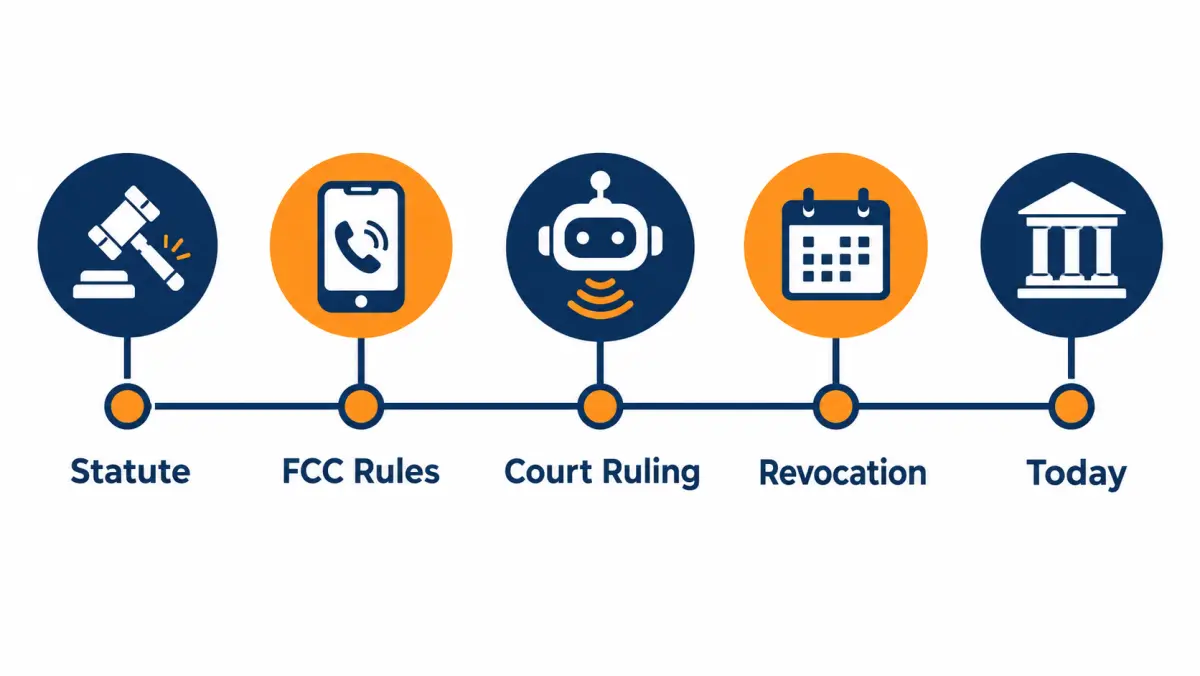
The milestones that matter for lead buyers
| Year | Milestone | Why a solar buyer should care |
|---|---|---|
| 1991 | Congress passes the TCPA, now at 47 U.S.C. § 227 | Creates the autodialer and prerecorded-voice restrictions and the private right of action |
| 2003 | National Do Not Call Registry launches under the FTC's Telemarketing Sales Rule and the FCC's rules | Scrubbing becomes a baseline duty for any seller placing sales calls |
| 2012 | FCC adopts the prior express written consent standard for telemarketing robocalls to wireless numbers (effective October 2013) | Defines the "written agreement" your web form disclosure must satisfy |
| 2013 | FCC declaratory ruling in the Dish Network matter on seller vicarious liability | Sellers can be liable for calls placed by third-party telemarketers under agency principles |
| 2015 | FCC omnibus declaratory ruling on autodialers, reassigned numbers and revocation | Broad autodialer reading, later set aside in part by the D.C. Circuit in ACA International v. FCC (2018) |
| 2020 | Barr v. American Association of Political Consultants | Supreme Court strikes the government-debt exception but leaves the robocall restriction in place |
| 2021 | Facebook, Inc. v. Duguid | Supreme Court narrows "autodialer" to equipment using a random or sequential number generator |
| 2021 | FCC Reassigned Numbers Database opens to callers | A database check can provide a safe harbor for calls to a reassigned number |
| 2021 to 2023 | Florida, Oklahoma, Maryland and other states pass or amend mini-TCPAs | State "automated system" definitions bring back some of what Duguid narrowed |
| December 2023 | FCC adopts the one-to-one consent rule (FCC 23-107) | The rule that would have ended multi-seller consent |
| February 2024 | FCC rules AI-generated voices are "artificial" voices | Voice AI outreach needs prior express written consent |
| February 2024 | FCC adopts consent revocation order | Revocation by any reasonable means, honored within 10 business days |
| January 24, 2025 | Eleventh Circuit vacates the one-to-one rule in Insurance Marketing Coalition v. FCC | Multi-seller consent is not barred by that rule, though it still has to identify you |
| April 2025 | Core revocation provisions take effect | Opt-out handling deadlines become enforceable |
| June 20, 2025 | McLaughlin Chiropractic Associates v. McKesson Corp. | District courts are not bound by FCC interpretations in enforcement suits |
| January 2026 | FCC bureau extends the "revoke-all" waiver to January 31, 2027 | Cross-purpose revocation is delayed again |
| October 2026 | FCC releases a further revocation order and notice of proposed rulemaking | Opt-out rules are moving again; check the final text with counsel |
The timeline shows a pattern. The FCC tends to expand protections by rule, and courts have trimmed several expansions. After McLaughlin, that trimming can happen in any district court, not only on direct review of an FCC order. For a lead buyer, the safest reading is the one that does not depend on any single FCC interpretation surviving.
What Duguid did and did not change
Facebook, Inc. v. Duguid, decided April 1, 2021 (Supreme Court opinion), held that to be an "automatic telephone dialing system," equipment must have the capacity to store or produce telephone numbers using a random or sequential number generator. Most modern predictive and power dialers that call from a list of leads arguably fall outside that definition.
Three things did not change:
- Prerecorded and artificial voice calls. These are restricted by a separate clause of § 227(b). Ringless voicemail, prerecorded messages, soundboard calls and AI voice agents are all analyzed under the voice clause, not the autodialer clause.
- Do Not Call. The registry and internal DNC rules apply to telephone solicitations however they are dialed, including manual calls.
- State law. Florida, Oklahoma and Maryland wrote consent rules around "automated systems" for selecting or dialing numbers, which reach further than the narrowed federal definition, depending on how courts read them.
A vendor who tells you "after Duguid you don't need consent" is describing one clause of one statute. Treat it as a red flag for the rest of their compliance story.
What McLaughlin means in practice
In McLaughlin Chiropractic Associates v. McKesson Corp. (June 20, 2025), the Supreme Court held that the Hobbs Act does not bind district courts to the FCC's reading of the TCPA in private enforcement suits. Courts must interpret the statute themselves, giving the agency's views appropriate respect.
For solar buyers that has three practical effects:
- Old FCC safe harbors may be contested. If your consent practice rests on an FCC interpretation rather than the statute text, a plaintiff can now argue the interpretation is wrong.
- Old FCC restrictions may also be contested. Defendants can argue FCC readings went too far. That helps some defendants, but you should not build a calling program on the hope of winning that argument.
- Outcomes may vary by court. Different districts may reach different readings until appellate courts settle them.
The response is the same as for the one-to-one rule: build consent that satisfies the plain words of the statute and the strictest state law you call into, and you are less exposed to whichever reading a court adopts.
Vicarious liability and the Dish Network ruling
In 2013 the FCC issued a declaratory ruling, in a proceeding involving Dish Network, that a seller can be vicariously liable under federal common-law agency principles for TCPA violations committed by third-party telemarketers acting on its behalf. Agency can be shown through actual authority, apparent authority or ratification. Courts have since applied those principles case by case.
For a solar company, the factors that tend to come up are familiar ones:
- Did you give the telemarketer scripts, calendars, lead lists or CRM access?
- Did you know, or should you have known, how they were generating calls?
- Did you keep accepting appointments after complaints or red flags?
- Did the homeowner reasonably believe the caller was you?
None of those mean "don't use partners." They mean know how your partners call, write it into contracts, audit it, and stop accepting work from any partner whose practices you cannot verify. The section on contracts below covers the clauses.
What does a defensible solar consent disclosure look like?
A defensible solar consent disclosure sits directly above or beside the submit button, in readable type, names the seller or sellers by legal name, says the homeowner agrees to calls and texts about solar including by automated technology and prerecorded or artificial voice, includes the phone number entered, says consent is not a condition of purchase, and explains how to opt out.
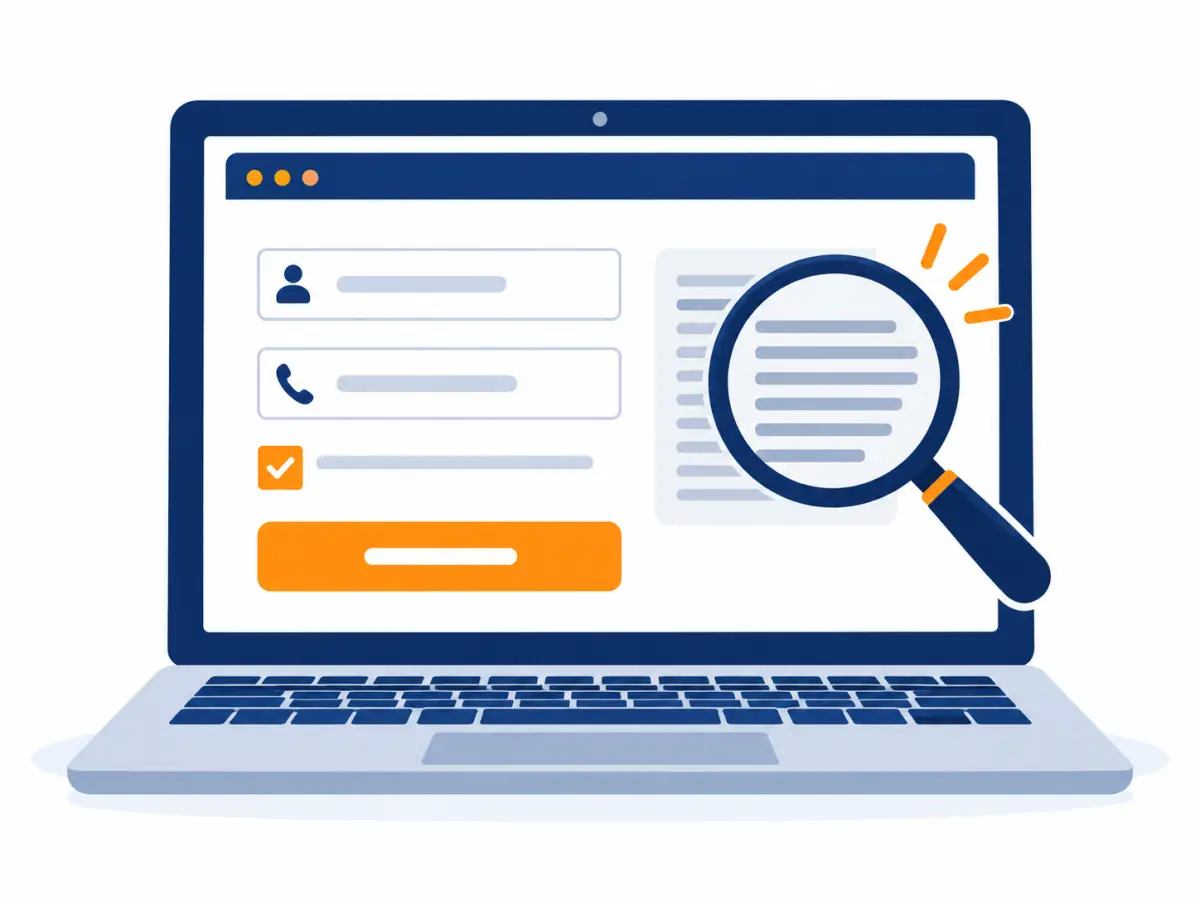
The anatomy, element by element
Each element below maps to the federal definition in 47 C.F.R. § 64.1200(f)(9) and to the state definitions quoted earlier.
| Element | What it looks like on the form | Why it matters |
|---|---|---|
| Placement | Directly above or next to the submit button, not behind a link | "Clear and conspicuous" is a recurring requirement in federal and state definitions |
| Readability | Same or similar font size as the form, contrasting color | Gray 8-point text under the fold invites a fight |
| Seller identity | The legal name (and any DBA) of each company that will call | Consent must authorize the seller; a hidden partner list weakens that |
| Topic | "about solar energy systems for your home" | Keeps calls tied to what the homeowner asked about |
| Methods | Calls, texts, automated technology, prerecorded or artificial voice | Must match how you will actually contact them |
| Number | The number entered on the form, shown or referenced | Federal and state definitions require the designated number |
| Not a condition | "Consent is not required to purchase" | Required in the federal definition and in FL, OK and MD |
| Signature act | Submit button, checkbox or typed name, captured with E-SIGN in mind | Electronic signature is how a web form becomes a "signed" agreement |
| Opt-out | "Reply STOP to opt out of texts" | Helps with revocation handling and carrier rules |
| Privacy link | A link to the privacy policy | Expected by consumers and by carriers reviewing text campaigns |
A sample disclosure to take to counsel
The sample below is illustrative only. It shows the structure most counsel will ask for. It is not approved language for your company, and you should not publish it without review.
By clicking "Get my solar quote," I agree that [Installer Legal Name] and its authorized representatives may contact me about solar energy systems for my home at the phone number I entered, including by calls and text messages that may use automated technology and prerecorded or artificial voice. I understand my consent is not required to make a purchase, that message and data rates may apply, and that I can opt out at any time by replying STOP or by telling the caller. I agree to the [Privacy Policy] and [Terms].
Notice what this sample does not do. It does not say "and our marketing partners." It does not link to a list of 300 companies. It does not bundle consent with a sweepstakes entry. Every one of those patterns shows up in lawsuits.
Patterns that weaken consent
These are the patterns to look for when you inspect a vendor's form:
- Consent buried in terms. "By submitting you agree to our Terms," with calling consent only inside the Terms page.
- Pre-checked boxes. A box the homeowner never touched is weak evidence of agreement.
- Partner lists behind a link. Especially long lists that include unrelated industries.
- Topic drift. A form about home insurance, auto insurance or a gift card that produces a solar call.
- Disclosure below the fold. On mobile, text the homeowner would have to scroll past the button to see.
- Font and color tricks. Light gray on white, tiny type, collapsed accordions.
- Number mismatch. The record shows a number different from the one delivered to you.
- Version gaps. The vendor cannot show the form as it looked on the date of submission.
How exclusive and multi-seller disclosures differ
| Feature | Single-seller disclosure | Multi-seller disclosure |
|---|---|---|
| Who is named | One company, by legal name | Several companies, ideally each by legal name on the page |
| Typical lead model | Exclusive | Shared |
| Defensibility | Strongest: the homeowner clearly picked you | Depends on clarity and how many sellers are named |
| What to verify | The name matches your legal entity and DBA | Your name is visible without clicking, and the list was set at submission |
| Risk if the list grows later | Not applicable | Buyers added after submission are not covered |
The vacated FCC rule would have required the left column. Many buyers now choose it voluntarily, because it is easier to defend and because it lines up with exclusivity. Our comparison of exclusive vs shared solar leads covers the pricing and close-rate side of that choice.
Legal name, DBA and brand mismatches
A surprisingly common gap: the disclosure names "SunBright Solar," but your entity is "SB Energy Holdings LLC d/b/a SunBright," and your setters answer as "SunBright Home Energy." Before you buy, send the vendor every legal name and DBA you operate under and ask that the disclosure use the one your counsel picks. If you operate several brands, ask counsel whether one consent covers all of them; do not assume it does.
What consent proof should travel with a solar lead?
Every solar lead should come with a consent record you can retrieve later: the submission timestamp, the URL of the page, the exact disclosure text the homeowner saw, the seller names it covered, the IP address and device details, and ideally an independent certificate or session replay. You should be able to pull that record by lead ID for years.
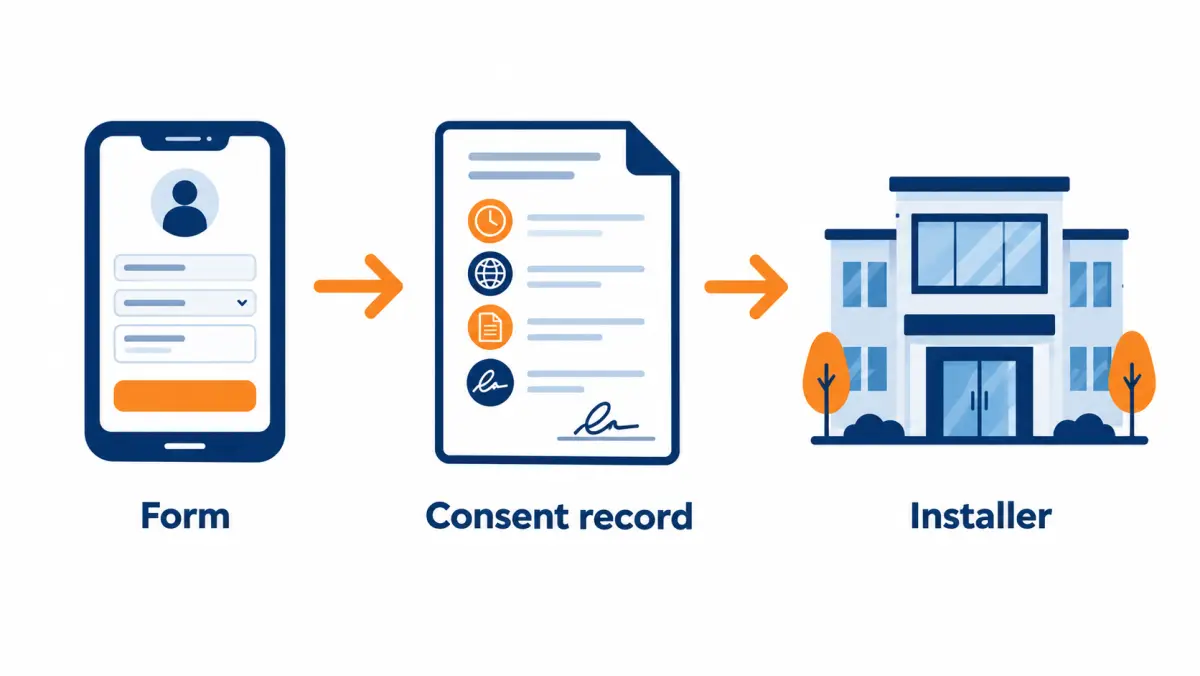
Timestamp, page, language, IP, seller named
Here is the record we recommend asking for, with why each field matters:
| Field | Why it matters |
|---|---|
| Submission timestamp with time zone | Shows consent came before your first call or text |
| Page URL | Ties the consent to a specific form you can inspect |
| Disclosure text as displayed | Proves what the homeowner actually agreed to |
| Seller names in the disclosure | Shows your company was authorized |
| Contact methods covered | Calls, texts, automated technology, prerecorded voice |
| Phone number as entered | Matches the number you dialed |
| IP address and user agent | Helps tie the submission to a real device and session |
| Certificate ID or session replay | Independent evidence from a third-party consent-capture service, where used |
| Form version history | Shows the disclosure on the date of submission, not today's |
The last row is often forgotten. Forms change. If a claim arrives two years later, you need the version of the page that the homeowner saw, not the current one.
Retention
The TCPA's statute of limitations for private claims is generally four years under the federal catch-all statute, and some state claims have their own periods. Many companies keep consent records at least that long, and some keep them longer. Ask counsel what retention period fits your program, then make sure both your contract with the vendor and your own systems support it. If the vendor goes out of business, your access to its records may disappear, so store a copy of each consent record or certificate ID in your own CRM at delivery.
Audit trail
Beyond the consent record itself, keep an internal audit trail of what you did with each lead:
- When the lead arrived and from which vendor
- When each call and text was made, by whom, and with what system
- DNC scrub results and dates
- Any opt-out request and when it was processed
- Any consent record request to the vendor and its response
Spot-check this monthly. Pull ten random leads, request the consent records and compare them with what your system shows. A vendor that cannot produce records on request during good times will not produce them during a lawsuit.
Our standard: "Every lead carries a timestamped consent record (certificate) whose disclosure names your company. We send it to you on request."
Checklist: a 30-minute consent-proof audit on a sample of leads
The quickest way to know whether your consent records would hold up is to audit a small sample before anyone asks. Pull ten recent leads from each vendor and check each one against the list below. This is an operational review, not legal advice; confirm the standard your business needs with counsel.
For each sampled lead, confirm you can produce:
- The exact disclosure text the consumer saw, as displayed at the time, not a current version of the form.
- A timestamp for the submission, with time zone.
- The page URL or form ID where the consent was given.
- The seller identity named or described in the disclosure, and whether your company falls inside it.
- The channels covered, such as calls, texts and prerecorded or artificial voice messages, and whether you plan to use any channel the disclosure does not mention.
- A third-party session record or certificate, if the vendor uses one, and confirmation that it is retrievable for the period you need.
- The phone number consented, matching the number in your CRM.
Then score the vendor:
- Green: all seven items retrievable within one business day for every sampled lead.
- Amber: items exist but take longer to retrieve, or one or two leads are missing a field.
- Red: disclosure text cannot be produced, seller identity does not cover you, or numbers do not match.
Actions by score
- Green vendors stay on a quarterly re-audit schedule.
- Amber vendors receive a written request to fix retrieval within a set period, and their leads are held from texting campaigns until fixed.
- Red vendors are paused until counsel has reviewed the gap.
Repeat the audit whenever a vendor changes its forms, adds a new traffic source or starts selling a new lead type, because each of those can change the disclosure your leads were captured under. Rotate which reps run the audit so more than one person knows how to retrieve the records.
Record the date, sample, findings and decision in a simple log. If a complaint or demand letter arrives later, that log shows you checked the records before you relied on them. Our own consent handling can be walked through on a call at book a call.
How do shared leads and aged leads affect consent scope?
Consent scope is the set of companies and contact methods a homeowner actually authorized. Shared leads raise the question of whether your company was clearly named among several sellers. Aged leads raise the question of whether consent given months ago, to a different company or for a different purpose, still covers your call today. Both need closer review than fresh exclusive leads.
Consent narrowing
When a lead is sold to several buyers, each buyer relies on the same consent. The disclosure needs to have named each of them, clearly, at the time of submission. Watch for:
- Partner lists behind a link where the homeowner would have to click to see who might call.
- Generic categories ("solar companies and their partners") instead of company names.
- Mismatched topics where a homeowner asked about insurance or a sweepstakes and gets a solar call.
- Added buyers who were not on the list when the form was submitted.
The vacated FCC rule would have made these patterns clearly non-compliant. Even without it, they are the facts plaintiffs' lawyers look for.
Age and re-permissioning
Aged leads are leads resold after their first sale window, often 30, 60, 90 days or older. They can be a reasonable low-cost product, but consent questions grow with age:
- Did the original disclosure name your company? Often it did not, because you were not a buyer at the time.
- Has the homeowner since revoked consent with any seller, or registered on the DNC list?
- Has the number been reassigned to a new person? The FCC's Reassigned Numbers Database exists for this reason, and checking it can provide a safe harbor in some situations.
Some aged-lead programs handle this by re-permissioning: contacting the homeowner through a compliant channel to get fresh consent that names you before any automated outreach. Others limit aged leads to manual dialing with careful DNC scrubbing. Discuss the approach with counsel. Our page on cheap aged solar leads explains how that category works; availability for your territory is confirmed on the call.
A comparison by lead type
| Lead type | Typical consent pattern | Main questions to verify |
|---|---|---|
| Exclusive real-time web lead | Disclosure names one seller | Is it your company? Is the form solar-specific? |
| Shared real-time web lead | Disclosure names several sellers | Is your company clearly named? How many? |
| Aged lead | Consent from the original sale | Does it cover you today? DNC and reassignment checks |
| Live transfer | Consent captured before the call is bridged | Was consent recorded, and does it name you? |
| Booked appointment | Consent captured at lead stage plus confirmation | Who set the appointment, under what consent? |
For live transfers, the setter's call to the homeowner is itself outbound, and the transfer bridges to you. Ask the vendor what consent supported their call. Our page on live transfers for solar covers the product in more depth.
How should a solar company run Do Not Call compliance day to day?
Day-to-day Do Not Call compliance means scrubbing every number against the National Do Not Call Registry at least every 31 days, scrubbing applicable state lists, keeping and honoring your own internal do-not-call list, knowing exactly when an established business relationship or written permission exempts a call, and documenting all of it so you can show a court your procedures.
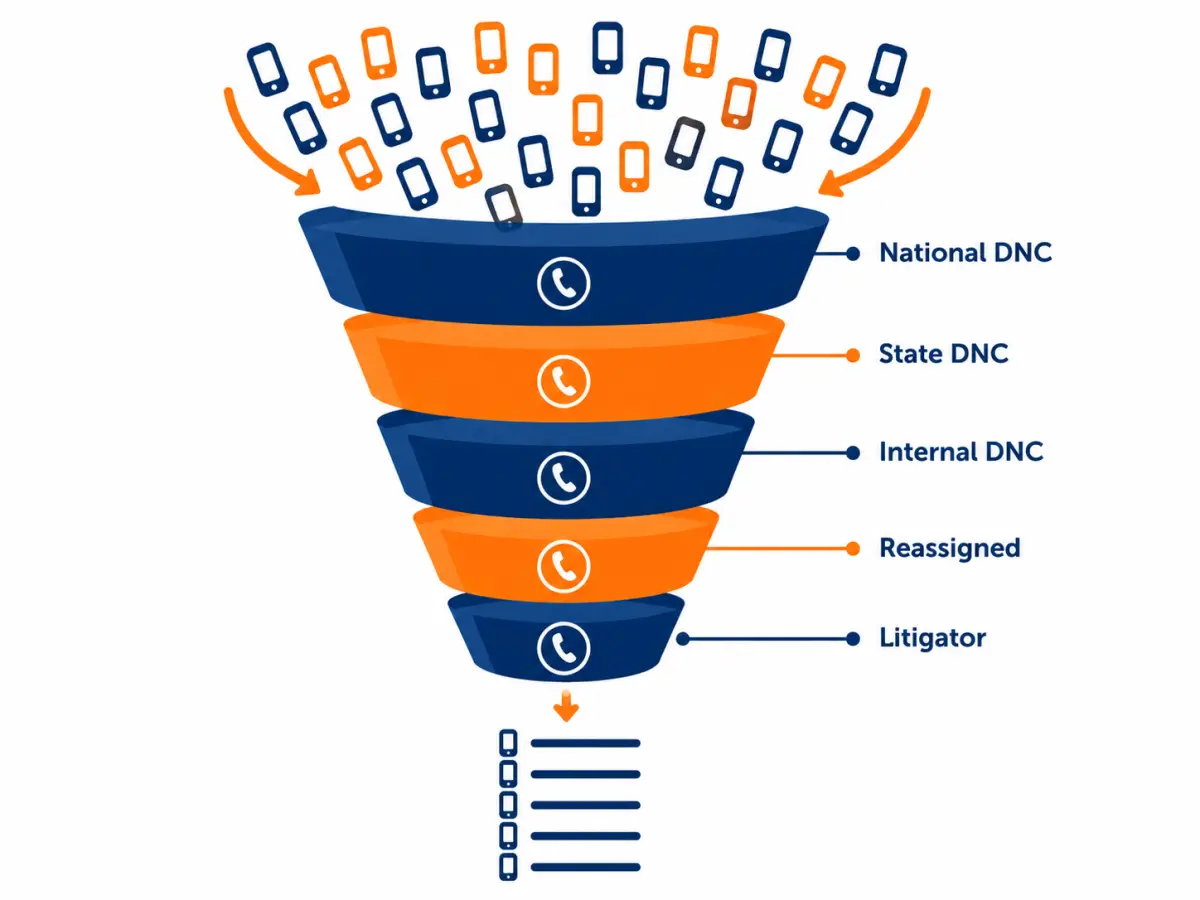
Registry access, in plain terms
Sellers and telemarketers get registry data through the FTC's National Do Not Call Registry for telemarketers. Access is by area code, and the FTC charges an annual fee per area code beyond a small number of free ones. Each seller on whose behalf calls are made needs its own Subscription Account Number (SAN). A vendor's SAN does not cover your calls.
That last point catches small installers. If you buy leads, then dial them yourself, you are the seller placing telephone solicitations. You need your own registry access for the area codes you call, or a documented arrangement with a service provider that scrubs under your SAN.
The 31-day rule
The FTC's Telemarketing Sales Rule and the FCC's rules both treat a seller as compliant only if it uses a version of the registry obtained no more than 31 days before the call. That has a practical consequence for lead buyers who hold leads: a lead scrubbed clean on delivery day can become a registry hit by day 35. Re-scrub held leads on a schedule.
The safe harbor and what it requires
The FCC's rules at 47 C.F.R. § 64.1200(c)(2) describe a safe harbor for a seller or telemarketer that calls a registered number by mistake. In summary, it requires showing that, as part of routine business practice, the caller:
- Has written procedures to comply with the national do-not-call rules.
- Trains its personnel, and anyone assisting in compliance, on those procedures.
- Has recorded and maintained a list of numbers the seller may not contact.
- Uses a process to prevent calls to registered numbers, using a version of the registry no more than 31 days old, and keeps records documenting that process.
- Uses a process to ensure it does not sell, rent, lease, purchase or use the registry for any purpose other than compliance.
Read that list as a build checklist. Small companies often do steps 3 and 4 and skip 1 and 2. The written procedure can be two pages. The training can be a 20-minute session with a sign-in sheet. Without them, a single mistaken call is harder to defend.
Established business relationship, precisely
The registry rules exempt calls to someone with whom you have an established business relationship (EBR). Under the FCC's definition in § 64.1200(f)(5), an EBR exists for:
- 18 months after the consumer's purchase or transaction with the seller, or
- 3 months after the consumer's inquiry or application regarding the seller's products or services,
and ends earlier if the consumer asks not to be called.
Two cautions for lead buyers:
- The inquiry has to be to you. A homeowner who filled out a form on a lead vendor's site made an inquiry to whoever that form named. Whether that inquiry creates an EBR with your company depends on how clearly the form named you. Counsel will tell you how much weight to put on it.
- EBR is a DNC exemption only. It does not substitute for prior express written consent for prerecorded or artificial voice telemarketing, and it does not override state laws that use their own definitions.
The internal do-not-call list
Separate from the national registry, § 64.1200(d) requires anyone making telemarketing calls to maintain procedures for an internal, company-specific do-not-call list. The core elements:
- A written policy, available on demand.
- Training for personnel engaged in telemarketing.
- Recording a do-not-call request when made and honoring it within a reasonable time. The FCC's 2024 revocation order set that at no more than 10 business days from receipt.
- Identifying the seller, the person calling, and a contact number or address.
- Applying the request to the seller on whose behalf the call was made, and to affiliates the consumer would reasonably expect to be included.
For solar, that last element matters when you run several brands or a separate financing entity. If a homeowner tells your "SunBright" setter to stop, and your "SB Battery" brand calls next week, expect the argument that the request covered both.
Reassigned numbers
Leads go stale. A phone number entered by a homeowner in March can belong to someone else by October. The FCC's Reassigned Numbers Database lets callers check whether a number has been permanently disconnected since a given date. Under § 64.1200(m), a caller that checks the database and gets a "no" (not reassigned) answer is protected from liability for a call to a number that turns out to have been reassigned anyway, if the database result was wrong.
When it matters most:
| Lead age | Reassignment risk | Suggested practice |
|---|---|---|
| Real-time (minutes to hours) | Very low | Usually not needed |
| Days to a few weeks | Low | Optional, depending on volume |
| 30 to 90 days | Rising | Consider a check before automated contact |
| Older than 90 days | Material | Check before any automated or prerecorded contact; ask counsel about manual calls |
State do-not-call lists
Several states maintain their own lists or fold the federal list into state law. Florida's "no sales solicitation calls" list under s. 501.059(3) includes federal registry listings for Florida numbers and must be screened by anyone offering consumer data with phone numbers. Washington's RCW 80.36.390(9) makes calling a federally registered number a state violation. Check each state you call; some lists require separate subscriptions.
Litigator lists
Many compliance vendors sell lists of phone numbers associated with frequent TCPA plaintiffs. Using one is legal in most contexts and common in the industry, but it is not a compliance strategy. A litigator scrub removes a few numbers whose owners are likely to sue; it does nothing about the consent gaps that would make anyone's claim valid. Use it as a last layer if counsel recommends, never as the main one.
A weekly DNC routine for a mid-size installer
| Day | Task | Owner |
|---|---|---|
| Monday | Download registry changes for your area codes; confirm the dialer pulled them | Ops lead |
| Daily | New leads scrubbed on arrival against national, state, internal and (for aged) reassigned lists | Automated |
| Daily | Opt-outs from calls, texts, email and web forms merged into the internal list | Automated, spot-checked |
| Wednesday | Re-scrub any lead older than 25 days that is still in an active cadence | Ops lead |
| Friday | Pull 10 random calls from the week; confirm each number passed the scrub before the call | Sales manager |
| Monthly | Review registry access, area codes, SAN details and the written DNC policy | Owner or compliance lead |
How should solar teams handle opt-outs and consent revocation?
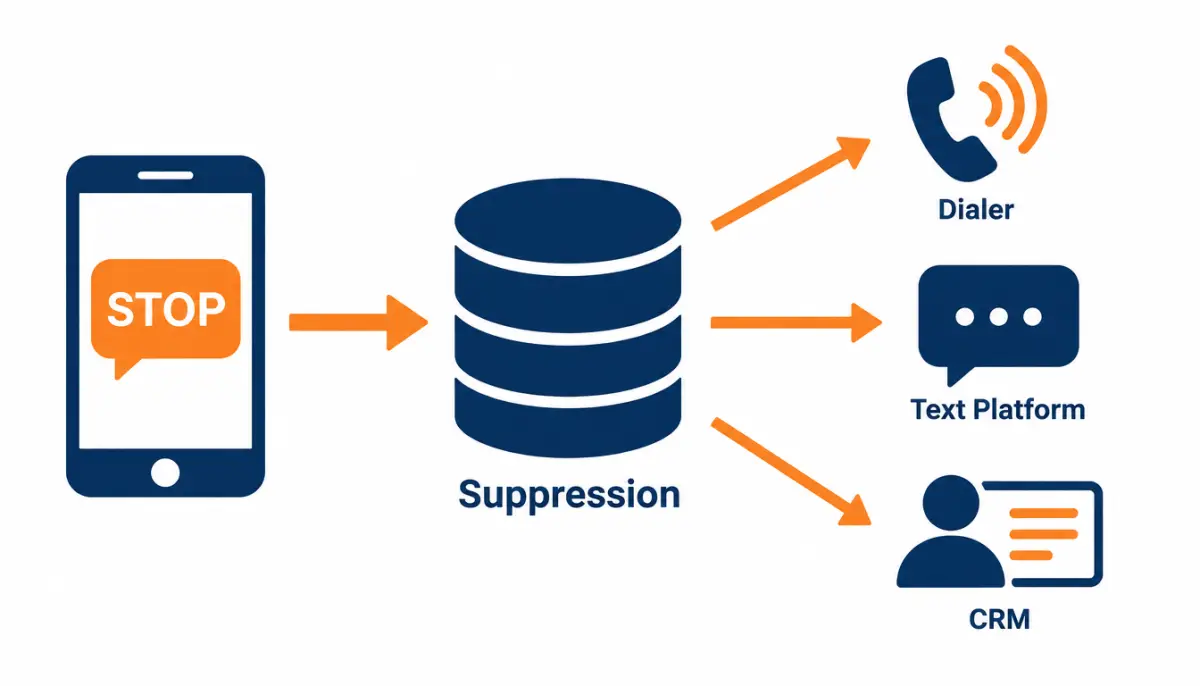
Solar teams should treat any reasonable expression of "stop contacting me" as a revocation, across every channel, and suppress the number everywhere within a short internal deadline well inside the FCC's 10-business-day limit. The FCC's 2024 order lists stop words that must be honored in texts, and Florida and Washington add their own state-specific rules.
What the 2024 revocation order requires
The FCC's February 2024 Report and Order on revocation of consent (FCC 24-24), with core provisions effective April 2025, includes these points as summarized in the FCC's rules at § 64.1200(a)(10)–(12):
- Consumers can revoke consent by any reasonable means. A caller cannot require a single exclusive method.
- A reply to a text with "stop," "quit," "end," "revoke," "opt out," "cancel" or "unsubscribe" is a valid revocation, and so are other words that a reasonable person would understand as a request to stop.
- Revocation must be honored within a reasonable time, not more than 10 business days.
- A one-time confirmation text, sent within five minutes and without marketing, is allowed.
The separate "revoke-all" provision, which would spread an opt-out from one type of message to unrelated robocalls and robotexts from the same caller, was extended by FCC bureau order to January 31, 2027, and the FCC released a further order and proposed rulemaking on revocation in October 2026. Plan for change and have counsel read the current text.
Building a revocation system that holds up
The legal deadline is 10 business days. A good internal standard is same day. The reason is practical: if a homeowner says "stop" on a Tuesday and your dialer calls again on Wednesday, the fact that you were still inside 10 business days is a weak argument to a jury and a strong motive for a lawsuit.
Design rules that work:
- One suppression list. Calls, texts, email replies, web unsubscribe and in-person requests all write to the same list.
- Automatic text keyword handling. The texting platform suppresses on any of the seven standard words and on common variants ("stop texting," "remove me," "wrong number," "don't text me").
- Human review for fuzzy replies. "Not interested right now," "who is this?" and "I already have solar" go to a human queue reviewed the same business day. Many counsel treat "not interested" as a revocation for marketing; decide your rule with counsel and train it.
- One-click opt-out in the CRM. Reps should never have to fill in a form to stop a homeowner's contact.
- Sync everywhere. Dialer, texting tool, CRM, email platform and any partner or vendor that calls for you.
- Return path to the vendor. Tell your lead vendor when a lead opts out if your contract says so, so they do not resell or recontact; for exclusive leads this matters less, but it still helps their records.
- Log the evidence. Time received, channel, words used, who processed it, time suppressed.
Florida's text-message notice step
Florida's s. 501.059(10)(c) requires a consumer, before suing over text message solicitations, to reply "STOP." The solicitor then has 15 days to stop texting, and a claim is only available if texts continue after that. This is a defense mechanism for compliant senders, not a license to keep texting: it only helps if your platform actually stops. Build your Florida texting so that "STOP" ends marketing texts immediately, and keep the record.
Washington's one-year request
Under RCW 80.36.390(7), a Washington consumer who says they do not want to be called again must be told they will be removed for at least one year, and must not receive solicitation calls at that number for at least a year. Many national programs keep internal DNC requests indefinitely anyway. If yours expires them, set Washington's floor at one year at minimum and confirm with counsel.
Scripts for opt-out moments
Reps handle most revocations live. Give them words.
When the homeowner says "take me off your list" on a call:
"Understood. I'm removing your number from our calling and texting list right now, and you won't hear from us again. Sorry to bother you. Have a good day."
Then end the call. In Washington, the script needs the one-year language and a call end within 10 seconds:
"Understood. Your number is removed from our list for at least one year. Goodbye."
When the homeowner says "I'm busy, call me later": that is not a revocation. Schedule the callback in the CRM with the time they gave and the stricter state calling window.
When the homeowner says "I never asked for this": treat it as a revocation, stop, and flag the lead for a consent record review with the vendor. A "never asked" response on a real-time lead is a data-quality signal worth chasing.
Confirmation text after a STOP (if your counsel approves sending one):
"You're unsubscribed from [Company] texts. No more messages will be sent."
No marketing, no "reply START," no link.
How do you audit a solar lead vendor's consent practices?
Audit a solar lead vendor by inspecting its live forms, pulling consent records for random leads you already received, matching each record to your CRM, asking how it controls affiliates and sub-vendors, and confirming its retention and retrieval promises in the contract. Do it before the first order and repeat it monthly. A vendor that resists an audit has answered the question.
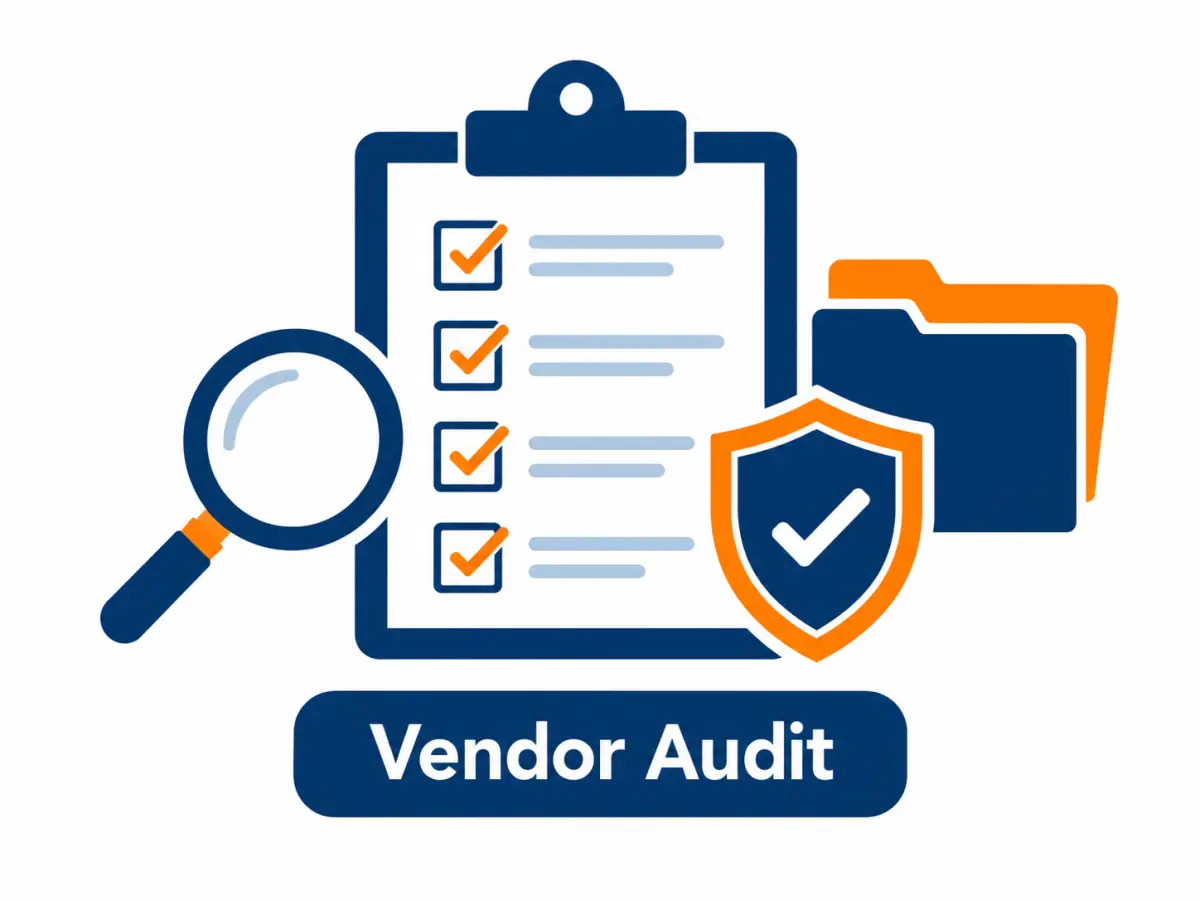
Step 1: Map the vendor's sources
Ask the vendor to describe, in writing, every source type that could produce a lead sold to you:
- Owned websites and landing pages (get URLs)
- Paid search, paid social or native ads pointing to those pages
- Affiliate or publisher traffic (ask how many publishers and how they are approved)
- Co-registration or "path" offers on other sites
- Call center or inbound call sources
- Data purchased from other vendors
The answer you want is short and specific. The answer to worry about is "a network of trusted partners."
Step 2: Inspect the forms yourself
Visit each landing page on desktop and on a phone. Screenshot the disclosure next to the submit button. Check:
- Is the disclosure visible without scrolling past the button?
- Is your company's legal name in it, or does it say "partners"?
- Does it cover calls, texts, automated technology and prerecorded or artificial voice if you use them?
- Is the page about solar?
- Is consent bundled with a contest, gift card or unrelated offer?
Do not submit test leads with fake data unless the vendor agrees, since that pollutes their data and may violate their terms. Ask for a demo submission instead.
Step 3: Pull records for real leads
Pick 10 leads at random from your last 30 days (or from a trial batch). Request the full consent record for each by lead ID. Set a deadline: 2 business days is reasonable.
Score each record:
| Check | Pass condition |
|---|---|
| Timestamp | Present, with time zone, before your first contact |
| Page URL | Matches a form you inspected |
| Disclosure text | Captured as displayed on that date |
| Seller named | Your legal name or approved DBA appears |
| Methods | Covers how you contacted the homeowner |
| Phone number | Matches the number you dialed |
| IP and device | Present and plausible for the property's region |
| Certificate or replay | Present where the vendor says it uses one; you can open it |
| Delivery time | Lead arrived within the window the vendor promised |
Eight or nine out of ten is not a pass. Every lead you call depends on its own record.
Step 4: Check independent certificates
Many vendors use third-party consent-capture services that generate a certificate ID and session replay for each form submission. If yours does:
- Open a few certificates yourself rather than accepting screenshots.
- Confirm the replay shows the homeowner reaching the submit button with the disclosure visible.
- Check whether you can claim or retain the certificate in your own account, so access does not depend on the vendor staying in business.
- Note how long the service keeps certificates, and compare with your retention plan.
Step 5: Ask about affiliate controls
If any traffic comes from affiliates or publishers, ask:
- How are publishers approved and how often are their pages reviewed?
- Does every publisher use the vendor's form and disclosure, or their own?
- What happens when a publisher is caught generating fake or incentivized leads?
- Can the vendor tell you which publisher produced each lead?
Step 6: Write it into the contract
The audit is only useful if the contract makes the vendor's answers enforceable. The next section lists the clauses.
Questions to ask on the first vendor call
Most of the audit can start on a single sales call with the vendor. These questions get to the answers quickly, and the way a vendor handles them tells you as much as the answers themselves:
- "Can you send me a full consent record for a lead you delivered last week, by lead ID, today?"
- "What exact legal name will appear in the disclosure for my leads, and can I approve it before launch?"
- "Which contact methods does your disclosure cover: calls, texts, automated technology, prerecorded or artificial voice?"
- "Is any of your traffic from affiliates, co-registration or sweepstakes pages? If so, what percentage, and can I opt out of it?"
- "How many buyers receive each lead in the product I'm buying, and is that in the contract?"
- "Which lists do you scrub before delivery, and how old is the registry version you use?"
- "How long do you keep consent records and form versions, and what happens to them if we stop working together?"
- "Have you received TCPA demand letters or lawsuits tied to leads you sold in the last two years? How were they resolved?" (Counsel can tell you how to weigh the answer.)
Write down the answers and compare them with what ends up in the contract. Gaps between the two are where problems start.
Step 7: Repeat
Monthly spot checks of ten leads take an hour. Put them on the calendar. Rotate who pulls them. File the results.

Which contract clauses protect a solar lead buyer?
The clauses that protect a solar lead buyer are a specific consent representation, a records-production obligation with a deadline, a retention period, audit rights, a written exclusivity and resale term, a DNC scrub obligation, a duty to notify you of complaints, termination rights for compliance breaches, and an indemnity your counsel has reviewed against the vendor's real ability to pay.
Clause list to bring to counsel
The list below describes what each clause should accomplish. It is not contract language. Your counsel drafts or approves the words.
| Clause | What it should accomplish |
|---|---|
| Consent representation | Vendor represents that each lead was generated with prior express written consent naming your company, covering calls, texts, automated technology and prerecorded or artificial voice, on a form that clearly displayed the disclosure |
| Records production | Vendor delivers the full consent record for any lead within a set number of business days of request |
| Retention | Vendor keeps consent records and form versions for an agreed period, and gives you a copy on termination |
| Form changes | Vendor notifies you before changing disclosure language and gives you the new version |
| Source disclosure | Vendor identifies source types and does not add new ones (for example, affiliates) without notice |
| Exclusivity | Number of buyers per lead stated; exclusive leads are not resold, recycled or sold later as aged |
| DNC | Vendor scrubs against the National Do Not Call Registry (and named state lists) before delivery |
| Complaint notice | Vendor tells you promptly about consumer complaints, demand letters or regulatory inquiries tied to leads sold to you |
| Cooperation | Vendor cooperates in defending claims, including producing witnesses and records |
| Audit | You may audit consent practices on reasonable notice |
| Termination | You may terminate immediately for a compliance breach |
| Indemnity | Vendor indemnifies you for claims caused by its consent failures, with insurance or other backing counsel finds credible |
Indemnity is not a strategy
An indemnity is a promise to pay later. It is only as good as the vendor's balance sheet, insurance and willingness to honor it while it is also being sued. Ask whether the vendor carries insurance that could respond to TCPA claims (many policies exclude them) and ask counsel what the clause is worth. Then build your program so you rarely need it.
What a fair vendor will and will not agree to
A legitimate vendor should readily agree to records production, retention, exclusivity terms in writing, DNC scrubbing and notice of complaints. Expect negotiation on uncapped indemnity, broad audit rights and insurance minimums. A vendor that refuses to put its consent claims in writing at all is telling you how confident it is in them.
How does consent work for live transfers and booked appointments?
For live transfers and booked appointments, consent has to be valid at two points: the call the setter placed to the homeowner, and the handoff to your company. Ask who placed the first call, under what consent and whose name, whether the homeowner agreed on the call to speak with you, and whether the call was recorded so you can prove it.
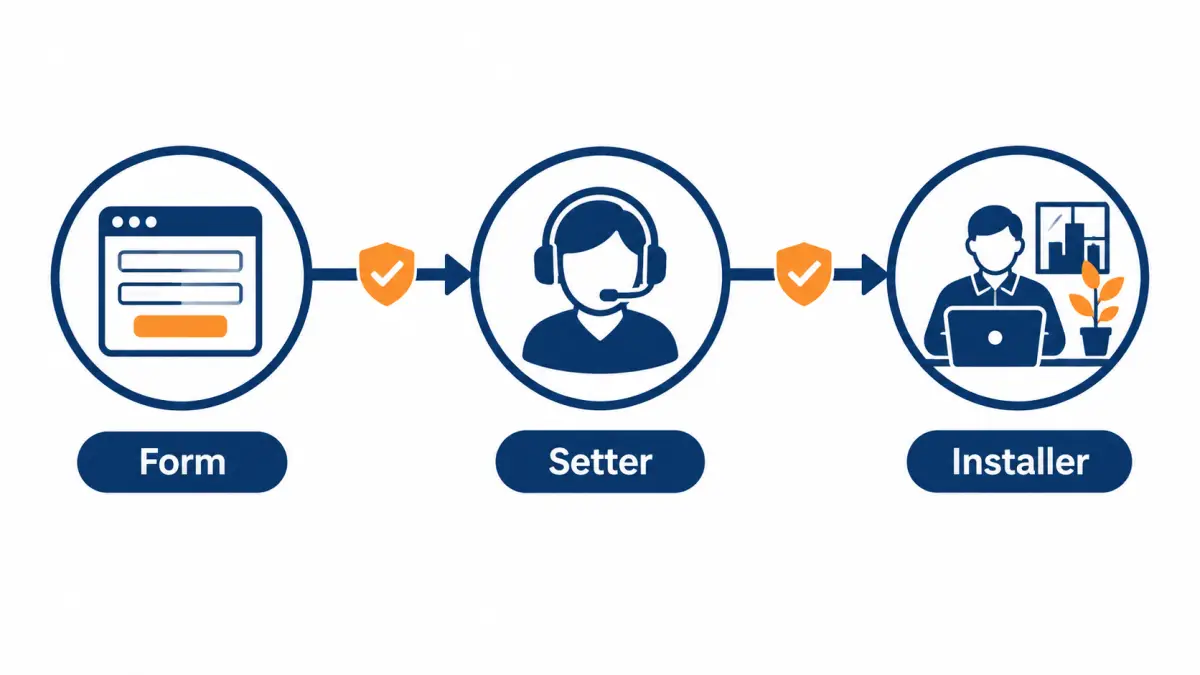
The consent chain for a live transfer
A typical solar live transfer has three links:
- The original lead. A homeowner submits a form. The disclosure names the transfer company (and perhaps you).
- The setter's call. The transfer company's agent calls the homeowner, qualifies them, and asks whether they would like to speak with a solar company now.
- The bridge. The setter warm-transfers the live call to your rep.
Each link raises its own question:
| Link | Question | Evidence to ask for |
|---|---|---|
| Original lead | Did the form's consent cover the setter's call method? | Consent record with disclosure text |
| Setter's call | Was the setter's dialer, voice and hours compliant? Was the number scrubbed? | Dialer type, scrub logs, call time |
| Bridge | Did the homeowner agree to talk to you? Did they hear your name? | Call recording of the handoff |
If the setter used a prerecorded message, soundboard or AI voice anywhere in that call, prior express written consent naming the seller becomes central. Ask directly.
Appointments
For booked appointments, the questions are similar but spread over time: the original consent, the setter's calls, any confirmation texts or reminder calls, and who placed each. Appointment reminders that use automated texting are still messages that need a basis. If your team takes over reminders after booking, your consent has to cover your texts.
Our pages on solar live transfer leads and booked solar appointments explain how those products work; availability for your territory is confirmed on the call.
Exemptions that may apply to appointment-led sales
Oklahoma's statute exempts sellers who do not make the major sales presentation or complete a sale during the call, but do so at a later face-to-face meeting (15 O.S. § 775C.5(3)). The federal Telemarketing Sales Rule has its own exemptions involving face-to-face presentations. Exemptions like these sound tailor-made for solar's "setter books, closer sells in the home" model, but they have conditions, and many do not reach the TCPA's consent rules at all. Ask counsel which apply to which statute before you rely on any.
What are the rules for AI voice, prerecorded messages and ringless voicemail?
AI voice agents, prerecorded messages, soundboard calls and ringless voicemail are all treated as artificial or prerecorded voice by the FCC or argued that way in court, so marketing use generally requires prior express written consent that clearly covers them. Several state laws add their own rules for recorded messages. Get counsel's sign-off before launching any of these tools.
AI voice agents
On February 8, 2024, the FCC issued a declaratory ruling (FCC 24-17) confirming that the TCPA's restrictions on "artificial or prerecorded voice" cover current AI technologies that generate human voices. The ruling followed AI-voice robocalls imitating a public figure, but it applies to commercial calling as well.
For a solar company, that means:
- An AI agent placing outbound marketing calls needs prior express written consent from the homeowner, covering artificial voice and naming your company.
- An AI agent answering inbound calls from homeowners is a different analysis; inbound calls the homeowner places are generally not telemarketing calls you initiated. Confirm with counsel.
- An AI agent returning a missed call or following up on a web lead is outbound. Treat it as such.
- Disclose that the caller is automated if counsel recommends it; several states and the FCC have proposed or adopted disclosure rules.
Prerecorded messages and soundboard
Prerecorded marketing messages to residential lines or mobile phones need prior express written consent under § 64.1200(a)(2)–(3), and the FCC's rules require an automated opt-out mechanism in prerecorded telemarketing messages. "Soundboard" systems, where a live agent plays recorded clips, have been treated as prerecorded voice by the FTC under the Telemarketing Sales Rule. Avoid them for cold or semi-cold outreach.
Ringless voicemail
Ringless voicemail drops a recorded message directly in a voicemail box. The FCC ruled in 2022 that ringless voicemail is a "call" subject to the TCPA. Florida and Maryland's consent definitions explicitly reach "prerecorded voicemail." Treat ringless voicemail as a prerecorded call.
A decision table for automated voice
| Tool | Treated as | Consent needed for marketing | Extra steps |
|---|---|---|---|
| Manual live call from a phone | Live call | DNC rules; state rules; consent still wise | Hours, frequency caps, opt-out handling |
| Power or predictive dialer, live agent | Depends on dialer and state law | Prior express written consent recommended; required by FL/OK/MD for automated systems | Counsel review of the platform |
| Prerecorded message | Prerecorded voice | Prior express written consent | Automated opt-out in message |
| Soundboard | Prerecorded voice (FTC view) | Prior express written consent | Generally avoid |
| Ringless voicemail | Prerecorded call | Prior express written consent | Treat as prerecorded |
| AI voice agent, outbound | Artificial voice | Prior express written consent | Counsel review; disclosure |
| AI voice agent, inbound only | Usually not telemarketing you initiated | Depends | Confirm with counsel |
What call recording rules apply to solar sales calls?
Call recording rules come from state wiretap laws, not the TCPA. Some states require only one party's consent to record; others, such as California, require all parties to consent. A national solar team that records calls should give a short recording notice at the start of every call, which satisfies the stricter approach in most cases. Confirm the details for each state with counsel.
California's statute, Penal Code § 632, is the best-known all-party consent law for confidential communications, and California is one of the largest solar markets. Courts have also applied California's law to calls from out-of-state companies recording California residents.
A simple opener that most counsel accept as a starting point:
"Hi, this is Jordan with [Company] about the solar quote you requested. This call may be recorded for quality. Is now still a good time?"
Three reasons to record anyway, with notice:
- Recordings are the best evidence that the homeowner agreed to a live transfer or an appointment.
- Recordings show how reps handled opt-outs.
- Recordings let you coach reps on compliance as well as closing.
Store recordings with the lead ID so you can retrieve them with the consent record.
Which state laws and calling rules apply to solar leads?
State law can be stricter than the TCPA. Several states have their own telemarketing laws, often called mini-TCPAs, with their own consent rules, calling hours, call-frequency limits, autodialer definitions and registration requirements. Call recording consent also varies by state. Check each state you call into with counsel; do not assume federal compliance is enough.
State telemarketing and mini-TCPA laws
Examples that are frequently discussed by compliance counsel include Florida's Telephone Solicitation Act, as amended in 2021 and again in 2023, Oklahoma's Telephone Solicitation Act of 2022, Maryland's Stop the Spam Calls Act and Washington's RCW 80.36.390. The next section walks through each one with citations to the statute text. These laws change, so confirm the details with counsel for each state you call into.
Questions to work through per state:
- Does the state require registration or bonding for telemarketers or sellers?
- Does it define "automated system" more broadly than federal law after Duguid?
- Does it limit calls per day or per period about the same subject?
- Does it set calling hours stricter than federal hours?
- Does it maintain its own do-not-call list?
- Does it have specific rules for home-improvement or energy sales?
Quiet hours
Federal rules prohibit telephone solicitations before 8 a.m. or after 9 p.m. local time at the called party's location, under 47 C.F.R. § 64.1200(c)(1). Some states set narrower windows (Florida, Oklahoma, Maryland and Washington all stop at 8 p.m.) or restrict calls on certain days. Configure your dialer and texting platform to use the homeowner's local time, not your office's, and to respect the stricter of federal and state rules.
Call recording consent
Many sales teams record calls for training and quality. States differ on whether one party or all parties must consent to a recording. If you record calls, a short disclosure at the start of the call is common practice across the board. Confirm with counsel which states you call require it.
How do the main state mini-TCPAs compare for solar callers?
Four state laws come up most often for solar lead buyers as of October 2026: Florida, Oklahoma, Maryland and Washington. Florida, Oklahoma and Maryland require prior express written consent for sales calls that use an "automated system" for selecting or dialing numbers, limit calls to 8 a.m. to 8 p.m., and cap calls at three per 24 hours on the same subject. Washington sets 8 a.m. to 8 p.m. hours and strict call-ending and do-not-call rules.
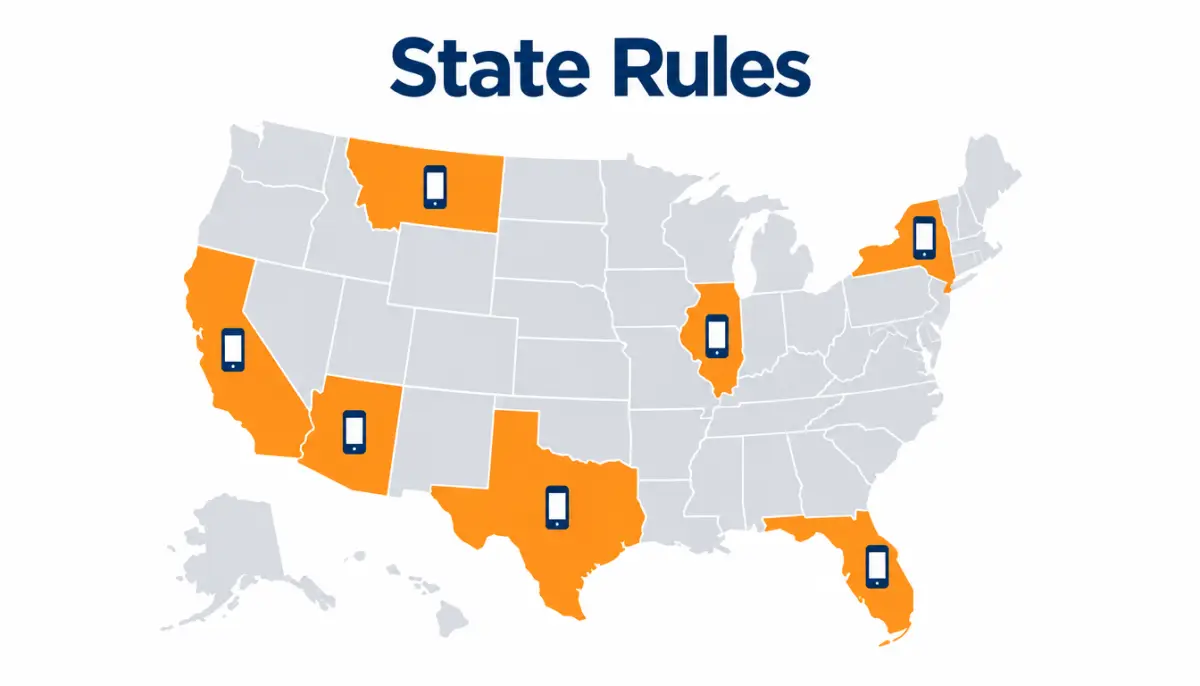
Everything in this section is quoted or summarized from the statute text published by each state legislature, linked below, and read in October 2026. Statutes get amended. Courts read them in ways the text alone does not show. Exemptions in the full statutes may or may not fit your sales model. Treat this as a map of what to ask counsel about, not as a conclusion about your program.
Florida: Telephone Solicitation Act and Telemarketing Act
Florida matters to almost every national solar buyer because it is one of the largest residential solar markets and because its law gives consumers a private right of action. Two sections do most of the work.
Section 501.059, Florida Statutes (read the current text) is the Florida Telephone Solicitation Act. The points that matter to a solar caller:
- Automated systems need written consent. Under s. 501.059(8)(a), a person may not make "or knowingly allow to be made" an unsolicited telephonic sales call that involves "an automated system for the selection and dialing of telephone numbers or the playing of a recorded message" without the called party's prior express written consent. Note the words "selection and dialing." That is not the federal autodialer definition the Supreme Court narrowed in Duguid, and Florida's legislature changed this wording in 2023 (ch. 2023-150). How Florida courts apply it to a given dialer is a question for counsel.
- Texts and voicemail count. A "telephonic sales call" is defined in s. 501.059(1)(j) as a "telephone call, text message, or voicemail transmission" made to solicit a sale.
- Consent has a defined form. Prior express written consent under s. 501.059(1)(g) must bear the called party's signature, clearly authorize the person making or allowing the call to use an automated system, include the phone number, and include a clear and conspicuous disclosure that the consumer is authorizing automated calls and is not required to agree as a condition of purchase. Signature includes an electronic signature or an act such as "checking a box indicating consent" (s. 501.059(1)(h)).
- Florida has its own no-sales-solicitation list. Section 501.059(3)–(4) runs a state "no sales solicitation calls" list, and anyone selling consumer data that includes phone numbers must screen those numbers out. That last sentence is worth reading twice if you resell or share leads.
- Opt-outs are absolute for the seller. Under s. 501.059(5), no one may call, text or leave a voicemail for a consumer who has told them they do not want such contact "made by or on behalf of the seller."
- Caller ID must work. Section 501.059(8)(b) requires transmitting the originating number, and that number must be able to receive calls and connect the caller back to the solicitor or the seller.
- Area-code presumption. Section 501.059(8)(d) creates a rebuttable presumption that a call to any Florida area code is made to a Florida resident. A homeowner who moved to Arizona but kept a 407 number may still be treated as a Florida call.
- Damages and the text-message notice step. Section 501.059(10) allows the greater of actual damages or $500 per violation, up to three times that amount for willful or knowing violations. For text message claims, s. 501.059(10)(c) requires the consumer first to reply "STOP," and a claim can only be brought if texts continue more than 15 days after that notice.
Section 501.616, Florida Statutes (read the current text), part of the Florida Telemarketing Act, adds the calling limits. Section 501.616(6) bars a "commercial telephone seller or salesperson" from making, including through automated dialing or recorded messages:
- a commercial telephone solicitation call "before 8 a.m. or after 8 p.m. local time in the called person's time zone"; and
- "more than three" such calls "from any number to a person over a 24-hour period on the same subject matter or issue, regardless of the phone number used to make the call."
The Florida Telemarketing Act has its own definitions and exemptions elsewhere in Part IV of chapter 501, and whether a solar installer's appointment-setting calls fall inside them is fact-specific. The practical point holds either way: if you call Florida homeowners, set your dialer to an 8 a.m. to 8 p.m. local window and a hard three-attempts-per-24-hours cap, and you have built to the stricter rule.
Oklahoma: Telephone Solicitation Act of 2022
Oklahoma's law, enacted as House Bill 3168 and codified at 15 O.S. §§ 775C.1 to 775C.6 (enrolled bill text), took effect November 1, 2022. It reads like Florida's 2021 law with a few differences.
- Consent for automated systems. Section 775C.3(A) bars making or knowingly allowing "a commercial telephonic sales call" that involves "an automated system for the selection or dialing of telephone numbers or the playing of a recorded message" without prior express written consent. Florida says "selection and dialing"; Oklahoma says "selection or dialing." Counsel will tell you whether that difference matters for your dialer.
- Same consent elements. Section 775C.2 defines prior express written consent with the same four elements as Florida: signature, clear authorization covering call, text or voicemail, the phone number, and a clear and conspicuous disclosure that agreement is not a condition of purchase.
- Hours and frequency. Section 775C.4(A) bars calls before 8 a.m. or after 8 p.m. in the called person's time zone, and more than three calls in 24 hours on the same subject "regardless of the phone number used."
- Caller ID and voice. Section 775C.3(B)–(C) and 775C.4(B) prohibit hiding caller ID, spoofing a different number to conceal identity, and disguising the caller's voice to defraud or confuse.
- An exemption worth asking about. Section 775C.5(3) exempts a person who does not make the major sales presentation or complete a sale during the call, but does so "at a later face-to-face meeting" with the buyer. Many solar sales follow that pattern: a setter books, a consultant sells in the home. Whether a specific program fits the exemption, and whether virtual meetings count, is precisely the kind of question to put to Oklahoma counsel rather than assume.
- Private right of action. The Act gives an aggrieved called party a claim for the greater of actual damages or $500, increased up to three times for willful or knowing violations (section 6 of the enrolled bill, codified at 775C.6).
Maryland: Stop the Spam Calls Act
Maryland's Stop the Spam Calls Act sits in Title 14, Subtitle 45 of the Commercial Law Article. Read § 14-4501, § 14-4502 and § 14-4503 together.
- Consent for automated and recorded calls. Section 14-4502(a)(3) bars a telephone solicitation that involves "an automated system for the selection or dialing of telephone numbers" or "the playing of a recorded message" without prior express written consent.
- Consent definition. Section 14-4501(d) defines prior express written consent to cover solicitation "by telephone call, text message, or voicemail," including automated systems, recorded or artificial voice messages and prerecorded voicemail. The disclosure must state what the person is authorizing.
- Hours and frequency. Section 14-4502(c) bars solicitation calls, including automated or recorded ones, "between 8 p.m. and 8 a.m." in the called party's time zone, and "more than three times to the same called party during a 24-hour period on the same subject matter or issue, regardless of the telephone numbers used."
- Caller ID. Section 14-4502(b) requires transmitting the originating number and bars spoofing to hide identity, with an allowance for showing the seller's name and customer service number.
- Remedies. Under § 14-4503(a), a violation is an unfair, abusive or deceptive trade practice under Maryland's Consumer Protection Act, and a called party may sue for up to $500 or actual damages, whichever is greater, with up to three times that for willful or knowing violations. Section 14-4503(b) presumes that a call to any Maryland area code reaches a Maryland resident.
- Exemptions. Section 14-4502(a)(1) lists exemptions, including a single solicitation made "in response to an inquiry or request" from the customer. Read that carefully. A single responsive call is not the same as a multi-touch dialer cadence.
Washington: RCW 80.36.390 and the Commercial Telephone Solicitation Act
Washington's rules do not center on autodialer consent the way Florida's do. They focus on conduct during the call and on how long a "do not call me" request lasts. RCW 80.36.390 (amended in 2022 and 2023) provides, among other things:
- Identify yourself fast. Under RCW 80.36.390(3), the caller must identify themselves, the company and the purpose of the call "within the first 30 seconds."
- End the call within 10 seconds when asked. RCW 80.36.390(6) requires ending the call within 10 seconds if the called party says they want to end it.
- A one-year no-call. Under RCW 80.36.390(7), if the person says they do not want to be called again, the solicitor must tell them they will be removed "for at least one year," end the call within 10 seconds, not solicit that number for at least a year, and not sell or give the contact to another company (returning the list to the source company is allowed).
- Hours. RCW 80.36.390(8) bars calls received before 8:00 a.m. or after 8:00 p.m. local time.
- Federal DNC folded into state law. RCW 80.36.390(9) makes calling a number on the federal registry a state violation too.
- Damages. RCW 80.36.390(13) lets a person "aggrieved by repeated violations" sue, and the court "shall award damages of at least $1,000 for each individual violation," plus attorney fees.
The Commercial Telephone Solicitation Act, RCW 19.158.110, separately applies 8 a.m. to 8 p.m. hours to "commercial telephone solicitors," and chapter 19.158 has its own registration provisions and exemptions. Whether your setters need to register is a question for Washington counsel.
The one-year rule is the trap for lead buyers. If a Washington homeowner told your setter "don't call me again" eight months ago and the same number arrives tomorrow as a fresh web lead, your internal DNC should catch it, and your counsel should tell you how a new, documented request from the homeowner interacts with the old one.
Texas: telemarketing registration and texts
Texas regulates telephone solicitation through chapter 302 of the Business and Commerce Code (chapter 302 text), which has long required registration with the Secretary of State for covered sellers. Senate Bill 140 (2025), effective September 1, 2025, expanded those rules to reach text and image messages. Its scope for consent-based texting has been disputed and, according to legal commentary, narrowed after litigation in late 2025. If you text Texas homeowners at volume, put the registration question to Texas counsel before your next campaign.
A side-by-side table
| Rule | Federal (TCPA / FCC) | Florida | Oklahoma | Maryland | Washington |
|---|---|---|---|---|---|
| Calling window (local time) | 8 a.m. to 9 p.m. (47 C.F.R. § 64.1200(c)(1)) | 8 a.m. to 8 p.m. (s. 501.616(6)(a)) | 8 a.m. to 8 p.m. (§ 775C.4(A)(1)) | 8 a.m. to 8 p.m. (§ 14-4502(c)(1)) | 8 a.m. to 8 p.m. (RCW 80.36.390(8)) |
| Calls per 24 hours, same subject | No numeric federal cap | 3 (s. 501.616(6)(b)) | 3 (§ 775C.4(A)(2)) | 3 (§ 14-4502(c)(2)) | No numeric cap in 80.36.390 |
| Written consent for automated systems | ATDS, artificial or prerecorded voice | "Selection and dialing" automated system or recorded message (s. 501.059(8)(a)) | "Selection or dialing" automated system or recorded message (§ 775C.3(A)) | "Selection or dialing" automated system or recorded message (§ 14-4502(a)(3)) | Not the main mechanism |
| Texts covered | Yes, treated as calls | Yes (s. 501.059(1)(j)) | Yes, in consent definition | Yes, in consent definition | Ask counsel |
| Private damages | $500, up to treble (47 U.S.C. § 227(b)(3)) | Greater of actual or $500, up to treble | Greater of actual or $500, up to treble | Up to $500 or actual, up to treble | At least $1,000 per violation for repeated violations |
| Area-code presumption | None | Yes (s. 501.059(8)(d)) | Yes | Yes (§ 14-4503(b)) | Not stated in 80.36.390 |
Key takeaway: If you call nationally, the strictest common denominator is an 8 a.m. to 8 p.m. window in the homeowner's local time, a cap of three attempts per 24 hours on the same subject, working caller ID, and written consent that clearly covers automated calls, texts and recorded messages. Then let counsel tell you where you can loosen it.
Why the area-code presumption changes dialer setup
Florida and Maryland presume a call to their area codes reaches someone in their state. Oklahoma's enrolled bill includes a similar presumption. That cuts both ways for a national dialer. Most platforms pick the time zone from the area code, which is usually right. But if a homeowner gives a service address in Texas and a Florida mobile number, the safest dialer rule applies both: the stricter hours and the frequency cap for each state that could claim the call. In practice that means storing two fields per lead, the property state and the phone area-code state, and having the dialer respect the tighter of the two.
Questions to put to counsel about each state
Bring these to your counsel for every state you call into, with your actual dialer documentation in hand:
- Does our dialer or texting platform "select or dial" numbers in a way the state's automated-system definition reaches?
- Do our web form disclosures meet the state's consent definition word for word, including the "not a condition of purchase" language?
- Does the state require registration, bonding or a license for our setters or for the vendor calling on our behalf?
- Do any exemptions (face-to-face sale, inquiry response, existing relationship) cover any part of our cadence?
- How long does a "do not call me" request last under state law, and does a new web submission reset it?
- What are the state's damages, and is there a pre-suit notice step (like Florida's 15-day text rule)?
- Does the state have its own do-not-call list we must scrub separately from the federal registry?
What operational controls keep a solar calling program compliant?
The core operational controls are list scrubbing before every campaign, fast opt-out handling across every channel, calling-time rules set by the homeowner's location, texting rules that match your consent, and a written policy your team is trained on. Controls matter because most TCPA problems are process failures, not bad intentions.
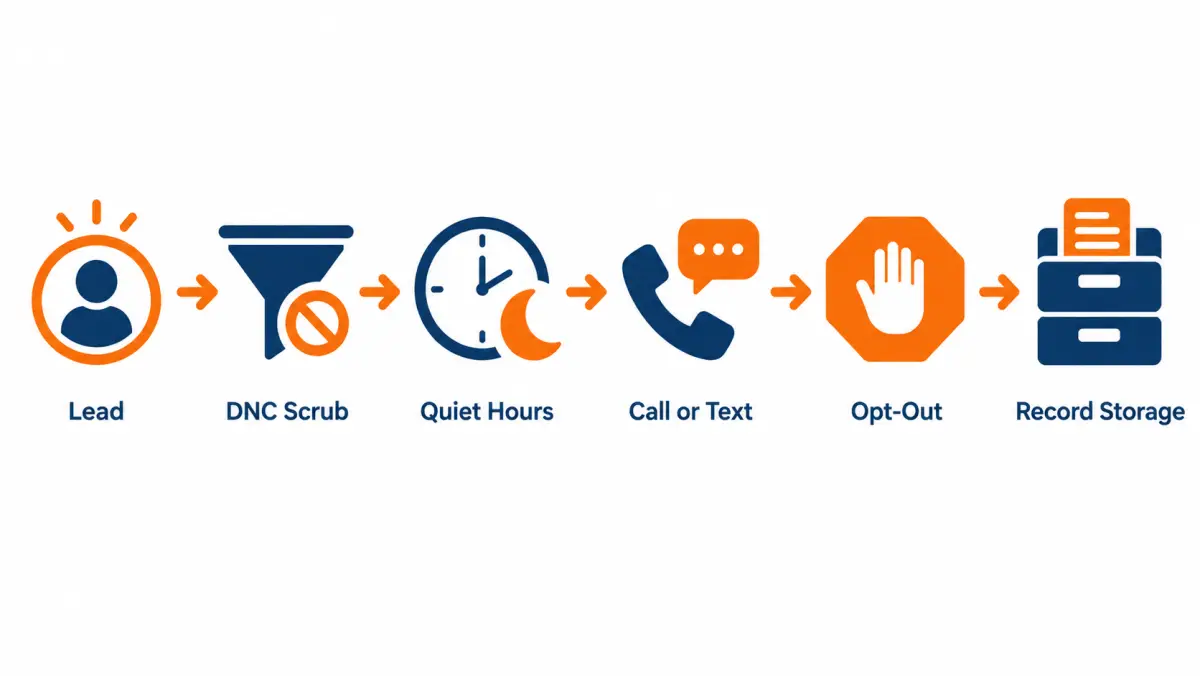
Scrubbing
Scrub every number against:
- The National Do Not Call Registry (at least every 31 days, per the FTC's Telemarketing Sales Rule guidance, and at or near delivery).
- Applicable state do-not-call lists.
- Your internal company DNC list.
- A litigator or known-plaintiff list, if your counsel recommends one.
- The FCC Reassigned Numbers Database, for older numbers.
Even if your vendor scrubs at delivery, scrub again before you dial a lead you have held for weeks. Our pre-delivery checks include a National Do Not Call Registry scrub, and we still recommend buyers scrub on their side.
Opt-out handling
A homeowner can revoke consent by any reasonable means. The FCC's 2024 revocation order confirmed that consumers can revoke through reasonable methods, including replying "stop" and similar words to a text, and set a ten-business-day deadline to honor revocation requests. That part took effect in April 2025.
A separate "revoke all" provision, which would have required an opt-out from one type of message to apply to all robocalls and robotexts from the caller, has been delayed repeatedly. As of October 2026, its waiver was extended to January 31, 2027, and the FCC released an order in October 2026 revising the revocation rules. Check the current status with counsel before you design your opt-out flows.
Practical controls:
- Opt-outs from any channel (call, text, email, web) flow into one suppression list.
- The suppression list syncs to your dialer, texting tool and CRM daily or faster.
- Reps can mark an opt-out in one click and are trained to do it.
- Opt-outs are honored across all your brands and campaigns, unless counsel tells you otherwise.
Texting rules
Texting works well for speed to lead, and it carries its own rules:
- Marketing texts through automated platforms need consent that covers texts.
- Quiet hours apply to texts.
- Include your company name and a clear opt-out instruction.
- Carrier rules (10DLC registration for business texting through local numbers) are separate from the law but can block your messages if ignored.
Our guide on solar speed to lead covers texting cadence; keep it inside these limits.
How do TCPA questions play out for different solar installers?
TCPA questions look different depending on how you sell. A small installer whose owner dials leads by hand faces mostly Do Not Call, calling-hour and consent-scope questions. A mid-size team with a power dialer and texting platform adds automated-contact questions. A large operation using outsourced setters or AI tools adds vicarious liability and artificial-voice questions. The scenarios below are illustrative, not legal conclusions.
Scenario 1: owner-operator, manual dialing
A two-crew installer buys 40 exclusive leads a month and the owner calls each one from a cell phone. No dialer, no texting platform. The main exposure points are calling a number on the National DNC Registry without a valid exemption, calling outside allowed hours, ignoring a "please stop calling" request, and calling a lead whose consent named a different company. Practical steps: keep the consent record for every lead, scrub before calling, log opt-outs in a simple shared sheet, and do not call before 8 a.m. or after 9 p.m. in the homeowner's time zone.
Scenario 2: in-house setters with a dialer and texting
A regional installer runs four setters on a power dialer and sends an automatic text the moment a lead arrives. Now the questions widen. Does the consent cover texts? Could the dialer or texting platform be argued to be automated under federal law or a broader state law? Do opt-outs from text replies reach the dialer? Practical steps: have counsel review the platforms, confirm the disclosure covers texts, centralize suppression, configure state-specific hours and call limits, and audit ten consent records a month.
Scenario 3: outsourced setters, live transfers or AI tools
A large installer buys live transfers, uses an outside appointment-setting firm and is testing an AI voice agent for after-hours callbacks. Each layer adds a party making calls on the installer's behalf. Practical steps: written contracts with each partner that cover consent, scripts and DNC handling; the right to audit their consent records and call recordings; a clear rule that no artificial or prerecorded voice is used without prior express written consent; and counsel review before any AI tool goes live.
| Installer profile | Highest-priority checks |
|---|---|
| Owner-operator, manual calls | DNC scrub, calling hours, consent names you, opt-out log |
| In-house team with dialer and texting | Consent covers texts, platform review, state limits, central suppression |
| Outsourced setters, transfers, AI | Partner contracts, audit rights, artificial voice rules, vicarious liability review |
Whatever your size, the cheapest compliance control is buying leads whose consent you can actually prove. Everything downstream depends on that record.
What should be on a pre-purchase TCPA checklist for solar leads?
Before you buy solar leads, confirm that every lead comes with a retrievable consent record naming your company, that the forms are solar-specific and inspectable, that the vendor scrubs DNC and you will too, that exclusivity and resale terms are written down, and that your own dialer, texting and opt-out setup matches the consent you are buying. Then have counsel review it.
The checklist
Vendor and source
- Vendor named the source types for leads you will buy
- You have inspected the live forms
- Forms are about solar, not sweepstakes or unrelated offers
- Vendor disclosed whether affiliates or sub-vendors are used and how they are audited
Consent
- Disclosure names your company (or the exact legal names you operate under)
- Disclosure covers each contact method you plan to use (calls, texts, automated, prerecorded)
- Disclosure states consent is not a condition of purchase
- Sample consent records received for random recent leads
- Records include timestamp, URL, disclosure text, IP and certificate or replay ID
- Retention period and retrieval process written into the contract
Exclusivity and resale
- Number of buyers per lead stated in writing
- Lead will not be resold later as aged or recycled data, if you are paying for exclusive
Scrubbing and data
- Vendor scrubs against the National DNC Registry before delivery
- You scrub again before dialing, and every 31 days for held leads
- Reassigned Numbers Database checks considered for older leads
Your operations
- Dialer and texting configured for local quiet hours
- State-specific rules reviewed for each state you call
- Opt-out process covers all channels and syncs to all systems
- Call recording disclosures where needed
- Reps trained on scripts and opt-out handling
- No AI voice or prerecorded outreach without counsel review
Contract
- Vendor represents its consent practices in writing
- Indemnity terms reviewed by counsel (and vendor's ability to pay considered)
- Right to audit consent records
- Right to terminate for compliance breach
Counsel
- A TCPA attorney has reviewed your calling program, scripts and vendor contracts
How should solar companies text leads without creating TCPA risk?
Solar companies can text leads safely when the consent clearly covers texts and names the company, the first text identifies the company and the request, every message includes a way to opt out, texts go only inside the stricter state calling window, frequency is capped, and the sending numbers are registered with carriers. Texting risk usually comes from cadence and opt-out failures, not from the first message.
The first text
The first text sets the tone and the evidence trail. It should name the company, reference what the homeowner asked for, and include an opt-out. An illustrative example:
"Hi Maria, this is Jordan at [Company]. You asked about solar for your home on Oak St. Is now a good time for a 5-minute call? Reply STOP to opt out."
What to avoid in the first message:
- Not naming the company.
- Implying an existing relationship that does not exist ("Following up on your account").
- Links to unrelated offers.
- Urgency claims you cannot back up ("Your incentive expires today").
Cadence limits
Florida, Oklahoma and Maryland cap calls at three per 24 hours on the same subject, and their definitions treat text messages as covered solicitations. Many programs apply a combined cap of three touches per 24 hours across calls and texts for those states, and use the same cap everywhere for simplicity. A sample illustrative cadence for a new web lead:
| Time from lead arrival | Touch | Channel |
|---|---|---|
| Within 5 minutes | 1 | Call |
| If no answer, immediately after | 2 | Text (first text above) |
| 3 to 4 hours later, inside window | 3 | Call |
| Next day, morning | 4 | Call |
| Next day, afternoon | 5 | Text |
| Day 3 | 6 | Call |
| Day 5 and day 8 | 7, 8 | Call or text |
| After day 10 | Pause | Move to a lower-frequency nurture if consent covers it |
Each day stays inside three touches. Our guide on solar speed to lead covers why the first five minutes matter for contact rates; this table shows how to keep that speed inside the limits.
Carrier registration (10DLC)
Business texting from ordinary 10-digit numbers in the US runs through carrier registration programs commonly called 10DLC. Registration is a carrier requirement, not a law, but unregistered or poorly described campaigns get filtered or blocked. Your texting platform walks you through brand and campaign registration. Use a campaign description and sample messages that match what you actually send, and make sure your web form's consent language matches the "opt-in" description you give the carriers.
Quiet hours for texts
Federal calling-time rules apply to telephone solicitations, and the state laws discussed above apply their windows to texts as covered calls. Set the texting tool to the homeowner's local time and the stricter rule. Queue overnight lead texts for 8 a.m. local the next morning rather than sending at 9:30 p.m.
Group texts, MMS and links
MMS (images) and link-heavy messages are more likely to be filtered by carriers. If you send a proposal link, use your own branded domain rather than a public shortener, and send it only after the homeowner asks for it.
How do TCPA risks differ by state for a solar installer?
TCPA risk by state depends on three factors: whether the state has a mini-TCPA with a private right of action, whether its calling window and frequency caps are stricter than federal rules, and how large your call volume into that state is. A Florida-heavy installer faces a different checklist than one that only calls Arizona, though federal rules apply everywhere.
Illustrative state profiles
The profiles below are illustrative. They combine the statutes summarized earlier with typical solar sales patterns. They are not legal conclusions about any company.
Florida-focused installer. A Tampa installer calling only Florida homeowners has to plan around s. 501.059 and s. 501.616: 8 a.m. to 8 p.m., three calls per 24 hours on the same subject, written consent for automated systems under Florida's definition, working caller ID, and the state no-sales-solicitation list. Florida's area-code presumption also means snowbirds with Florida numbers who live in Ohio half the year are still Florida calls. Practical build: Florida hours as the default for every lead, a dialer that counts attempts per number per 24 hours (not per campaign), and counsel's review of whether the dialer "selects and dials."
Multi-state Southeast installer. A company calling Florida, Georgia, the Carolinas and Tennessee should set Florida's rules as the floor across the whole region rather than managing five rule sets. It is simpler, and reps do not need to know which state they are in.
Oklahoma or Texas expansion. An installer adding Oklahoma has a state law nearly identical to Florida's. Adding Texas raises the registration question under Business and Commerce Code chapter 302, particularly for text-heavy programs after SB 140. Budget time for counsel before the first campaign, not after.
Mid-Atlantic installer. Maryland's Stop the Spam Calls Act adds the same 8 a.m. to 8 p.m. and three-per-24-hours rules, plus a private right of action. A company calling Maryland, Virginia and Pennsylvania from one dialer should apply Maryland's rules to all Maryland area codes at minimum.
Pacific Northwest installer. Washington's RCW 80.36.390 changes the script more than the dialer: identify within 30 seconds, end within 10 seconds when asked, a one-year no-call, 8 a.m. to 8 p.m. A Washington team should rehearse the opening and the opt-out lines until they are automatic.
California installer. California's call recording law makes a recording notice standard. California also has its own telemarketing and consumer protection statutes worth reviewing with counsel.
A configuration table for a national dialer
| Setting | Conservative national default | Why |
|---|---|---|
| Calling window | 8 a.m. to 8 p.m., homeowner's local time | Meets FL, OK, MD, WA; tighter than federal 9 p.m. |
| Time-zone source | Stricter of area code and property address | Area-code presumptions in FL, OK, MD |
| Attempts per 24 hours, same subject | 3 across calls and texts | Meets FL, OK, MD caps |
| Caller ID | Real, callable number that reaches your company | FL, OK, MD caller ID rules |
| Opt-out processing | Same day, all channels | Inside FCC 10-business-day limit; WA one-year rule |
| Prerecorded or AI voice | Off unless counsel approves with written consent | Federal artificial voice rules |
| Recording notice | On, every call | All-party consent states |
| DNC scrub | National, state, internal at arrival; re-scrub held leads within 31 days | Federal and state DNC |
How do TCPA questions change with installer size and lead type?
TCPA questions change with size because volume multiplies small error rates, more people touch each lead, and more tools get involved. A two-person installer's risk is a missed opt-out. A 50-rep sales floor's risk is a systemic consent gap across thousands of calls. Lead type changes which consent questions come first: exclusive, shared, aged, transfers or appointments.

Why volume changes the math (illustrative)
The TCPA sets statutory damages of $500 per violation, up to $1,500 if willful or knowing, under 47 U.S.C. § 227(b)(3). The table below is an illustrative example of how a small error rate scales. It is not a prediction of any outcome, and actual exposure depends on facts, defenses and the court.
| Installer size (illustrative) | Leads contacted per month | Hypothetical share with a consent defect | Contacts at issue per month | Statutory figure at $500 each |
|---|---|---|---|---|
| Owner-operator | 40 | 5% | 2 | $1,000 |
| Regional team | 600 | 5% | 30 | $15,000 |
| Multi-state floor | 5,000 | 5% | 250 | $125,000 |
The per-contact figure is the same at every size. What changes is that a large program's defect becomes a class, and each lead usually gets several calls and texts, each of which may count separately. That is why larger buyers invest in audits and why "we'll handle it if it comes up" works poorly at scale.
By lead type: what to verify first
| Lead type | First question | Second question | Third question |
|---|---|---|---|
| Exclusive real-time | Does the disclosure name our legal entity? | Does it cover texts and our dialer? | Can we retrieve the record in two days? |
| Shared real-time | How many sellers were named, and were we visible without a click? | Was the list fixed at submission? | Are other buyers calling with compliant cadence (affects the homeowner's patience, not our liability)? |
| Aged | Were we named in the original consent? | DNC and reassigned-number status today? | Manual dialing or re-permissioning plan? |
| Live transfer | What consent supported the setter's call? | Is the handoff recorded? | Did the setter use any recorded or AI voice? |
| Booked appointment | Who placed each call and text? | Do our reminder texts have consent? | Is the face-to-face exemption relevant in our states (ask counsel)? |
Our page on aged solar leads explains the aged category; for lead pricing by type see how much solar leads cost.
What do compliant and non-compliant lead journeys look like?
The clearest way to see TCPA compliance is to follow a lead from form to first call. The two walkthroughs below are illustrative composites, not real companies or customers. They show where the same lead source can produce a defensible or a risky outcome depending on what the buyer checks and how the calling program is set up.

Walkthrough A: a defensible exclusive lead (illustrative)
- 7:42 p.m., Tuesday. A homeowner in Orlando searches for solar quotes and lands on a solar-only page. The disclosure above the button names one installer by legal name and covers calls, texts and automated technology. She checks the box and submits.
- 7:42 p.m. The vendor's consent-capture service records a certificate and session replay. The vendor scrubs the number against the national registry and Florida's list. Clean.
- 7:43 p.m. The lead posts to the installer's CRM with the certificate ID attached.
- 7:44 p.m. The dialer calls. The rep opens with name, company and "the solar quote you requested," plus a recording notice. The homeowner says she is putting her kids to bed; can they call tomorrow at 10?
- 7:46 p.m. The rep books the callback. The dialer counts that as one attempt in the 24-hour window.
- 10:00 a.m., Wednesday. The rep calls, qualifies and sets an appointment.
- Wednesday afternoon. A reminder text names the company and includes "Reply STOP to opt out."
- Six months later. The homeowner's neighbor, who also filed a complaint about solar calls, mentions her. A lawyer sends a letter. The installer pulls the certificate, the replay, the call recordings and the CRM attempt log in under an hour.
The installer's position is strong because every link has evidence: consent naming them, scrub logs, hours inside the Florida window, three attempts or fewer in 24 hours, an opt-out path, and a recording.
Walkthrough B: the same homeowner, a risky path (illustrative)
- 7:42 p.m., Tuesday. The homeowner enters a sweepstakes for a gift card. The "partners" link in tiny type lists 140 companies, including the installer's parent company under a different name.
- The lead is sold to four buyers, then resold as an aged lead 60 days later.
- 8:51 p.m. An installer's dialer calls her at 8:51 p.m. local time. That is legal under the federal 9 p.m. rule but after Florida's 8 p.m. limit.
- Over the next 24 hours she gets five calls from that installer from different local numbers. Florida's cap is three per 24 hours on the same subject regardless of number.
- She texts "stop texting me." The texting tool only recognizes the exact word "STOP" and keeps sending.
- Two months later, as an aged lead, a different buyer's prerecorded voicemail reaches her.
- A lawyer's letter arrives. The installer asks the vendor for the consent record. The vendor sends a screenshot of today's version of the sweepstakes page.
Every step has a problem. None of them depend on the vacated one-to-one rule.
What separates the two paths
| Factor | Walkthrough A | Walkthrough B |
|---|---|---|
| Form topic | Solar | Sweepstakes |
| Seller named | Clearly, by legal name | Parent company in a hidden list |
| Calling window | Inside 8 p.m. state limit | After the state limit |
| Frequency | Within three per 24 hours | Five in 24 hours |
| Opt-out | Path offered and honored | Variant ignored |
| Records | Certificate, replay, recordings | Today's screenshot only |
How long should solar companies keep TCPA records?
Keep consent records, call and text logs, DNC scrub logs, opt-out records and form versions for at least five years unless counsel sets a longer period. Five years covers the four-year federal limitations period that generally applies to TCPA claims and matches the Telemarketing Sales Rule's recordkeeping period after its 2024 amendment. Store copies in your own systems, not only the vendor's.

Why five years is a sensible floor
- Federal limitations period. TCPA private claims are generally subject to the four-year catch-all period in 28 U.S.C. § 1658(a). Records have to outlast the period in which someone can sue, plus the time it takes for a suit to reach discovery.
- Telemarketing Sales Rule. The FTC amended the TSR's recordkeeping provisions at 16 C.F.R. § 310.5 in 2024, extending the retention period for covered records to five years and expanding what must be kept, including call detail records and, for sellers relying on consent, records of that consent.
- State claims. State statutes and consumer protection laws may have different limitation periods. Ask counsel.
What to keep, and where
| Record | Where it lives | Retention target |
|---|---|---|
| Consent record or certificate ID per lead | CRM, attached to the lead | 5 years or counsel's period |
| Form version (screenshot or HTML) per form per date | Shared drive, indexed by URL and date | Same |
| Call detail records (time, number, rep, duration, outcome) | Dialer export, archived monthly | Same |
| Text logs (messages sent and received) | Texting platform export, archived monthly | Same |
| DNC scrub logs (date, list version, result) | Dialer or scrub provider export | Same |
| Opt-out log | Suppression system | Indefinitely, or counsel's period |
| Call recordings | Recording platform, indexed by lead ID | Counsel's period |
| Vendor contracts and audit results | Contract folder | Life of contract plus 5 years |
| Written DNC policy and training sign-ins | Compliance folder | Each version for 5 years |
Exports protect you from vendor turnover
Dialers, texting tools and lead vendors change. Every time you switch platforms, export the history before cancellation. Every month, archive a CSV of calls, texts and opt-outs to storage you control. A lawsuit filed three years from now will ask about calls made on a system you no longer pay for.
What should a solar company do if it receives a TCPA demand letter?
If a solar company receives a TCPA demand letter or lawsuit, it should preserve all records immediately, stop contacting the person, call its TCPA counsel and insurer before responding, gather the consent record and contact logs for that number, and notify the lead vendor under the contract. Do not reply to the claimant yourself or delete anything.
The first 48 hours
- Do not respond to the claimant directly. Anything you say can be used. Let counsel respond.
- Preserve. Put a litigation hold on records for the phone number: CRM history, dialer logs, texts, recordings, emails, consent records. Turn off any auto-delete on those systems.
- Suppress. Add the number to the internal DNC list across all systems, if it is not already there.
- Notify counsel. A TCPA-experienced attorney, not a general business lawyer, ideally.
- Notify your insurer. Check whether any policy may respond and what notice it requires. Late notice can matter.
- Notify the vendor. Most contracts require prompt notice to trigger cooperation and indemnity. Request the full consent record in writing.
- Assemble the file. Consent record, form version, scrub logs, every call and text with timestamps, rep notes, recordings.
Questions counsel will ask
- Where did the lead come from, and when?
- What did the consent disclosure say on that date, and did it name you?
- How many calls and texts went to the number, at what local times?
- Was the number on the national or a state DNC list at the time?
- Did the person ever say stop, in any channel? When was it processed?
- What dialer and texting tools were used?
- Did anyone else call the number on your behalf?
Lessons to feed back into the program
Every demand letter is free audit information. After the claim is handled, ask:
- Was this a one-off or a pattern? Pull 20 more leads from the same source and check.
- Did a control fail (hours, caps, opt-out), or was there no control?
- Does the vendor contract need tightening?
- Does training need a refresh?
How should a solar sales team be trained on TCPA rules?
Train a solar sales team with a short written policy, a 30 to 45 minute onboarding session, scripts for openings and opt-outs, a quarterly refresher, and monthly call reviews that score compliance alongside sales skill. Keep sign-in sheets and policy versions. Training is part of the federal Do Not Call safe harbor, so documentation matters as much as content.
A one-page policy outline
- Who we call: only leads with a consent record attached in the CRM.
- When we call: 8 a.m. to 8 p.m. homeowner local time, unless a manager approves a scheduled callback the homeowner requested within federal and state rules.
- How often: no more than three calls and texts combined per lead per 24 hours.
- How we open: name, company, reason, recording notice.
- How we handle stop: stop, confirm, mark in CRM, end the call.
- What we never use without approval: prerecorded messages, soundboards, ringless voicemail, AI voice, new texting tools.
- Who to ask: the named compliance lead.
Onboarding session agenda (illustrative)
| Minutes | Topic |
|---|---|
| 0 to 5 | Why this matters: liability attaches to us, not the vendor |
| 5 to 15 | What consent looks like: open a real consent record in the CRM |
| 15 to 25 | Hours, caps and caller ID: where the dialer enforces them and where reps must |
| 25 to 35 | Opt-out drill: role-play five homeowner responses |
| 35 to 40 | State notes: FL, OK, MD, WA rules our team hits most |
| 40 to 45 | Questions, sign-in, policy acknowledgment |
Opt-out role-play prompts
Give reps these lines and have them respond out loud:
- "Who gave you my number?"
- "Take me off your list."
- "I already have solar."
- "Stop calling me, I've told you three times."
- "Not now, maybe next month."
Correct answers: 1, explain the request and offer to stop; 2 and 4, stop and confirm; 3, ask if they want to be removed, and remove if so; 5, schedule a callback at the time they choose, within the calling window.
Monthly call review scorecard
| Item | Yes/No |
|---|---|
| Opened with name, company and reason within 30 seconds | |
| Recording notice given | |
| Call inside the homeowner's state window | |
| Attempt count inside 24-hour cap | |
| Any opt-out request honored and marked | |
| No misleading statements about incentives or affiliation |
That last row is a reminder that the FTC's Telemarketing Sales Rule also prohibits misrepresentations in sales calls. Incentive claims are a common problem in solar. After the residential clean energy credit (25D) ended for systems placed in service after 2025, any rep still pitching it to homeowners is creating a deception risk on top of a sales problem. See our guide to solar leads after 25D.
What are the most common solar TCPA problems and how do you fix them?
The most common solar TCPA problems are calls after the state calling window, more than three attempts in 24 hours, missed text opt-outs, missing or vague consent records, leads held past the 31-day scrub window, and partners calling with tools you did not approve. Most have a configuration fix that takes less than a day.
| Symptom | Likely cause | Fix |
|---|---|---|
| Calls logged after 8 p.m. local in FL, OK, MD, WA | Dialer uses office time zone or federal 9 p.m. default | Set homeowner-local time and an 8 p.m. stop per state |
| More than three attempts in 24 hours | Cap counted per campaign or per number used, not per homeowner | Count attempts per destination number across all campaigns and caller IDs |
| Homeowner says "I said stop" | Texting tool only matches exact "STOP" | Enable all standard keywords plus variants; route fuzzy replies to a human |
| Vendor cannot produce a record | No certificate service, or records not retained | Require records production in contract; stop buying from that source |
| Record shows a different company name | Disclosure uses a parent, old or wrong DBA | Send vendor your legal names; require the approved name |
| DNC hit on an older lead | Lead held past 31 days without re-scrub | Weekly re-scrub of any lead older than 25 days |
| Calls to a reassigned number | Old lead, number changed hands | Reassigned Numbers Database check for older leads |
| Complaint says "a robot called me" | Partner using prerecorded or AI voice | Contract ban; audit partner recordings |
| Caller ID shows a number that does not ring back | Rotating local numbers not routed | Route every displayed number back to your company |
| Appointment reminders draw complaints | Reminder texts sent by a tool without consent coverage | Confirm consent covers reminders; add opt-out to each |
TCPA and solar lead glossary
These are the terms that show up most in vendor contracts, consent records and counsel memos for solar lead buyers. Definitions are plain-language summaries for orientation, not legal definitions. Where a term has a statutory or regulatory definition, the source is noted so counsel can check the exact text.
- ATDS (automatic telephone dialing system): Under the TCPA as read in Duguid, equipment that can store or produce numbers using a random or sequential number generator and dial them. Narrower than many state "automated system" definitions.
- Artificial or prerecorded voice: Recorded messages, synthesized voices and AI-generated voices. Marketing calls using them generally need prior express written consent.
- Automated system (state law): Florida's "selection and dialing" and Oklahoma's and Maryland's "selection or dialing" definitions, which may reach dialers outside the federal ATDS definition.
- Certificate (consent certificate): A record from a third-party service capturing a form session, usually with a replay.
- Consent record: The evidence package for a lead: timestamp, URL, disclosure, seller named, number, IP, device, certificate.
- DNC (Do Not Call): The national registry, state lists and your internal company list.
- EBR (established business relationship): A DNC exemption for 18 months after a purchase or 3 months after an inquiry, under 47 C.F.R. § 64.1200(f)(5).
- Exclusive lead: A lead sold to one buyer only.
- Internal DNC list: Your company-specific list of people who asked you to stop.
- Live transfer: A call where a setter qualifies a homeowner and bridges them to your rep.
- Mini-TCPA: A state law with TCPA-like consent, hours and frequency rules, such as Florida's or Oklahoma's.
- One-to-one consent rule: The FCC's 2023 rule requiring consent to one seller at a time; vacated January 24, 2025.
- Prior express written consent: A signed written agreement authorizing a specific seller to deliver marketing calls using an ATDS or artificial or prerecorded voice to a designated number, with the required disclosures (47 C.F.R. § 64.1200(f)(9)).
- Reassigned Numbers Database: The FCC-run database for checking whether a number was permanently disconnected after a date.
- Revocation: A consumer's withdrawal of consent, by any reasonable means.
- Ringless voicemail: A recorded message dropped into voicemail without ringing; treated as a call.
- SAN (Subscription Account Number): Your account for accessing the national DNC registry.
- Shared lead: A lead sold to more than one buyer.
- Soundboard: A system where a live agent plays recorded audio clips; treated as prerecorded by the FTC.
- TSR (Telemarketing Sales Rule): The FTC's telemarketing rule at 16 C.F.R. Part 310.
- 10DLC: Carrier registration for business texting from standard 10-digit numbers.
- Vicarious liability: Liability of a seller for calls placed on its behalf by others, under agency principles.
What does a 90-day TCPA build plan look like for a solar installer?
A practical 90-day plan starts with an inventory and counsel review in the first month, configuration of dialer, texting and suppression controls in the second, and vendor audits, training and recordkeeping in the third. After that, the program runs on monthly spot checks and quarterly reviews. The plan below is illustrative; adjust the order to your biggest gaps.
Days 1 to 30: inventory and counsel
- List every lead source, vendor, partner and tool that touches a homeowner's phone number
- List every state you call or text, with monthly volume per state
- Collect sample consent records from each vendor (10 per vendor)
- Document your dialer, texting platform and any recorded or AI voice tools, with vendor documentation
- Confirm national registry access (SAN) for your area codes
- Engage TCPA counsel; send them the inventory and samples
- Pause any prerecorded, ringless voicemail or AI voice outreach pending review
Days 31 to 60: controls
- Set calling and texting windows to homeowner-local time with an 8 p.m. stop, or counsel's approved window per state
- Set a per-number cap of three attempts per 24 hours across channels
- Build one suppression list that syncs to dialer, texting, CRM and email
- Turn on all standard text opt-out keywords and a human queue for fuzzy replies
- Route every displayed caller ID number back to your company
- Add the recording notice to every script
- Attach each lead's consent record or certificate ID to the CRM record on arrival
- Set weekly re-scrub for leads older than 25 days; add reassigned-number checks for older leads
Days 61 to 90: vendors, people and records
- Complete the seven-step vendor audit for every lead source
- Update vendor contracts with the clause list, reviewed by counsel
- Write the one-page policy and the written DNC procedures
- Run onboarding training; collect sign-ins
- Start monthly archive exports for calls, texts, opt-outs and scrub logs
- Schedule monthly ten-lead spot checks and quarterly reviews
After 90 days: the ongoing rhythm
| Frequency | Activity |
|---|---|
| Daily | Automated scrubs, suppression sync, cap enforcement |
| Weekly | Re-scrub held leads; review fuzzy opt-out queue |
| Monthly | Ten-lead consent spot check per vendor; call review scorecards; archive exports |
| Quarterly | Policy review; training refresher; check FCC and state law changes with counsel |
| Annually | Registry subscription renewal; contract and insurance review |
If you would rather start with leads whose consent records already name your company, book a 30-minute call and ask us for a sample record. You can also use our solar lead cost calculator to see how compliance costs fit your cost per acquisition.
How does Buy Solar Leads handle consent?
Every lead we sell carries a timestamped consent record whose disclosure names your company, and we send it to you on request. Exclusive leads are sold to one company and never resold, and each lead is scrubbed against the National Do Not Call Registry before delivery. Our full policy is on our TCPA compliance policy page.
Here is how our published terms map to the checklist above:
| Checklist item | Our term |
|---|---|
| Consent record | Every lead carries a timestamped consent record (certificate) whose disclosure names your company. We send it to you on request. |
| Exclusivity | Each exclusive lead is sold to one company. It is never resold, recycled or sold later as an aged lead. |
| DNC | Scrubbed against the National Do Not Call Registry. |
| Duplicates | Duplicate-checked against leads already sent to you. |
| Delivery | Real-time delivery to your CRM, dialer, email, or SMS. |
| Contract | No long-term contracts. Start with a test batch, scale when the numbers work. |
What we cannot do is make your calling program compliant on your behalf. Your dialer settings, scripts, texting platform, state registrations and opt-out handling are yours to own, with your counsel. For a broader look at buying, see our page on solar leads for sale, or book a 30-minute call and bring your compliance questions; we will show you a sample consent record.
What should solar lead buyers watch in 2026?
In late 2026, watch for FCC action on consent revocation (the revoke-all waiver runs to January 31, 2027, and an October 2026 order revises the rules), any FCC response on remand to the vacated one-to-one rule, district court decisions applying McLaughlin to past FCC interpretations, and new state telemarketing laws. Date-stamp your compliance review and repeat it quarterly.
| Item | Status as of October 2026 | What to do |
|---|---|---|
| One-to-one consent rule | Vacated by the Eleventh Circuit, January 24, 2025 | Keep seller-specific consent as a best practice |
| Revoke-all provision | Waiver extended to January 31, 2027; October 2026 FCC order revises revocation rules | Have counsel review the new order and update opt-out flows |
| McLaughlin v. McKesson | Decided June 20, 2025; courts not bound by FCC interpretations | Expect fresh arguments on older FCC positions |
| AI voice calls | FCC ruled in 2024 that AI voices are "artificial" under the TCPA | Treat as prerecorded; get counsel review |
| State mini-TCPAs | Several states active; details vary | Review each state you call into |
The FCC's consumer pages, such as its guide to stopping unwanted robocalls and texts, are a good place to start for current summaries, but read the underlying orders with counsel before changing your program.
FAQ
Do I need TCPA consent to call purchased solar leads?
If you call or text purchased leads for marketing using an autodialer, artificial voice or prerecorded voice, you generally need prior express written consent that covers your company. Manual calls still face Do Not Call and calling-time rules. Confirm the requirements for your specific setup with counsel; this is not legal advice.
What happened to the FCC one-to-one consent rule?
It never took effect. The FCC adopted it in December 2023, then postponed it, and on January 24, 2025, the Eleventh Circuit vacated it in Insurance Marketing Coalition v. FCC, finding the FCC exceeded its authority. Prior express written consent and other TCPA rules still apply.
Can I text solar leads?
Yes, if your consent covers texts and you follow the rules: marketing texts through automated platforms generally need prior express written consent, quiet hours apply, you should identify your company, and you must honor opt-outs such as replying "stop." Carrier registration rules also apply to business texting.
Are aged solar leads legal to call?
They can be, but consent is the issue. The original consent may not name your company, the homeowner may have revoked consent or joined the DNC list, and the number may have been reassigned. Many buyers use manual dialing, fresh scrubs or re-permissioning. Review your approach with counsel.
Who is liable for TCPA violations when buying leads?
The company that places the call or text can be liable, and sellers can face vicarious liability for calls made on their behalf. The lead vendor may also be liable in some cases, and contracts may include indemnities, but buying a lead does not shift your own responsibility.
What consent record should a lead vendor provide?
At minimum: submission timestamp with time zone, the page URL, the exact disclosure text, the seller names it covered, the contact methods it covered, the phone number as entered, IP address and device data, and a third-party certificate or session replay where available, retrievable by lead ID for years.
How often must I scrub against the Do Not Call Registry?
The FTC's Telemarketing Sales Rule guidance says lists must be scrubbed at least every 31 days. Scrub at or near purchase and again before dialing any lead you have held for a while, and also check your internal company do-not-call list and applicable state lists.
What are the TCPA calling hours?
Federal rules prohibit telephone solicitations before 8 a.m. or after 9 p.m. in the called party's local time. Some states set stricter windows. Set your dialer and texting tools to the homeowner's time zone and the stricter rule.
Does the TCPA apply to AI voice agents?
The FCC ruled in February 2024 that AI-generated voices count as artificial voices under the TCPA, so outbound marketing calls using them generally need prior express written consent. Talk to counsel before deploying any AI calling tool.
Which states have their own mini-TCPA laws that affect solar calls?
Florida (s. 501.059 and s. 501.616), Oklahoma (15 O.S. § 775C.1 and following), Maryland (Commercial Law § 14-4501 and following) and Washington (RCW 80.36.390) are the ones most often discussed, each with calling-hour and other rules stricter than federal law. Texas regulates telemarketing registration under Business and Commerce Code chapter 302. Other states have their own rules; review each state you call with counsel.
What are the calling hours in Florida, Oklahoma, Maryland and Washington?
All four use 8 a.m. to 8 p.m. in the called person's local time, according to the statute text: Florida s. 501.616(6)(a), Oklahoma § 775C.4(A)(1), Maryland § 14-4502(c)(1) and Washington RCW 80.36.390(8). That is an hour earlier than the federal 9 p.m. limit.
How many times can I call a solar lead in one day?
Federal rules do not set a numeric daily cap. Florida, Oklahoma and Maryland cap commercial solicitation calls at three per 24 hours to the same person on the same subject, regardless of the number used. Many national programs apply that cap everywhere and count texts toward it.
Does an established business relationship let me call a lead on the Do Not Call list?
An established business relationship is a Do Not Call exemption that lasts 3 months after an inquiry or 18 months after a purchase under FCC rules. Whether a web form on a vendor's site creates an inquiry to your company depends on how clearly it named you. It does not replace written consent for prerecorded or AI voice calls. Ask counsel.
How fast must I honor a "stop" request?
The FCC's 2024 revocation order requires honoring revocation within a reasonable time, not more than 10 business days. Washington requires a removal of at least one year when a person asks not to be called again. A same-day internal standard is safer.
Do I need my own Do Not Call registry access if my vendor scrubs leads?
If you place the sales calls, you are a seller making telephone solicitations, and registry access is tied to the seller on whose behalf calls are made. A vendor's scrub at delivery helps, but most buyers need their own access to re-scrub held leads. Confirm with counsel.
Is ringless voicemail legal for solar marketing?
The FCC ruled in 2022 that ringless voicemail is a call under the TCPA, so marketing ringless voicemail generally needs prior express written consent, and Florida and Maryland's consent definitions explicitly cover prerecorded voicemail. Get counsel's approval before using it.
How long should I keep consent records?
At least five years is a common floor: TCPA claims generally have a four-year federal limitations period, and the FTC's Telemarketing Sales Rule now requires keeping covered records for five years. Keep copies in your own CRM, not only with the vendor.
Does the face-to-face appointment model exempt solar setters from telemarketing laws?
Some laws, including Oklahoma's (15 O.S. § 775C.5(3)), exempt sellers who make the main sales presentation at a later face-to-face meeting rather than on the call. Exemptions have conditions and often do not reach federal TCPA consent rules. Ask counsel before relying on one.
What should I do if I get a TCPA demand letter?
Preserve all records, stop contacting the number, call TCPA counsel and your insurer before responding, gather the consent record and contact logs, and notify the lead vendor as your contract requires. Do not respond to the claimant yourself or delete anything.
Is this article legal advice?
No. It is general information as of October 2026 to help solar installers ask better questions. TCPA rules, FCC orders, court decisions and state laws change and depend on facts. Consult a qualified attorney before making compliance decisions.