Solar Leads After the 25D Credit: What Changes for Installers in 2026
The 25D homeowner credit ended after 2025. What that means for solar lead quality, pricing and pitch, and how installers adjust with TPO and batteries.
Updated · 81 min read
In this guide (37 sections)
- What changed when the 25D credit ended?
- What exactly did the 25D credit cover, and what is left for homeowners?
- How do installation dates decide who got the credit?
- A glossary of post-25D terms for solar sales teams
- How does the end of 25D affect solar demand and customer acquisition cost?
- What does the end of 25D do to solar lead economics?
- How do post-25D lead strategies differ by market type?
- What do worked examples of post-25D lead economics look like?
- Why are more solar leads shifting to leases and PPAs?
- How should installers change their pitch and qualification after 25D?
- Do batteries change solar lead strategy after 25D?
- How should reps explain the credit change on a first call?
- What scripts and templates work for post-25D solar leads?
- What should a post-25D solar proposal include?
- What compliance issues get sharper after 25D?
- Which metrics should you track to see the post-25D effect?
- What should you ask your solar lead provider after 25D?
- How do you set lead filters for the post-25D market?
- What should you put in a request for proposal to solar lead vendors in 2026?
- What are illustrative post-25D turnaround walkthroughs?
- How do you troubleshoot a post-25D drop in solar lead results?
- Which KPIs belong on a post-25D solar sales dashboard?
- How should you train sales reps for selling solar after 25D?
- How is commercial solar different after 25D?
- What is a 30/60/90-day action plan for installers after 25D?
- How should solar lead strategy differ by installer size after 25D?
- How does each type of solar lead perform after 25D?
- How do you choose a lease or PPA partner after 25D?
- How should you talk about batteries with post-25D leads?
- How should you allocate a solar lead budget after 25D?
- What policy dates and changes should solar lead buyers watch?
- How should seasonality and the 2025 pull-forward affect your 2026 comparisons?
- What should you give homeowners who ask what happened to the solar tax credit?
- What should lead vendors and installers agree on in writing after 25D?
- Who on your team owns which post-25D changes?
- Sources and disclaimers
- FAQ
The federal 25D Residential Clean Energy Credit ended for homeowner-owned solar after December 31, 2025, so solar leads after 25D behave differently: homeowners who buy with cash or a loan no longer get a 30% federal credit, analysts expect acquisition costs to rise, and more deals move to leases and power purchase agreements. As of October 2026, installers who adjust their lead filters, pitch and test plans are better placed than those buying the same leads the same way they did in 2025. This guide covers what changed, what it does to lead economics, and a 90-day plan.

Tax statements in this article are general information, not tax advice. Talk to your tax advisor about specific projects.
What changed when the 25D credit ended?
The One Big Beautiful Bill Act, signed July 4, 2025 (Public Law 119-21), ended the Section 25D Residential Clean Energy Credit for expenditures made after December 31, 2025. IRS guidance says an expenditure is treated as made when installation is complete, so a system paid for in 2025 but finished in 2026 does not qualify. Homeowners buying solar outright in 2026 get no federal credit.
25D ended for systems completed after December 31, 2025
Before the change, 25D gave homeowners a credit equal to 30% of qualified solar, battery and related costs for systems they owned. It was the single most common closing line in residential solar: "the federal government pays back 30%."
The IRS Residential Clean Energy Credit page and the IRS FAQs on Public Law 119-21 (Fact Sheet FS-2025-05, August 21, 2025) explain the cut-off. The FAQ table states that the credit "will not be allowed for any expenditures made after December 31, 2025." The key detail for sales teams is the timing rule. Under the existing statute, an expenditure is treated as made when original installation is completed. The FAQs confirm that paying in 2025 did not lock in the credit if installation was completed in 2026. Homeowners who claimed a 2025 credit they could not fully use can still carry the unused amount forward under the existing carryforward rules.
What this means on the phone:
- A homeowner who buys a system with cash or a loan in 2026 gets no 25D credit.
- A homeowner who is confused because a neighbor "got 30% back" probably installed in 2025 or earlier.
- Your reps should never imply that the credit still applies to homeowner-owned systems. Talk to your tax advisor about specific projects.
What still exists: 48E for TPO and commercial
The business-side clean electricity investment credit, Section 48E, was not repealed on the same timeline. Third-party-owned (TPO) residential systems, meaning leases and PPAs where a company owns the panels, can still be eligible for 48E in the owner's hands, subject to OBBBA's new deadlines. Trade press summaries of the law, such as pv magazine USA's analysis, describe the timing rule this way: solar facilities that began construction by July 4, 2026 have a longer runway, while those beginning construction after that date must be placed in service by the end of 2027. The primary source on what "beginning construction" means for wind and solar is IRS Notice 2025-42, effective for facilities that begin construction on or after September 2, 2025. It relies on the physical work test, keeps the 5% safe harbor only for small solar facilities with maximum net output of 1.5 MW (AC) or less, and gives a continuity safe harbor when the facility is placed in service by the end of the fourth calendar year after construction began.
Confirm current deadlines
| Credit | Who claims it | Status as of October 2026 | Source |
|---|---|---|---|
| 25D Residential Clean Energy Credit | Homeowner who owns the system | Ended for expenditures made (installation completed) after December 31, 2025 | IRS |
| 48E Clean Electricity Investment Credit | Business owner of the system, including TPO providers and commercial owners | Available subject to begin-construction and placed-in-service deadlines added by OBBBA; foreign entity rules also apply | P.L. 119-21, IRS guidance |
| 25D carryforward | Homeowners with unused credit from 2025 or earlier | Still allowed | IRS |
These deadlines are detailed and fact-specific (begin-construction tests, safe harbors, foreign entity of concern restrictions). Re-verify them at publication and before quoting any of them to a homeowner. Talk to your tax advisor about specific projects.
What exactly did the 25D credit cover, and what is left for homeowners?
The 25D credit covered 30% of the cost of qualified clean energy property a homeowner owned and installed at a home they used as a residence, including solar panels, related wiring and labor, and battery storage of at least 3 kilowatt hours. It was claimed on IRS Form 5695. As of October 2026, nothing equivalent exists at the federal level for a homeowner who buys a new system.
Sales teams that sold through 2025 often know the 25D pitch line well but not the mechanics behind it. That gap now causes problems, because homeowners ask detailed questions about why a neighbor got money back and they did not. The more precisely your reps understand what the credit was, the faster they can close the topic and move on to the bill.
The mechanics in plain language
According to the IRS Residential Clean Energy Credit page, the credit equaled 30% of the costs of new, qualified clean energy property. Points that matter for a sales conversation:
- It was a credit, not a rebate. It reduced federal income tax owed. A homeowner with little tax liability could not use all of it in one year.
- It was nonrefundable, with carryforward. Unused credit carried forward to future years. That is why some homeowners who installed in 2024 or 2025 are still "getting money back" on 2026 returns, which confuses their neighbors.
- It applied to the year of installation. The IRS says the credit is claimed for the tax year the property is installed, not merely purchased.
- Battery storage needed at least 3 kWh of capacity to qualify.
- The home did not have to be a primary residence for every property type, but rules differed by property type. Your reps do not need to explain those details; they only need to know the credit is gone for new installs.
Talk to your tax advisor about specific projects.
What is left for a homeowner in 2026
For a homeowner buying a system outright in 2026, the federal picture is short:
| Item | Status as of October 2026 | What a rep can say |
|---|---|---|
| 25D credit on a new system completed in 2026 | Not available | "The federal homeowner credit ended for systems finished after 2025." |
| Carryforward of unused credit from a qualifying earlier install | Still allowed under existing rules | "If you installed before, ask your tax preparer about any carryforward." |
| State or utility incentives | Varies by state and utility; some exist, many have changed | "Let's check what applies at your address." |
| Business credits for third-party-owned systems | Owner may claim, subject to deadlines and rules | "Some monthly plans may reflect a business credit the owner claims." |
The state and utility row is where most of the remaining homeowner value sits. The best public directory for checking it is DSIRE, run by the N.C. Clean Energy Technology Center. Programs change often, so check before each sales season and do not rely on a list your team built a year ago.
Talk to your tax advisor about specific projects.
Why precision matters for lead buyers
Leads are the first touch where a homeowner's expectations get set. If a vendor's ad or landing page still says "claim your 30% federal credit," the homeowner arrives expecting something that does not exist, and your setter spends the first call undoing it. Worse, the homeowner may feel misled by your company, not the vendor. That is one reason we recommend checking live capture pages for every source you buy from. Our solar lead provider red flags guide covers how to do that check.
How do installation dates decide who got the credit?
Installation completion decides it. IRS guidance treats a 25D expenditure as made when original installation is completed, so a system paid for in 2025 but finished in 2026 does not qualify. Reps hear many edge cases about deposits, permits and inspections; the safe answer is that timing questions go to the homeowner's tax preparer, not the sales team.
The IRS FAQ on Public Law 119-21 says an expenditure is treated as made when the original installation of the item is completed, and that paying on or before December 31, 2025 did not save the credit if installation finished later.
Edge cases your team will hear
These are the situations installers report hearing on calls in 2026. Each one gets the same structure of answer: here is the general rule from IRS guidance, and your tax preparer decides how it applies to you.
| Situation the homeowner describes | General rule (IRS guidance) | What the rep should do |
|---|---|---|
| "We signed and paid a deposit in November 2025, install finished in February 2026." | Expenditure treated as made at completion, so after 2025 | Do not speculate. Refer to their tax preparer. Do not promise anything. |
| "Our panels went up in December 2025 but the utility gave permission to operate in January." | The IRS uses "original installation completed"; how that applies to a specific case is fact-specific | Refer to tax preparer. Note the dates in CRM if they become a customer. |
| "We installed in 2024 and still have credit left." | Unused credit can carry forward | Suggest they confirm with their preparer; this does not affect a new purchase. |
| "Can we add a battery to our 2025 system and claim it?" | A battery installed in 2026 is a 2026 expenditure | No homeowner credit for the 2026 battery. Refer to preparer. |
| "My installer told me in 2025 I'd get the credit, but they finished late." | Completion date governs | This is a dispute with the prior installer. Stay neutral, do not comment on their contract. |
Why reps should not answer timing questions
A rep who says "you'll be fine, you paid in 2025" is giving tax advice and is likely wrong under the IRS FAQ. A rep who says "you definitely can't" may also be wrong on unusual facts. The defensible line is short:
"The IRS says the credit depends on when installation was completed, and it ended for anything finished after 2025. Your tax preparer is the right person to look at your dates. What I can help with is what solar looks like for you today."
Then return to the bill. Put that line in your setter script, your closer script and your customer service script so everyone says the same thing. Talk to your tax advisor about specific projects.
Using timing confusion as a lead source
Some homeowners who started a project in late 2025 and stalled are now in limbo. They are warm, they already decided solar makes sense, and they may have walked away from a contract. If your lead vendor offers aged solar leads, records from late 2025 can contain these homeowners. They need a fresh, honest explanation and a 2026 proposal. Treat them carefully: their earlier consent may not cover your company, and you should confirm consent and do-not-call status before contacting anyone. See our solar TCPA compliance guide and confirm with counsel.
A glossary of post-25D terms for solar sales teams
Post-25D selling uses vocabulary many residential reps never needed before: third-party ownership, placed in service, beginning of construction, escalators, prepaid leases and FEOC rules. A shared glossary keeps setters, closers and lead vendors describing products the same way, which reduces mismatched appointments and misleading statements.
Print this list, put it in onboarding and use the same words in your lead filters.

| Term | Plain-language meaning | Where it matters |
|---|---|---|
| Section 25D | The federal Residential Clean Energy Credit for homeowner-owned property. Ended for expenditures made after December 31, 2025. | Correcting homeowner expectations |
| Expenditure made | For 25D, treated as made when original installation is completed (IRS) | Timing questions |
| Carryforward | Using unused credit from an earlier year on a later return | Homeowners who installed before 2026 |
| Section 48E | Clean Electricity Investment Credit, a business credit that can apply to TPO residential and commercial systems, subject to deadlines and rules | Lease, PPA and commercial pitches |
| Section 45Y | Clean Electricity Production Credit, the production-based counterpart to 48E | Mostly commercial and utility-scale |
| TPO | Third-party ownership: a company owns the system on the homeowner's roof | Lease and PPA leads |
| Lease | Homeowner pays a set monthly amount to use the system | Monthly plan pitch |
| PPA | Power purchase agreement: homeowner pays per kWh the system produces | Monthly plan pitch |
| Prepaid lease | Homeowner pays the lease upfront, provider still owns the system | Cash buyers who lost 25D |
| Escalator | Annual percentage increase in a lease or PPA payment | Savings disclosures |
| Beginning of construction | Tax test for when a project started; for wind and solar, IRS Notice 2025-42 sets the rules | 48E deadlines |
| Placed in service | When a system is ready and available for its function | 48E deadlines |
| Physical work test | Construction begins when physical work of a significant nature starts | Notice 2025-42 |
| 5% safe harbor | Older method of proving start of construction by spending 5% of cost; Notice 2025-42 keeps it only for solar facilities of 1.5 MW (AC) or less | Small projects |
| FEOC | Foreign entity of concern: restrictions on credits tied to certain foreign ownership or supply chains | TPO and commercial equipment choices |
| Net metering / net billing | How a utility credits exported solar power | Savings math, battery value |
| Time-of-use rate | Electricity price varies by time of day | Battery value |
| Attach rate | Share of solar jobs that include a battery | Revenue per job |
| CAC | Customer acquisition cost: marketing, leads and sales labor per sale | Budgeting |
| Cost per sale | Total lead spend divided by closed deals | The number that decides lead sources |
Two words cause most of the trouble on calls: "credit" and "free." Ban both from setter scripts unless the sentence is accurate and approved by compliance. A homeowner who hears "credit" assumes it is theirs. A homeowner who hears "free" hears a scam, and regulators hear a deceptive claim. The FTC's guidance on solar warns consumers about exactly this kind of language.
Talk to your tax advisor about specific projects.
How does the end of 25D affect solar demand and customer acquisition cost?
Analysts expect residential demand to fall and acquisition costs to rise after 25D. Wood Mackenzie projected residential solar customer acquisition cost to rise about 40% in 2026, to $0.84 per watt, from a five-year low of $0.60 per watt in 2025, as installers compete harder for fewer buyers. Estimates of how far the market contracts vary by source and should be treated as uncertain.
Wood Mackenzie's acquisition cost outlook
In its outlook on US residential solar customer acquisition costs, Wood Mackenzie described 2025 as an unusual year. Homeowners rushed to install before the credit ended, which pulled demand forward and let installers fill pipelines with less sales and marketing spend. Its forecast for 2026 reverses that: higher cost per watt to acquire each customer, followed by a gradual decline in later years.
Put those per-watt figures in system terms with an illustrative example. On an 8 kW system (8,000 watts), $0.60 per watt is $4,800 of acquisition cost, and $0.84 per watt is $6,720. That is roughly $1,900 more per sale spent on marketing, lead purchase and sales labor. The exact numbers for your company will differ; the direction is the point.
| Year | Wood Mackenzie residential CAC | Illustrative cost on 8 kW system |
|---|---|---|
| 2025 | $0.60/W (five-year low) | $4,800 |
| 2026 forecast | $0.84/W | $6,720 |
Source: Wood Mackenzie, as cited above. The system-size math is an illustrative example, not a Wood Mackenzie figure.
Market contraction estimates differ
Different analysts and trade groups have published different forecasts for how much residential installations fall in 2026. They use different baselines (2024 vs 2025), different definitions (installations vs sales) and different assumptions about leases. We do not pick a single number here, because they disagree and the year is not over. Track the quarterly reports from SEIA and Wood Mackenzie's US Solar Market Insight, and from your own utility interconnection queues, which are often the earliest real signal in your territory.
What matters for lead buyers is the shape: fewer homeowners buying with cash or loans, more competition for the ones who are, and a rising share of deals that depend on lease or PPA availability.
What does the end of 25D do to solar lead economics?
After 25D, solar lead economics depend less on how many leads you buy and more on how well each lead fits a product you can still sell profitably. Expect cash and loan leads to convert worse without the credit, lead prices to stay firm or rise as installers compete, and TPO-ready leads to matter more. Measure your own conversion before and after rather than trusting vendor forecasts.
Conversion hypotheses
Several lead vendors and marketing firms have published claims that post-25D leads convert noticeably worse, with some stating ranges such as 15% to 30% lower. We have not seen independent data behind those figures, so treat them as hypotheses. The mechanism is reasonable: a homeowner who was comparing a solar payment to their utility bill now sees a bigger payment or a longer payback on a purchased system.
How to test it yourself:
- Pull your 2025 funnel by month: leads, contacts, appointments, sits, closes.
- Pull the same for 2026, by month.
- Split by financing type (cash, loan, lease, PPA) and by lead source.
- Compare like with like: same source, same territory, same season.
If your loan close rate fell and your lease close rate held, you know where to steer lead filters.
Lead price changes
Lead prices are set by advertising costs and by what installers are willing to pay. When CAC rises across the market, as Wood Mackenzie forecasts, competition for each interested homeowner tends to keep lead prices firm even if fewer homeowners are searching. That squeeze is why cost per sale, not cost per lead, is the number to watch. For current price context, see our breakdown of solar lead prices, and use our solar lead cost calculator to rerun your break-even with 2026 conversion rates.
Quality vs quantity
When each sale is harder to win, low-quality leads cost more than they used to, because every dead lead burns setter time that could have gone to a real buyer. The adjustments that usually help:
- Tighter filters: homeowners only, minimum bill threshold, property types you can install.
- Fewer buyers per lead: exclusive leads reduce the number of installers competing for the same homeowner.
- Faster response: see solar lead follow-up for the first-five-minutes playbook.
- Product-aware intake: questions that tell you whether the homeowner is a lease, loan or cash buyer before the appointment.
A worked example
Here is an illustrative example of how a conversion drop changes cost per sale. It uses made-up round numbers so you can see the mechanics; plug in your own.
| Input | 2025 (illustrative) | 2026 (illustrative) |
|---|---|---|
| Price per lead | $X | $X |
| Leads to one sale | 20 | 25 |
| Lead cost per sale | 20 × $X | 25 × $X |
| Change | 25% higher lead cost per sale |
A drop from 1 in 20 to 1 in 25 leads closing raises lead cost per sale by 25% even at the same price per lead. If price per lead also rises, the two effects multiply. That is why our solar lead ROI guide starts from conversion, not price.
How do post-25D lead strategies differ by market type?
Post-25D lead strategy depends on four local factors: whether third-party ownership is available, how the utility credits exported power, how expensive and volatile retail rates are, and how often the grid goes down. Markets strong on those factors can still support residential lead spend; markets weak on all four need smaller, tighter tests.
We do not rank individual states here, because incentive programs, tariffs and TPO availability change often and a stale ranking would mislead you. Instead, use these market archetypes and check your own territory with current sources: your utility's tariff pages, your state utility commission, DSIRE for incentives, and your TPO partners' service maps. For lead price context by geography, see solar lead cost by state.

Archetype 1: TPO available, high rates, weak export credit
What it looks like: homeowners pay a lot for power, the utility credits exported solar at well below retail, and lease and PPA products are offered by several providers.
Why it can still work: the bill comparison is strong, the monthly-plan option replaces the lost credit for many homeowners, and storage has a clear role because self-consumption is worth more than export.
Lead specs: homeowner, minimum bill, financing preference, battery interest, credit range where the vendor can capture it.
Pitch focus: monthly payment vs current bill, solar plus storage, how the escalator works.
Watch out for: escalator and term disclosures, and providers changing their state coverage mid-year.
Archetype 2: TPO available, moderate rates, good export credit
What it looks like: the utility still credits exports reasonably well, rates are middle of the road, and leases or PPAs are offered.
Why it can still work: solar-only systems can pencil without storage, and the monthly plan gives cash-shy homeowners a path.
Lead specs: homeowner, minimum bill, financing preference.
Pitch focus: simple savings math on the bill, ownership vs monthly plan trade-offs.
Watch out for: pending tariff changes. If the utility or commission is reviewing export compensation, homeowners may hear about it and want to wait. Know the status before your reps do.
Archetype 3: TPO limited or unavailable
What it looks like: no lease or PPA partner serves the area, or state rules restrict third-party sales of electricity.
Why it is harder: your products are cash and loan, exactly the ones that lost 25D. The homeowner's payback period is longer than it was in 2025.
Lead specs: homeowner, higher bill threshold, a cash-or-finance preference, length of stay in the home. Consider fewer leads with stronger signals.
Pitch focus: long-term ownership value, rate protection, storage where outages are common, honest payback.
Watch out for: buying volume to "make up" for lower conversion. The math rarely supports it. Run the break-even first in the solar lead cost calculator.
Archetype 4: frequent or long outages
What it looks like: storms, wildfire shutoffs or an aging grid cause regular outages.
Why it can work: backup power is a reason to buy that never depended on 25D. A homeowner who lost power for days cares less about payback.
Lead specs: battery interest, home size, whether the homeowner already owns a generator.
Pitch focus: what loads the battery can run and for how long, how the system behaves in an outage, then the bill.
Watch out for: overpromising backup duration. Base it on the homeowner's actual loads and say so in writing.
Archetype 5: low rates, mild climate, reliable grid
What it looks like: cheap power, good reliability, little reason for storage.
Why it is hardest: without 25D, the savings case is thin for many homeowners.
Lead specs: very tight. Large bills only, high usage homes (pools, EVs, electric heat), long expected tenure.
Pitch focus: specific high-usage situations, not general savings.
Watch out for: spending at 2025 levels. Consider a much smaller test budget, or moving some spend to commercial if you have that capability.
Market archetype summary
| Archetype | Monthly plan available | Storage case | Lead volume stance | Filter emphasis |
|---|---|---|---|---|
| 1. TPO, high rates, weak export | Yes | Strong | Test and scale | Bill, financing path, battery |
| 2. TPO, moderate rates, good export | Yes | Moderate | Test and scale carefully | Bill, financing path |
| 3. TPO limited | No | Depends | Small, tight tests | Bill, tenure, cash or finance |
| 4. Frequent outages | Varies | Strong | Test with backup angle | Battery interest |
| 5. Low rates, reliable grid | Varies | Weak | Minimal | Usage outliers only |
Most installers operate in more than one archetype, sometimes inside one county when two utilities serve it. Tag every ZIP in your CRM with its utility and archetype so you can compare results like with like.
What do worked examples of post-25D lead economics look like?
Worked examples show how three inputs move cost per sale after 25D: conversion rate by financing path, the share of leads in each path, and revenue per job. All figures below are illustrative examples with round numbers chosen to show the mechanics. They are not market data, benchmarks or our prices. Plug your own numbers in.
Every example uses the same definitions:
- Lead cost per sale = price per lead × leads needed for one sale.
- Leads needed for one sale = 1 ÷ (lead-to-sale conversion rate).
- Lead cost share of revenue = lead cost per sale ÷ revenue per job.
Pricing for our leads is confirmed by ZIP on your call. Use the solar lead cost calculator to run your own numbers, and the solar lead ROI guide for the full break-even method including labor.
Example 1: same leads, mix shifts toward monthly plans
An installer buys 100 leads a month. In both years, assume a price per lead of P.
| Illustrative input | 2025 | 2026 |
|---|---|---|
| Leads that prefer cash or loan | 70 | 50 |
| Leads that prefer a monthly plan | 30 | 50 |
| Close rate, cash or loan leads | 6% | 4% |
| Close rate, monthly plan leads (installer has no TPO partner) | 1% | 1% |
| Sales from cash or loan | 4.2 | 2.0 |
| Sales from monthly plan | 0.3 | 0.5 |
| Total sales | 4.5 | 2.5 |
| Leads per sale | about 22 | 40 |
In this illustration, lead cost per sale nearly doubles, from about 22P to 40P. Two things caused it: the cash and loan close rate fell, and more leads wanted a product this installer cannot offer.
Now add a TPO partner in 2026 and assume the monthly-plan close rate rises to 5%:
| Illustrative input | 2026 with TPO partner |
|---|---|
| Sales from cash or loan (50 × 4%) | 2.0 |
| Sales from monthly plan (50 × 5%) | 2.5 |
| Total sales | 4.5 |
| Leads per sale | about 22 |
The point is not the specific percentages. The point is that product shelf can matter as much as lead source. Before you blame or switch vendors, check whether your losses are concentrated in a financing path you cannot serve.
Example 2: tighter filters, higher price, better cost per sale
An installer compares two lead specs in 2026:
| Illustrative input | Broad spec | Tight spec |
|---|---|---|
| Price per lead | P | 1.5P |
| Lead-to-sale conversion | 2.5% | 5% |
| Leads per sale | 40 | 20 |
| Lead cost per sale | 40P | 30P |
Paying 50% more per lead lowers cost per sale by 25% in this illustration, because the tight spec doubles conversion. The reverse can also happen: if the tight spec only lifts conversion to 3%, cost per sale rises to 50P. That is why you pilot both specs at once in the same ZIPs and decide on cost per sale.
Example 3: setter time is a cost too
Lead price is not the only cost of a bad lead. Assume a setter spends a fixed number of minutes on each lead (calls, texts, voicemails, notes). When conversion falls, setter time per sale rises in the same proportion as leads per sale.
| Illustrative input | 2025 | 2026 |
|---|---|---|
| Leads per sale | 20 | 30 |
| Setter time per lead | T | T |
| Setter time per sale | 20T | 30T |
If your setters were already at capacity in 2025, a 50% increase in setter time per sale either means hiring, slower response (which lowers conversion further) or fewer leads worked. This is the hidden cost behind "the leads got worse." Tighter filters, better routing, or booked appointments for overflow are the usual fixes.
Example 4: battery attach changes revenue per job
| Illustrative input | Solar only | Solar plus battery |
|---|---|---|
| Revenue per job | R | 1.4R |
| Lead cost per sale | 30P | 30P |
| Lead cost share of revenue | 30P ÷ R | 30P ÷ 1.4R (about 29% lower share) |
The lead cost is the same, but spread over more revenue. Battery attach only helps if the homeowner genuinely values storage and your margins on storage are real. Do not push storage to fix lead math; it creates cancellations and complaints.
Example 5: the Wood Mackenzie CAC forecast in system terms
Wood Mackenzie's outlook forecast residential CAC moving from $0.60 per watt in 2025 to $0.84 per watt in 2026 (see the demand section above for the source). Applied to different system sizes, as an illustrative calculation:
| System size | At $0.60/W | At $0.84/W | Difference |
|---|---|---|---|
| 6 kW | $3,600 | $5,040 | $1,440 |
| 8 kW | $4,800 | $6,720 | $1,920 |
| 10 kW | $6,000 | $8,400 | $2,400 |
| 12 kW | $7,200 | $10,080 | $2,880 |
Those per-watt figures are a market-wide analyst forecast. Your CAC could be higher or lower. Calculate yours: total sales and marketing spend (leads, ads, setter and closer pay, commissions, software) divided by watts sold in the same period.
How to build your own version
- Export the last 12 months of leads with source, ZIP, financing path, status and closed revenue.
- Calculate leads per sale by source and financing path.
- Add setter and closer cost per lead worked.
- Compare with the same months in 2025.
- Rank sources by total cost per sale, not price per lead.

Why are more solar leads shifting to leases and PPAs?
More solar leads are shifting to third-party ownership because a lease or PPA provider that owns the system may still claim the business credit under Section 48E and pass part of the value through in a lower monthly payment, while homeowner-owned systems lost 25D. For many homeowners in 2026, a lease or PPA offers the lowest upfront cost and a payment comparable to their bill.
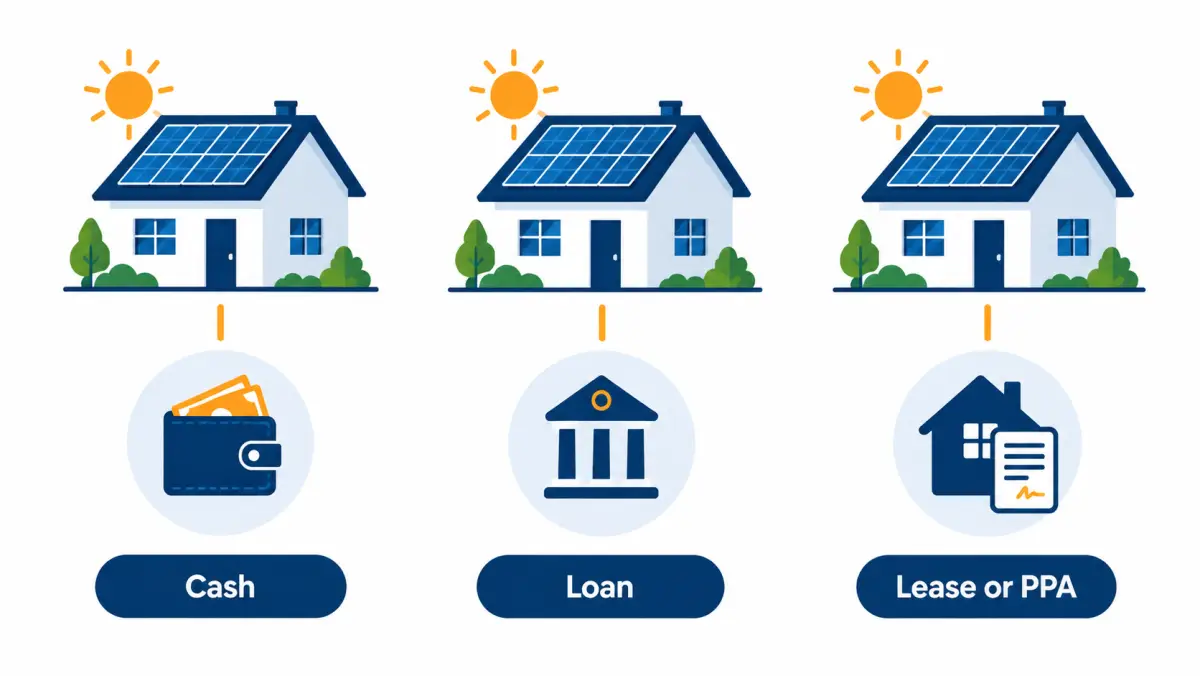
Leases and PPAs
| Option | Who owns the system | Federal credit in 2026 | Typical homeowner pitch |
|---|---|---|---|
| Cash purchase | Homeowner | No 25D for systems completed after 2025 | Long-term savings, ownership, home value |
| Loan | Homeowner | No 25D for systems completed after 2025 | Monthly payment vs utility bill, ownership |
| Lease | Third party | Owner may claim 48E, subject to deadlines | Fixed monthly payment, low or no upfront cost |
| PPA | Third party | Owner may claim 48E, subject to deadlines | Pay per kWh produced, low or no upfront cost |
| Prepaid lease | Third party | Owner may claim 48E, subject to deadlines | One upfront payment, no monthly bill to the provider |
Talk to your tax advisor about specific projects.
The shift has consequences for lead buying:
- Credit checks matter. TPO providers have credit requirements. Leads with a self-reported credit range help you avoid appointments that cannot be approved.
- Bill size matters more. Lease and PPA pitches lean on comparing the new payment to the current utility bill.
- Homeowner status still matters. Renters cannot sign a lease for a roof they do not own.
State availability varies
Third-party ownership is not available everywhere. Some states restrict or do not clearly allow PPAs, and providers choose which states and utilities they serve. Before you shift your lead spend toward TPO, confirm which providers you can sell through in each ZIP code you target. Buying leads in areas where your TPO partners do not operate wastes the spend.
Prepaid leases
A prepaid lease lets a homeowner pay the lease cost upfront, often appealing to cash buyers who lost the 25D credit. The TPO owner keeps ownership and may claim the business credit, which can be reflected in the price. Rules and product availability vary by provider; check terms with your partners and talk to your tax advisor about specific projects.
How should installers change their pitch and qualification after 25D?
After 25D, installers should qualify for financing path early, build savings claims on the homeowner's actual bill and realistic assumptions, and prepare for objections about selling a home with a leased system. Remove any script line that mentions a 30% homeowner credit. Savings claims need to be defensible, both for trust and because regulators scrutinize misleading solar sales.
Questions that now matter
Add these to your setter script and your lead filters where possible:
- Do you own the home? Unchanged, still first.
- What is your average monthly electric bill? Drives both loan and lease math.
- Are you thinking of paying cash, financing, or would a monthly plan with no upfront cost be better? Sorts the lead into a product path.
- How long do you plan to stay in the home? Matters for loan payback and lease transfer.
- Have you looked at solar before? Many 2025 shoppers paused; they may need a fresh explanation.
- Is battery backup important to you? Opens the storage conversation (see below).
- Did anyone tell you about a tax credit? Lets you correct misinformation early.
Savings claims must be defensible
Without the credit, the gap between an honest and an exaggerated savings claim is wider. The Federal Trade Commission has issued consumer guidance on solar warning homeowners about misleading promises, including claims about tax credits and savings. Keep proposals grounded:
- Use the homeowner's real usage and current utility rates.
- State assumptions such as rate escalation and degradation in writing.
- Show the no-solar baseline next to each option.
- Never say a federal credit applies to a homeowner-owned system completed after 2025.
- For TPO, explain escalators and term length clearly.
Home sale and lease transfer objections
A common TPO objection: "What happens if I sell my house?" Know your partners' transfer process: whether the buyer must qualify, whether the lease can be bought out, and how long transfers usually take. A clear answer in the first meeting removes a reason to delay. Train reps not to dismiss the concern; it is a fair question and a frequent reason deals stall.
Do batteries change solar lead strategy after 25D?
Batteries can change solar lead strategy in markets where utility rate design, outages or export compensation make storage valuable, and storage can add revenue per job. But the tax treatment of residential batteries after 25D varies by ownership model and has been described inconsistently across sources, so confirm current rules before quoting any battery credit to a homeowner.
Attach rate context by market
Battery interest is uneven. It tends to be strongest where:
- Export compensation for solar is low, so storing midday power for evening use is worth more.
- Time-of-use rates make evening power expensive.
- Outages are frequent or long.
- Utilities or states offer storage incentives or demand-response payments.
Ask lead vendors whether they can capture "interested in battery backup" as a field. A lead that wants backup power is often a different buyer from one who only wants a lower bill, and your pitch should change accordingly.
Credit status is inconsistent across sources
For homeowner-owned batteries, 25D ended on the same timeline as solar. For TPO and commercial batteries, storage may be eligible for business credits under different rules and deadlines from solar. Published summaries do not always agree on the details. Before your reps say anything about a credit for storage, confirm it with your finance partners and talk to your tax advisor about specific projects.
How should reps explain the credit change on a first call?
Reps should explain the credit change in one or two plain sentences, without blame or drama, then move straight to the homeowner's bill and the options that still work. Many homeowners heard about the 30% credit from a neighbor or an old ad. A calm, accurate correction builds trust; a dodge or an outdated promise destroys it and can create legal risk.
A sample first-call script
The script below is a starting point, not a legal or tax script. Have your compliance lead and counsel review any script your team uses.
Rep: Thanks for asking about solar. Before we get into numbers, one quick thing: you may have heard about a 30% federal tax credit. That homeowner credit ended for systems finished after the end of 2025, so I want to make sure you're comparing current options. The good news is there are still a few ways to lower your bill. Can I ask what your electric bill usually runs each month?
Homeowner: Around two hundred, more in summer.
Rep: Got it. Some homeowners prefer to own the system with cash or a loan, and others go with a monthly plan where a company owns the panels and you pay for the power, usually with little or nothing upfront. Is one of those closer to what you had in mind?
Homeowner: I don't want to put money down.
Rep: That's common. Let me set up a time for one of our consultants to look at your roof and your bills and show you what a monthly plan would look like next to what you pay now. Does Tuesday evening or Thursday afternoon work better?
Notice what the script does: it corrects the credit once, uses the bill as the anchor, sorts the homeowner into a product path, and books a next step. It does not promise savings, quote a credit, or argue about policy.
Objections that come up more often now
| Objection | What is behind it | A fair response |
|---|---|---|
| "My neighbor got 30% back." | Old information | That credit ended for systems finished after 2025; here is what is available now. |
| "I'll wait for the credit to come back." | Hope of a policy change | Nobody can promise that; here is what the numbers look like today so you can decide. |
| "Without the credit it's not worth it." | Payback anchored on the old math | Let's compare your bill with each option, including a no-upfront plan. |
| "What if I sell the house?" | Lease transfer worry | Here is how transfers work with our partner, step by step. |
| "Is a lease a scam?" | Bad press or past experience | Here is the contract, the escalator and the term; read it before you sign. |
Train reps on these and listen to recorded calls weekly. The objections will shift as homeowners hear more about the change.
What scripts and templates work for post-25D solar leads?
Post-25D scripts should correct the credit once, anchor on the homeowner's bill, sort the lead into a financing path, and book a next step, in that order. The templates below cover voicemail, text, email, re-engagement of 2025 shoppers, closer openings and handoffs. Have compliance and counsel review them before use.
These are starting points written for this guide. Adapt them to your products, your state rules and your partners' approved language. None of them is legal or tax advice. Text messages and calls to leads must follow the consent the homeowner actually gave; see our solar TCPA compliance guide and confirm with counsel.

First voicemail
"Hi [first name], this is [rep] with [company], returning your request about solar for your home on [street]. I'll send you a quick text too. The main thing I want to do is look at your electric bill with you and show you the options that work this year. You can reach me at [number]. Thanks."
Why it works: it references their request, sets up a text, and mentions "options that work this year" without bringing up the credit in a voicemail, where you cannot answer follow-up questions.
First text (only where consent covers texting)
"Hi [first name], it's [rep] at [company] about your solar request. When's a good time for a 5-minute call? Reply STOP to opt out."
Keep it short. Do not mention credits, savings percentages or "free" in a text.
First live call opening
The full first-call script is earlier in this guide. Here is a shorter version for setters who reach the homeowner on a mobile while they are busy:
"Hi [first name], [rep] from [company], you asked about solar. Is now a quick minute or should I call back? ... Great. Two quick questions so I don't waste your time: do you own the home, and roughly what's your electric bill each month?"
Save the credit correction for when the homeowner raises it or when you reach the financing question. Many homeowners in 2026 already know. Leading with it on every call wastes time.
When the homeowner raises the credit first
"Good question. The federal credit for homeowners ended for systems finished after 2025, so I won't build anything around it. Some people now go with a monthly plan where a company owns the panels, and others still buy. I'd rather show you both against your real bill. What's it running lately?"
Re-engagement message for 2025 shoppers
For homeowners who got quotes in 2025 and stopped, where your consent and do-not-call checks clear:
Text version:
"Hi [first name], [rep] at [company]. You looked at solar with us last year. A few things changed for 2026, including the federal homeowner credit ending. If you'd like an updated look at your options, reply YES and I'll call. Reply STOP to opt out."
Email version:
Subject: Your solar options for 2026
Hi [first name],
Last year you looked at solar for your home. Since then, the federal homeowner tax credit (Section 25D) ended for systems finished after December 31, 2025. That changes the math for buying a system, and it is why some homeowners are now choosing monthly plans where a company owns the panels.
If you'd like, we can put together an updated comparison based on your current bill: buying, financing, and a monthly plan where available at your address. There's no obligation.
Reply to this email or book a time here: [link].
[Rep name] [Company] | [License number where required]
This message is general information, not tax advice. Talk to your tax advisor about your situation.
Closer opening at the appointment
"Before I show you anything, let me tell you how I'll do this. I'm going to start from your actual bills, show you three ways to pay if they're available here, and put every assumption in writing so you can check it. The federal homeowner credit ended last year, so it's not in any of these numbers. Sound fair?"
That last line removes the elephant from the room in one sentence and earns permission to proceed.
Setter-to-closer handoff note template
Use the same fields for every appointment so closers do not re-ask questions:
| Field | Example entry |
|---|---|
| Homeowner(s) and decision makers present | Both spouses confirmed |
| Average monthly bill and utility | About $X, [utility] |
| Financing preference stated | Monthly plan, no money down |
| Credit range (self-reported, if collected) | [range] |
| Battery interest | Yes, outages last winter |
| Credit misconceptions heard | Thought 30% still applied, corrected on call |
| Length of stay | Plans to stay 10+ years |
| Objections raised | "What if I sell?" |
| Roof notes | Asphalt, about 10 years old |
| Lead source and lead ID | [vendor], [ID] |
The "credit misconceptions heard" field is new for 2026. Track it. If one source produces far more misconceptions than others, check that vendor's ads and landing pages.
Objection handling, expanded
The objection table earlier covers the five most common objections. These are the next tier, also heard more often after 25D:
| Objection | A fair response |
|---|---|
| "Isn't the government going to bring the credit back?" | "I can't predict that, and I'd never ask you to decide based on a guess. Let's see if it makes sense without it. If it doesn't, you shouldn't do it." |
| "The other company said I'd still get a credit." | "I'd ask them to put that in writing with the tax code section. Based on IRS guidance, the homeowner credit ended for systems finished after 2025. Please check with your tax preparer." |
| "A monthly plan sounds like renting my roof." | "That's a fair way to see it. You don't own the system; you pay for the power or a set monthly amount. Let's compare that with owning so you can pick." |
| "What happens when the lease ends?" | "Here is what our partner's contract says about the end of term: [options per contract]. Read that page before you sign." |
| "Is the price going to go up every year?" | "Some plans have an annual escalator. This one is [X% or none, per contract]. Here is what the payment looks like in year 1, year 10 and year 20." |
| "I'll just get a generator." | "For some homes that's the right call. Let's compare what a battery covers versus a generator for your loads, and what each costs to run." |
Closing and next step lines
- "Would you like me to send this comparison so you can look at it together tonight?"
- "Which option, if any, would you want to see a final proposal for?"
- "What would you need to see to feel comfortable either way?"
Notice none of these pressures the homeowner. Pressure tactics show up in cancellations, complaints and chargebacks, and they get worse when the main financial incentive is gone.
What should a post-25D solar proposal include?
A post-25D solar proposal should show the homeowner's current bill as the baseline, each available payment option side by side, every assumption in writing (rate escalation, degradation, escalator, term), no homeowner federal credit for systems completed after 2025, and clear terms for transfer, buyout and end of contract. Accuracy protects both the sale and your license.
The FTC's consumer guidance on solar advises homeowners to get multiple quotes, check claims about tax credits and savings, and read contracts carefully. Write proposals that would pass that homeowner's checklist.
Proposal checklist
Baseline
- 12 months of usage from the homeowner's bills or utility data
- Current rate plan and utility named
- "No solar" cost projection shown with the same assumptions as the solar options
Options
- Cash price, if offered
- Loan terms: rate, term, payment, any dealer fee disclosure required in your state
- Lease or PPA terms, if offered: payment or rate per kWh, escalator, term, end-of-term options
- Prepaid lease, if offered
- Battery as a separate line, with what it covers in an outage
Tax and incentives
- No 25D credit shown for systems completed after December 31, 2025
- Any state or utility incentive named with program name and current status
- Line stating "This is not tax advice. Talk to your tax advisor about your situation."
Assumptions
- Utility rate escalation assumption, stated as an assumption
- Panel degradation assumption
- Production estimate method and shading notes
- Export compensation assumption under the current tariff
Contract terms
- Home sale and transfer process
- Buyout options
- Warranty and production guarantee terms (as offered by the manufacturer or provider)
- Cancellation rights
Wording to remove from old templates
Search your proposal software, website, ads and email templates for these phrases and remove or rewrite them:
| Phrase found in 2025 templates | Problem | Replacement idea |
|---|---|---|
| "30% federal tax credit" | Not available for homeowner systems completed after 2025 | Remove for homeowner-owned systems |
| "Net cost after credit" | Implies a credit | "Total cost" |
| "The government pays for a third" | False for 2026 installs | Remove |
| "Free solar" | Misleading | "No upfront cost option" only if accurate |
| "Guaranteed savings" | Usually not guaranteed | Describe the actual guarantee, if any, from the contract |
| "Act before the credit expires" | Deadline has passed for homeowners | Remove |
Talk to your tax advisor about specific projects.
What compliance issues get sharper after 25D?
After 25D, misstatements about tax credits become a clear consumer-protection risk, and calling or texting leads still requires valid consent under the TCPA and state rules. The FCC's one-to-one consent rule was vacated by the Eleventh Circuit on January 24, 2025, but prior express written consent requirements still apply. Confirm with counsel.
This section flags issues; it is not legal advice. Confirm with counsel.
Credit claims in marketing
Any ad, landing page, text or script that tells a homeowner they will receive a federal credit for a 2026 homeowner-owned system is inaccurate under the IRS guidance cited in this article. That applies to your materials and, in practice, to your lead vendors' materials, because the homeowner associates the claim with whoever calls them. Audit both.
Consent for calls and texts
The FCC's one-to-one consent rule, which would have required consent to name a single seller, was vacated by the Eleventh Circuit on January 24, 2025. That did not remove the underlying TCPA requirements for autodialed or prerecorded calls and texts, or state laws that add their own rules. Our standard: "Every lead carries a timestamped consent record (certificate) whose disclosure names your company. We send it to you on request." Our TCPA compliance policy and the solar TCPA compliance guide cover the details. Confirm with counsel.
Re-contacting 2025 shoppers
Re-engagement campaigns aimed at people who shopped in 2025 are tempting. Check three things before you send anything: whose consent the record carries, whether the number is on the National Do Not Call Registry or your internal list, and whether your state limits contact times or frequency. Confirm with counsel.
Savings and contract disclosures
Some states require specific disclosures for solar sales, leases or PPAs. With more deals moving to TPO, make sure your reps use the provider's required disclosure documents and do not summarize terms in ways that contradict them.

Which metrics should you track to see the post-25D effect?
Track your funnel by financing path and lead source every month: contact rate, appointment rate, sit rate, close rate, financing approval rate and cost per sale. Compare each with the same month in 2025. Those few numbers tell you whether the end of 25D is hurting your business, where, and which adjustments are working.
| Metric | Split by | What a change tells you |
|---|---|---|
| Contact rate | Vendor, territory | Lead quality and speed, mostly unrelated to 25D |
| Appointment rate | Financing preference | Whether homeowners still see value at first contact |
| Sit rate | Financing preference | Whether interest survives until the meeting |
| Close rate | Cash, loan, lease, PPA | Where the credit loss bites hardest |
| Financing approval rate | Product | Whether credit filters on leads need tightening |
| Average system size and revenue per job | Product, battery attach | Whether storage or TPO changes job value |
| Cost per sale | Vendor, product | The number that decides where to spend |
If contact rate falls, look at the vendor and your speed to lead. If contact holds but close rate on cash and loan deals falls, that is the credit effect, and the response is product mix and qualification, not a new vendor. Separating those two causes saves you from firing a good vendor for a policy problem.
Using the numbers to set a target lead price
Here is an illustrative example of working backward. Suppose you decide you can afford $Y of lead cost per sale after the credit change, and your 2026 data shows 1 sale per 25 leads on your best source. Then your maximum price per lead on that source is $Y divided by 25. If a vendor's price is above that, the source does not work for you at current conversion, no matter how good the leads look. Our solar lead cost calculator runs this math for you.
What should you ask your solar lead provider after 25D?
After 25D, ask your solar lead provider whether its forms and filters changed for 2026, whether it can capture financing preference and credit range, how its refund terms treat leads that cannot qualify for any product you sell, and whether it supports a small pilot so you can measure post-25D conversion before scaling. Vendors that still advertise a 30% credit to homeowners are a warning sign.
Spec changes
Questions to put to every vendor:
- Did your landing pages and ads remove references to a homeowner tax credit?
- Can you add a financing-preference question (cash, loan, monthly plan)?
- Can you filter by minimum bill, credit range, or TPO-available ZIP codes?
- Can you capture battery interest?
- How has your contact rate changed in 2026 in my territory?
A vendor still promising homeowners a federal tax credit on its capture pages is sending you leads with wrong expectations, and potentially creating compliance risk. Check the live pages. Our guide on how to vet a solar lead provider covers the full checklist.
Replacement terms
Ask whether leads that fall outside new filters (for example, a lead that says it wants a monthly plan in a ZIP where you have no TPO partner) count as outside your filters. Our policy covers leads outside your filters: "Replacement credits for disconnected numbers, wrong contact details, or leads outside your filters." What is not covered: "a prospect who isn't interested, doesn't answer, doesn't get financing approved, or doesn't buy." That last point matters more in 2026, because financing declines are more common when deals move to credit-checked products. Set filters accordingly.
Pilot after the shift
Do not assume a vendor that worked in 2025 still works now. Run a fresh test batch with 2026 filters, track it for a full sales cycle, and compare cost per sale with your 2025 baseline. Our term is: "No long-term contracts. Start with a test batch, scale when the numbers work." That approach fits a market where the rules just changed.
How do you set lead filters for the post-25D market?
Set post-25D lead filters around the products you can actually sell at each ZIP: homeowner status, minimum bill, financing preference, credit range where available, battery interest, roof and property type, and TPO availability by ZIP. Each filter should remove leads you cannot convert, not just shrink volume. Review filters monthly against close data.
Filters are the cheapest lever you have. A filter costs nothing to add, and it decides what you pay for. But every filter also removes some good leads and usually raises the unit price. The goal is the combination with the lowest cost per sale, which you only find by testing.
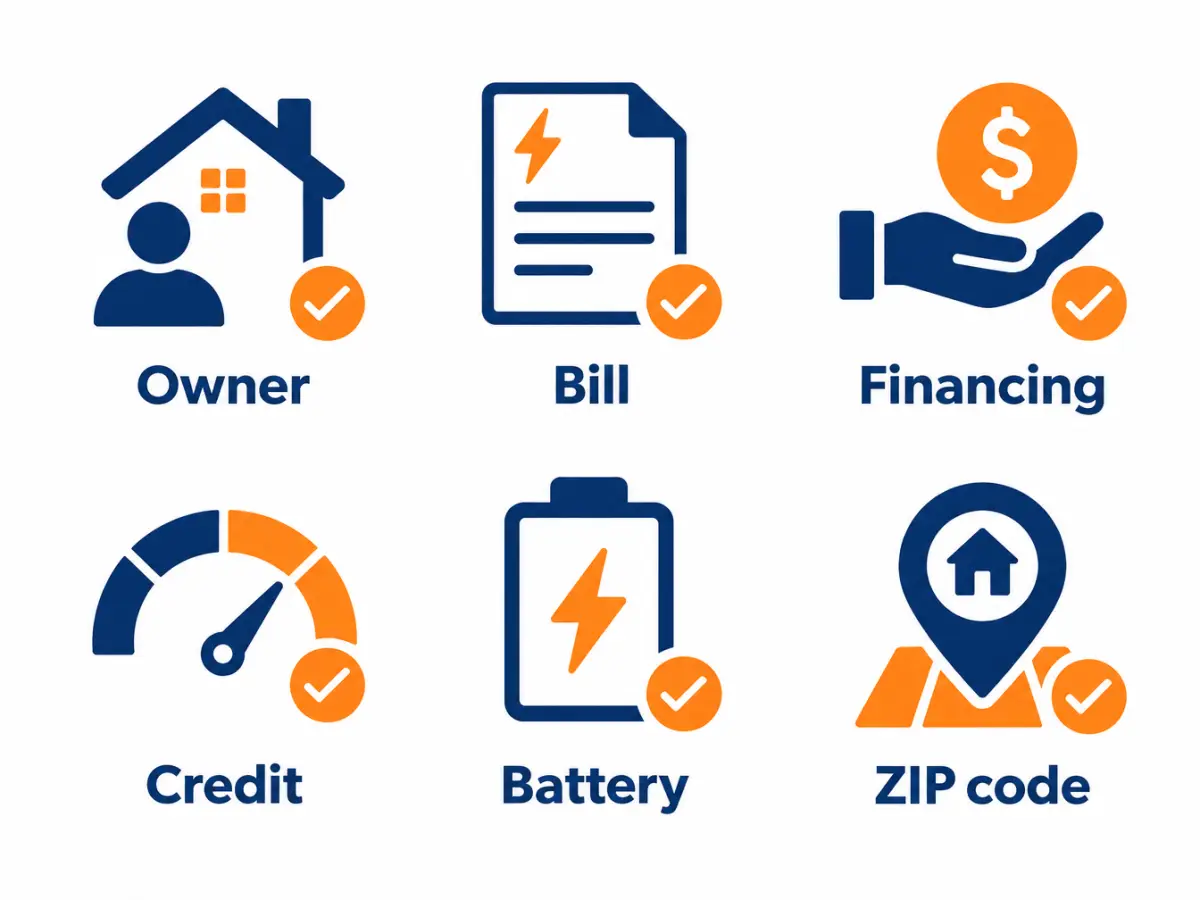
Filter-by-filter guide
| Filter | Why it matters after 25D | How strict to start | Tradeoff |
|---|---|---|---|
| Homeowner | Renters cannot buy or lease for a roof they do not own | Required | None worth taking |
| Minimum monthly bill | Savings math, for both ownership and monthly plans, starts here | Set from your own closed-deal data | Higher threshold, fewer leads, higher price |
| Financing preference | Routes the lead to a product path | Capture, do not filter out at first | Filtering out monthly-plan leads only makes sense where you have no TPO partner |
| Credit range (self-reported) | TPO and loans are credit-checked | Capture where the vendor can | Self-reported, so treat as a signal |
| Battery interest | Identifies backup-driven buyers | Capture | Few downsides |
| Property type | Single-family vs condo vs mobile home | Match what you install | Condos often need HOA approval |
| Roof type and age | Some roofs need replacement first | Capture if possible | Roof work can add revenue or kill a deal |
| ZIP list | TPO and utility coverage | Match partner coverage | Smaller list, fewer leads |
| Shade | Production | Rarely reliable at lead stage | Better checked on the appointment |
| Length of stay | Payback and transfer questions | Capture where possible | Self-reported |
Our quality checks, for reference, are: phone number validated before delivery; homeowner status self-reported, then checked against property records; duplicate-checked against leads already sent to you; scrubbed against the National Do Not Call Registry. Replacement credits cover "disconnected numbers, wrong contact details, or leads outside your filters," within 7 days. Because "leads outside your filters" is a replacement reason, writing filters precisely protects you.
A test plan for filters
- Pick two specs. Spec A is your current filter set. Spec B adds one change, for example a higher bill threshold.
- Run both in the same ZIPs, same weeks. Otherwise season and territory differences hide the effect.
- Set a sample size before you start. Decide how many leads per spec, for example enough to expect several closes on each side. Small samples swing wildly.
- Track every lead to an outcome. Contacted, appointment, sit, close, or dead with a reason.
- Decide on cost per sale. Not contact rate, not appointment rate.
- Change one thing at a time. Two simultaneous changes make the result impossible to read.
Common filter mistakes after 25D
- Filtering out every monthly-plan lead in ZIPs where you do have a TPO partner. You are throwing away the leads most likely to convert in 2026.
- Raising the bill threshold too far. You get fewer, pricier leads and may not gain enough conversion to pay for it.
- Writing vague filters. "Good credit" is not a filter. "Self-reported credit range of [X] or above" is.
- Never revisiting filters. Partner coverage and products change. Review monthly.
What should you put in a request for proposal to solar lead vendors in 2026?
A 2026 request for proposal to solar lead vendors should ask how leads are generated, what the capture page says about tax credits, which fields are collected, how consent is recorded, how filters and replacements work, what a pilot looks like, and what data the vendor will share. Comparing answers side by side beats comparing price sheets.
Send the same document to every vendor. Ask for written answers. Our best solar lead providers page explains the buying criteria in more depth, and how to vet a solar lead provider covers verification steps.
RFP template
Section 1: Lead generation
- Which channels generate your leads (search, social, display, affiliates, call center)?
- Do you use any third-party publishers or affiliates? If so, how do you control their claims?
- Please send links to every live landing page that would feed our leads.
- Do any of your ads or pages mention tax credits? Please quote the exact wording.
Section 2: Data fields
- List every field delivered with a lead.
- Do you capture financing preference (cash, loan, monthly plan)?
- Do you capture self-reported credit range, monthly bill, battery interest, roof type, length of stay?
- Can we add custom questions?
Section 3: Consent and compliance
- How is consent captured, and does the disclosure name our company?
- Can we receive the consent certificate for each lead?
- How do you scrub against the National Do Not Call Registry and state lists?
- Who handles consumer complaints about your marketing?
Section 4: Exclusivity and delivery
- Is each lead sold once, or to multiple buyers? How many?
- Are leads ever resold later as aged leads?
- How quickly are leads delivered, and to which systems?
Section 5: Filters and replacements
- Which filters can we set (ZIP, bill, homeowner, financing preference, credit range, property type)?
- What is your replacement policy, what is covered and not covered, and what is the window?
- How do you treat a lead that does not match our filters?
Section 6: Pilot and terms
- What is the minimum test batch?
- Is there a long-term contract or minimum commitment?
- What reporting do you provide during a pilot?
- How has contact rate changed in our territory in 2026?
Scoring the answers
| Criterion | Weight (your choice) | Vendor A | Vendor B | Vendor C |
|---|---|---|---|---|
| No homeowner credit claims on pages | Pass/fail | |||
| Consent names your company | Pass/fail | |||
| Financing-preference field | ||||
| Exclusivity terms | ||||
| Filter options | ||||
| Replacement terms | ||||
| Pilot size and terms | ||||
| Reporting | ||||
| Price per lead (confirmed for your ZIPs) |
Pass/fail items come first. A vendor that fails either one is out, regardless of price.
What are illustrative post-25D turnaround walkthroughs?
These walkthroughs show how an installer might diagnose and fix a post-25D slowdown. They are illustrative composites written for this guide, not real client stories, and they contain no real results. Each follows the same method: split the funnel by financing path and source, find where the drop is, change one lever, measure cost per sale.
Walkthrough A: "The leads stopped working"
Situation (illustrative). A three-crew installer in a high-rate market says every vendor's leads got worse in the first quarter of 2026.
Diagnosis. The owner exports leads and outcomes. Contact rate is roughly the same as 2025 for every vendor. Appointment rate is a bit lower. Close rate on loan deals is clearly lower. Monthly-plan leads are a much larger share than before, and nearly all of them were lost because the company had no TPO product.
Action. Sign one TPO partner covering most of the territory. Add financing preference to intake. Brief the closer on lease terms and transfer process.
What to measure. Cost per sale by financing path for the next two full sales cycles, against the same months in 2025.
Lesson. The vendors were not the problem. The product shelf was.
Walkthrough B: "Our setters are drowning"
Situation (illustrative). A mid-size installer's setters handle the same lead volume as in 2025 but book fewer appointments, and speed to lead has slipped from minutes to hours.
Diagnosis. Each lead now takes more conversations: homeowners ask about the credit, compare plans, and ask for callbacks. Setter time per appointment has gone up, so leads wait longer, and slower response lowers contact rate.
Action. Add a short credit explanation to the script so setters stop improvising. Route monthly-plan leads to one specialist setter. Cut lead volume slightly until response time recovers. Test booked appointments for overflow in one territory.
What to measure. Median time to first call, appointments per setter hour, cost per sale.
Lesson. Volume above setter capacity raises cost per sale even if the leads are fine. See solar lead follow-up.
Walkthrough C: "Aged leads from last year"
Situation (illustrative). An installer has hundreds of 2025 quotes that never closed and is considering buying aged leads too.
Diagnosis. Many 2025 quotes were built around the 30% credit. Those homeowners have outdated expectations. Some have since installed with someone else.
Action. After confirming consent and do-not-call status with counsel, send the re-engagement email and text from the scripts section. Offer an updated comparison. Track replies and appointments separately from new leads.
What to measure. Cost per appointment and close rate on re-engaged records vs purchased aged leads vs new leads.
Lesson. Your own old quotes can be the cheapest leads you have, provided contact is lawful and the message is honest about what changed.
Walkthrough D: "We moved budget to commercial"
Situation (illustrative). A larger installer with a small commercial team considers shifting residential budget to commercial in 2026.
Diagnosis. Commercial projects depend on business credits with their own deadlines (see Notice 2025-42 for beginning of construction), on the business's tax position, and on longer sales cycles. A shift in budget will not produce revenue for months.
Action. Keep a reduced residential program running in the strongest archetype markets. Pilot commercial leads with a clear qualification checklist. Involve tax advisors early on each project.
What to measure. Pipeline value by stage, time from lead to signed contract, and project timing relative to credit deadlines. See commercial solar leads.
Lesson. Commercial is a different business, not a quick fix for residential.
Talk to your tax advisor about specific projects.
How do you troubleshoot a post-25D drop in solar lead results?
Troubleshoot a post-25D drop by locating the funnel stage where results fell, then checking the causes that fit that stage. Contact-rate drops usually point to speed or data quality; appointment and sit drops point to expectations and script; close-rate drops on cash and loan deals point to the credit loss and product mix.
Use this as a working checklist in your weekly sales meeting. Start at the top of the funnel and stop at the first stage that clearly changed.
Symptom, likely cause, first fix
| Symptom | Likely causes | First fix to try |
|---|---|---|
| Contact rate down | Slower response; bad numbers; leads sold to more buyers; time-of-day mismatch | Measure time to first call; request replacements for bad numbers within the window; test exclusive leads |
| Contact holds, appointments down | Homeowners hear "no credit" and stop; setter script improvised; no monthly-plan option | Standard credit line in script; add monthly-plan path; financing-preference field |
| Appointments hold, sits down | Credit-driven bookings cancel; long gap between booking and meeting | Confirm the night before; shorten time to appointment; correct credit expectations at booking |
| Sits hold, closes down (cash and loan) | The credit loss itself; old proposal templates; longer payback | Rebuild proposals on the bill; storage where valuable; offer TPO where available |
| Sits hold, closes down (TPO) | Credit declines; escalator objections; transfer worries | Capture credit range; train on escalator and transfer answers |
| Cancellations up after signing | Expectations set wrong; pressure close; homeowner talks to a tax preparer and learns there is no credit | Audit scripts and proposals for credit language; slow the close |
| Revenue per job down | Smaller systems; fewer batteries; more TPO with lower installer margin | Track revenue per job by product; check storage attach by market |
| Cost per sale up but every stage "a bit worse" | Market-wide demand drop plus higher competition | Tighten filters, reduce volume, focus on strongest markets |
Checking speed to lead
Pull a report of time from lead delivery to first call attempt for the last 60 days. Look at the median and the slowest quarter of leads. If response time has slipped, conversion usually slips with it, regardless of 25D. Our delivery line: "Real-time delivery to your CRM, dialer, email, or SMS." Real-time delivery only helps if someone acts on it. The solar lead follow-up guide covers staffing and cadence.
Checking data quality
Sample twenty recent dead leads. For each, note why it died: wrong number, not a homeowner, not interested, wanted a product you do not offer, credit decline, no answer after the full cadence. Wrong numbers and leads outside your filters are replacement items: "Replacement credits for disconnected numbers, wrong contact details, or leads outside your filters." Not interested, no answer and financing declines are not covered under our terms, so they belong in your filter and process review, not in a vendor dispute.
Checking the script
Listen to five recorded first calls from each setter. Count how many mention the credit, how they phrase it, and whether the homeowner's bill comes up in the first two minutes. Inconsistent credit explanations are a common hidden cause of lower appointment rates in 2026.
Checking the proposal
Open the last ten proposals that did not close. Look for leftover credit language, missing no-solar baselines, and unclear escalator terms. Ask the closer what the homeowner said at the end of the meeting.
When the answer is "the market"
Sometimes every stage is a little worse and nothing in your process explains it. That is consistent with the demand and CAC picture analysts describe for 2026. The response is not more volume. It is fewer, better leads in your strongest markets, an expanded product shelf, and patience while you collect enough data to see trends. Review the solar lead ROI break-even with your current numbers before cutting or adding spend.
Which KPIs belong on a post-25D solar sales dashboard?
A post-25D dashboard should show, by lead source and financing path: lead count, speed to first call, contact rate, appointment rate, sit rate, close rate, cancellation rate, revenue per job, battery attach rate and cost per sale, each compared with the same period in 2025. Review weekly for operations and monthly for spend decisions.
Most CRMs can produce these figures if the right fields are filled in. The usual blocker is missing data: financing path left blank, lead source overwritten, or outcomes never logged. Fix the fields first.
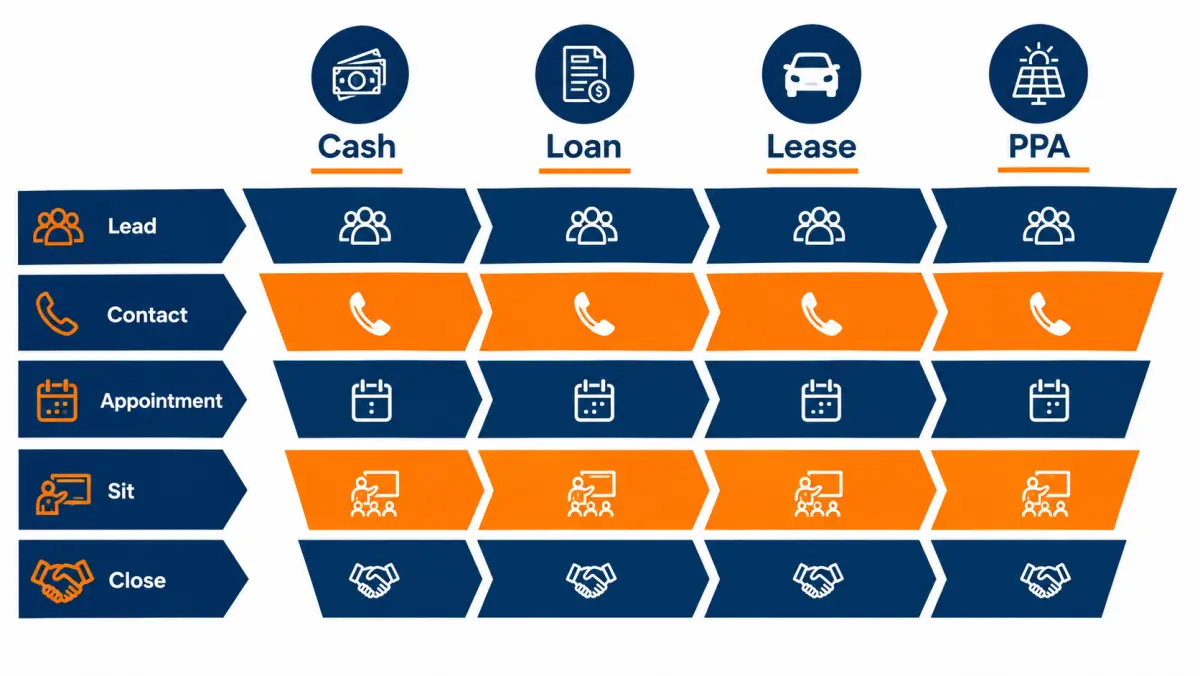
Required CRM fields
| Field | Values | When it is filled in |
|---|---|---|
| Lead source | Vendor name and product (exclusive, shared, aged, transfer, appointment) | At delivery, never edited |
| Lead ID | Vendor's ID | At delivery |
| ZIP and utility | From lead plus lookup | At delivery |
| Market archetype | 1 to 5 from the market section | At delivery, by ZIP lookup |
| Financing preference (stated) | Cash, loan, monthly plan, unsure | First contact |
| Financing path (final) | Cash, loan, lease, PPA, prepaid lease | At proposal |
| Battery interest | Yes, no, unsure | First contact |
| Credit misconception heard | Yes, no | First contact |
| Status | Contacted, appointment, sat, closed, cancelled, dead | Each stage |
| Dead reason | Fixed list | When marked dead |
| Revenue | Contract value | At close |
Dashboard layout
Row 1, this week vs same week 2025: leads, median time to first call, contact rate, appointments set.
Row 2, this month vs same month 2025, by financing path: sits, closes, close rate, cancellation rate.
Row 3, rolling 90 days, by source: cost per appointment, cost per sit, cost per sale.
Row 4, rolling 90 days, by market archetype: cost per sale, revenue per job, battery attach rate.
Weekly sales meeting agenda (30 minutes)
- Five minutes: speed to lead and contact rate by source. Any vendor issues or replacement requests outstanding?
- Ten minutes: two recorded calls. One that went well, one that did not. Focus on the credit explanation and the move to the bill.
- Ten minutes: pipeline by financing path. Which deals are stuck and why?
- Five minutes: decisions. Any filter changes, volume changes or script changes. Write them down with the date so you can measure their effect.
Monthly spend review agenda (60 minutes)
- Cost per sale by source and archetype, vs last month and vs 2025.
- Pilot results, if any are complete.
- Policy and partner check: any changes to TPO partner coverage, products, or tax guidance? Talk to your tax advisor about specific projects.
- Decision: scale, hold or cut each source. One owner per action.
How should you train sales reps for selling solar after 25D?
Train reps in four steps: the facts (what ended, what remains, where to send tax questions), the products (lease, PPA, prepaid lease, loan, cash, storage), the conversation (scripts, objections, the move from credit to bill), and the compliance boundaries (no tax advice, accurate claims, consent). Test each step with role-play before reps take live leads.
Reps who sold in 2025 may need more retraining than new hires, because their habits were built around the credit. Plan for both.
Week 1: facts
- Read the "What changed" section of this guide and the IRS pages it links.
- Memorize the one-sentence credit explanation.
- Learn the referral line for timing and tax questions: "Your tax preparer is the right person to look at that."
- Quiz: five questions (below).
Week 2: products
- Partner training on each lease and PPA product: payment structure, escalator, term, transfer, buyout, end of term.
- Battery training: what loads a battery covers, outage behavior, how it interacts with your utility's rate plan.
- Loan training: rate, term, any dealer fees and required disclosures.
Week 3: conversation
- Role-play the first call, the credit question, the "I'll wait" objection, the "what if I sell" objection, and the re-engagement call.
- Shadow a senior setter or closer for at least a day.
- Review recorded calls with a manager.
Week 4: live with supervision
- Take live leads with call recording on and daily review.
- Manager signs off when the rep handles the credit question accurately and consistently.
Five-question knowledge check
- A homeowner whose system was completed in January 2026 asks if they get the 30% credit. What do you say?
- A homeowner paid a deposit in 2025 and finished in 2026. Can you tell them whether they qualify?
- What is the difference between a lease and a PPA?
- A homeowner asks if a monthly plan's payment can go up. What do you check before answering?
- Who should answer questions about carryforward of an earlier credit?
Expected answers: (1) no homeowner credit for systems completed after 2025, then move to options; (2) no, refer to their tax preparer, IRS guidance ties it to completion; (3) a lease is a set payment for use of the system, a PPA is a price per kWh produced; (4) the escalator in the specific contract; (5) the homeowner's tax preparer.
Role-play scenarios
| Scenario | Homeowner says | What a good answer includes |
|---|---|---|
| The neighbor | "My neighbor got thousands back last spring." | Likely an earlier install or carryforward; ended for 2026 installs; move to bill |
| The waiter | "I'll wait for Congress to bring it back." | No prediction; decide on today's numbers; no pressure |
| The skeptic | "Leases are a scam." | Acknowledge, show the contract, explain escalator and transfer |
| The prepper | "I just want backup power." | Ask about loads, outage history; storage first, then bill |
| The researcher | "I read that leased systems still get a credit." | The owner of a leased system may claim a business credit subject to rules; the homeowner does not claim it; refer tax questions |
| The returner | "You quoted me last year with the credit." | Thank them, explain the change, offer an updated comparison |
Talk to your tax advisor about specific projects.
How is commercial solar different after 25D?
Commercial solar is less affected by the end of 25D because 25D was always a homeowner credit. Businesses that own solar may claim Section 48E or related credits subject to the OBBBA deadlines and other requirements, so commercial lead strategy turns on project timing, begin-construction rules and the business owner's tax position rather than the homeowner credit.
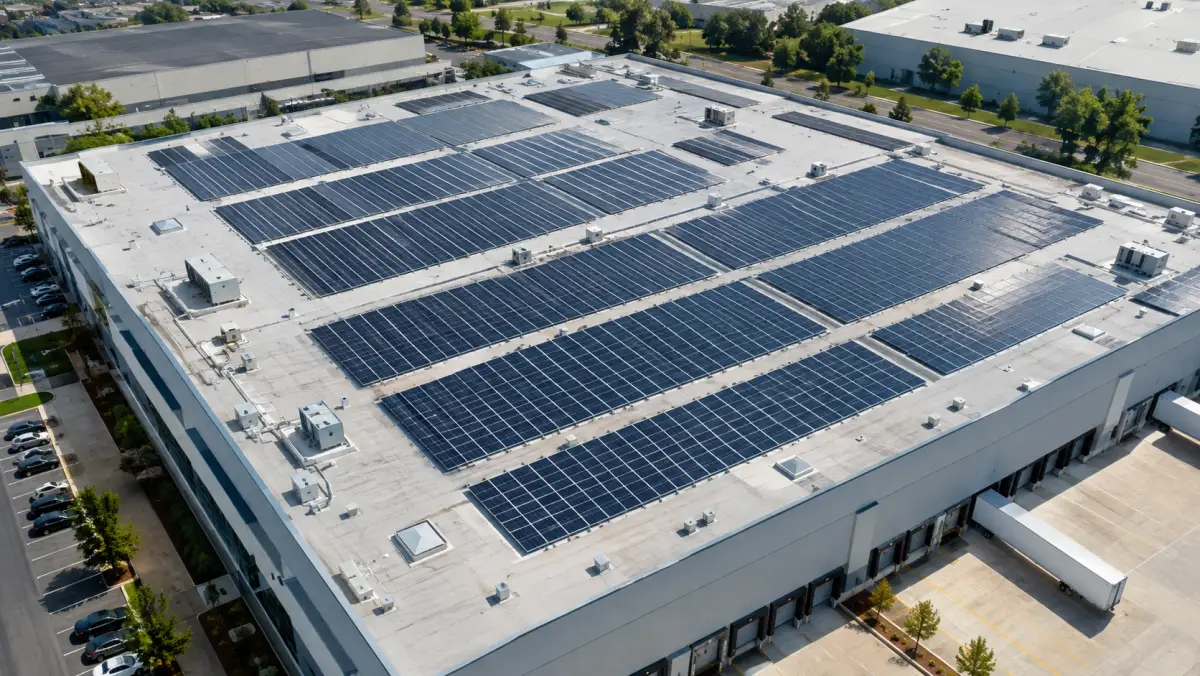
Commercial buyers are a different lead entirely: longer sales cycles, multiple decision makers, and project economics driven by business tax capacity, depreciation and utility tariffs. If you are considering C&I, read our page on commercial solar leads and talk to your tax advisor about specific projects. Timelines matter more there, because deadlines tied to beginning construction and placing in service can decide whether a project pencils.
What is a 30/60/90-day action plan for installers after 25D?
A practical 30/60/90-day plan is: in the first 30 days, clean scripts and measure your post-25D funnel; by day 60, adjust lead filters, add TPO and battery paths and run a fresh pilot; by day 90, scale the sources and products that produce the lowest cost per sale and cut the rest. Re-check tax deadlines at each step.
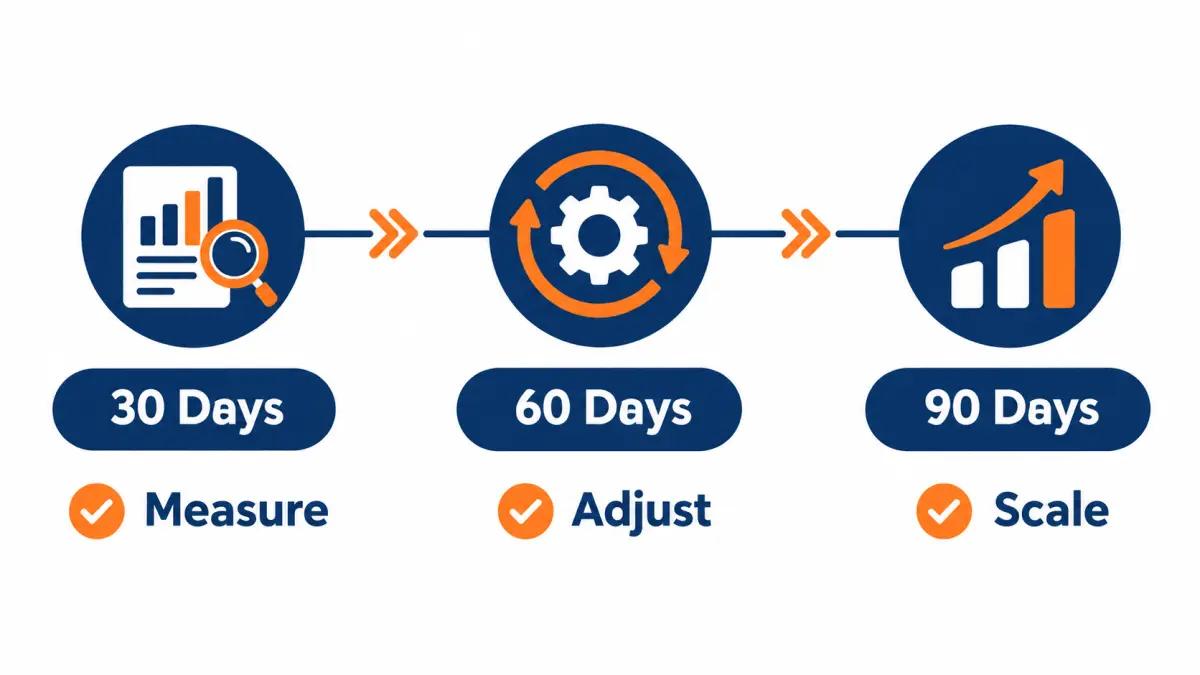
Days 1 to 30: clean up and measure
- Remove every reference to a 30% homeowner credit from scripts, proposals, website and ads.
- Brief reps on the 25D end date and the completion-date rule. Talk to your tax advisor about specific projects.
- Pull 2025 and 2026 funnel data by source and financing type.
- Calculate current cost per sale using the solar lead cost calculator.
- List which TPO providers you can sell through, by ZIP.
Days 31 to 60: adjust and pilot
- Update lead filters: homeowner, bill threshold, financing preference, TPO-available ZIPs.
- Add battery interest to intake where storage makes sense in your market.
- Ask vendors to confirm their pages no longer promise homeowner credits.
- Run a pilot batch with the new filters from one or two vendors.
- Train reps on lease transfer and home-sale objections.
Days 61 to 90: scale what works
- Compare pilot cost per held appointment and early closes with your baseline.
- Shift spend toward the vendor, product and territory mix with the lowest cost per sale.
- Consider homeowner solar leads with tighter filters, or booked appointments, if your setters are stretched.
- Recheck 48E deadlines and partner product changes before quarter-end.
Scenarios by installer size
| Installer size | Biggest post-25D risk | First move |
|---|---|---|
| Small (1 to 3 crews) | Cash and loan pipeline dries up | Add at least one TPO partner, tighten filters |
| Mid-size (4 to 10 crews) | Setter capacity wasted on unqualified leads | Add financing-path questions, test exclusive leads |
| Large (multi-state) | CAC rises faster than revenue per job | Shift spend to markets with storage value and TPO availability |
How should solar lead strategy differ by installer size after 25D?
Lead strategy after 25D should follow your capacity and your product shelf. Small installers need fewer, tighter leads and at least one monthly-plan option; mid-size installers need setter discipline and financing-path routing; large multi-state operators need market-by-market budgets tied to TPO availability and storage value. One plan for all sizes wastes money.
The table in the action plan above gives the one-line version. This section goes deeper, with an illustrative walkthrough for each size. The numbers in the walkthroughs are invented round figures to show the mechanics. They are not benchmarks, and they are not our prices.
Small installers: one to three crews
A small installer's biggest risk in 2026 is an empty install calendar. Crews are a fixed cost, and a two-week gap hurts more than a slightly higher cost per lead.
What changed for this group. Many small shops sold mostly cash and loan deals and relied on the 30% line to close. Some have no TPO partner at all. If that describes you, the end of 25D removed your strongest closing argument and left you with only the products that lost the credit.
Priorities, in order:
- Add a monthly-plan path. Even one lease or PPA partner that operates in your ZIPs changes which leads you can use. Without it, every "no money down" lead is a likely loss.
- Buy fewer leads with tighter filters. Homeowner status, minimum bill, roof type you install, and a financing-preference question.
- Answer fast. Small teams often lose leads simply because the owner is on a roof. A part-time setter or an answering workflow can matter more than a new vendor. See solar lead follow-up.
- Consider booked appointments for overflow. If you cannot staff a setter, solar appointments shift the setting work to the provider, at a higher unit cost.
Illustrative walkthrough. A two-crew installer sold mostly loans in 2025. In early 2026 the owner notices more first calls ending with "I'll wait." He adds one TPO partner, adds a question to his lead filter ("cash, finance, or monthly plan?"), and reduces his weekly lead order by a third so he can call every lead within minutes. After two months he compares cost per sale against 2025 by financing type. That comparison, not a vendor's promise, tells him whether the change worked.
Mistakes to avoid: buying a large shared-lead package to "make up volume," keeping old proposal templates that mention a 30% credit, and signing a long contract with any vendor while the market is moving. Our terms are simple: "No long-term contracts. Start with a test batch, scale when the numbers work."
Mid-size installers: four to ten crews
Mid-size installers usually have dedicated setters and closers, several lead sources and a CRM. Their 2026 risk is waste: setters burning hours on leads that cannot qualify for any product you sell.
Priorities:
- Route by financing path at intake. A cash-leaning lead and a monthly-plan lead need different closers, different proposal templates and sometimes different appointment lengths.
- Measure by source and path. Your CRM can probably split close rate by vendor already. Add financing path as a required field, and you can see where the credit loss bites.
- Test exclusivity. When fewer homeowners buy, the cost of competing with three other installers on the same lead goes up. See exclusive vs shared solar leads for the trade-offs.
- Coach objections weekly. Post-25D objections change as homeowners hear more news. Recorded calls are your best training material.
Illustrative walkthrough. A seven-crew company buys from three vendors. In 2026 its overall close rate drops. When the sales manager splits the data, she finds contact and appointment rates are steady on all three sources, but loan close rates fell on the source whose ads targeted "tax credit" searchers. That source's homeowners were credit-driven; once the credit ended, fewer bought. She cuts that source back, asks the other two to add a financing-preference field, and moves the saved budget into a pilot of exclusive leads in the ZIPs where her TPO partner operates.
Mistakes to avoid: firing a vendor for a policy problem (see the metrics section above), and letting every closer improvise their own credit explanation.
Large and multi-state installers
Large operators have the data and the budget to treat 2026 as a portfolio problem. Their risk is that acquisition cost rises faster than revenue per job, as Wood Mackenzie's CAC outlook suggests could happen across the market.
Priorities:
- Budget by market, not by company. A market with available TPO products, poor export compensation and frequent outages has different economics from one with none of those. Lead spend should follow.
- Watch 48E deadlines with finance. If your TPO partners or your own TPO program depend on the business credit, project timing in 2026 and 2027 matters. Notice 2025-42 sets the beginning-of-construction rules for solar. Talk to your tax advisor about specific projects.
- Separate storage economics. Battery attach can raise revenue per job where it has value. Track it as its own line.
- Negotiate data, not just price. Ask vendors for field-level data (bill, financing preference, battery interest) that feeds your routing.
Illustrative walkthrough. A company working in several states ranks each market on three questions: can we offer a monthly plan here, is storage valuable here, and what is our current cost per sale here? Markets that score poorly on the first two get a smaller test budget. Markets that score well get an expanded pilot with tighter filters. Every quarter, the ranking is redone with new data.
Summary table by size
| Small (1 to 3 crews) | Mid-size (4 to 10 crews) | Large (multi-state) | |
|---|---|---|---|
| Main 2026 risk | Empty calendar | Setter time wasted | CAC outruns revenue per job |
| Lead type to test first | Exclusive, tight filters; appointments if no setter | Exclusive vs shared split test | Market-by-market pilots |
| Key filter to add | Financing preference | Financing preference plus credit range | Market-level TPO and storage criteria |
| Key metric | Cost per sale, weekly | Close rate by path and source | Cost per sale by market |
| Decision cadence | Every two weeks | Monthly | Quarterly with monthly checks |

How does each type of solar lead perform after 25D?
Each lead type responds differently to the end of 25D. Exclusive web leads give you control over the first conversation; shared leads face more competition for fewer buyers; aged leads include homeowners who paused in 2025; live transfers and booked appointments move the credit correction to the provider's script, so you need to check what that script says.
Below, each lead type gets the same structure: what changed, what to check, and how to test it. For product definitions and pricing context, follow the links; this section only covers the post-25D angle.
Exclusive leads
An exclusive lead goes to one company. Our line on this: "Each exclusive lead is sold to one company. It is never resold, recycled or sold later as an aged lead."
What changed: With fewer cash and loan buyers, being the only installer calling matters more. You get time to explain the credit change properly instead of racing three competitors who may still be quoting the old math.
What to check: the capture page wording, the questions asked, and whether financing preference is captured.
How to test: run a pilot batch with your 2026 filters, track it through a full sales cycle and compare cost per sale with your other sources. More on exclusive solar leads.
Shared leads
A shared lead is sold to several installers. It costs less per lead but you compete on speed and price.
What changed: When demand falls, each shared lead is contested by the same number of buyers chasing fewer real homeowners. Some competitors may still pitch a homeowner credit that no longer exists, which can make your honest pitch sound worse by comparison on the first call.
What to check: how many companies receive each lead, and whether the vendor's ads mention tax credits.
How to test: compare contact rate and close rate on shared vs exclusive in the same ZIPs during the same weeks. See exclusive vs shared solar leads.
Aged leads
Aged leads are older records sold at a lower price. Availability for your territory is confirmed on the call.
What changed: Aged records from 2025 include homeowners who were shopping when the credit was available. Some bought, some paused, and some are waiting for "the credit to come back." Their expectations are out of date.
What to check: the age range, the original consent language and whether it covers your company, and do-not-call scrubbing. Confirm with counsel before calling.
How to test: use a re-engagement message that leads with the change ("a lot has changed since you looked at solar last year") and track cost per appointment, not cost per lead. Full playbook on the aged solar leads page.
Live transfers
A live transfer connects you to a homeowner on the phone, already qualified by the provider's call center. Availability for your territory is confirmed on the call.
What changed: The provider's agent speaks to the homeowner before you do. If that agent still says "you'll get 30% back," your closer inherits a false expectation in real time.
What to check: ask for the provider's current qualification script and listen to sample recordings. Ask how they handle the credit question.
How to test: track transfer-to-appointment and appointment-to-close by financing path. See live transfers for solar.
Booked appointments
A booked appointment puts a confirmed meeting on your calendar. Our policy: "If a confirmed appointment doesn't sit because the prospect no-shows or doesn't match your filters, report it within 7 days of the scheduled time and we replace it."
What changed: Appointment setters now need a financing-path question and an honest credit line. A homeowner who booked expecting a 30% credit is more likely to cancel or to end the meeting early.
What to check: the confirmation script and the fields passed to you (bill, financing preference, battery interest).
How to test: compare sit rate and close rate on appointments booked with the new script against your own setters. More on solar appointments.
Lead type comparison after 25D
| Lead type | Main post-25D advantage | Main post-25D risk | First question to ask the provider |
|---|---|---|---|
| Exclusive | You control the first conversation | Higher unit price | "What does your capture page say about tax credits?" |
| Shared | Lower unit price | More competitors, some with outdated pitches | "How many companies get each lead?" |
| Aged | Homeowners already interested in solar | Outdated expectations and consent questions | "What consent language was used, and does it name my company?" |
| Live transfer | Real-time conversation | Provider script may misstate the credit | "Can I hear current recordings?" |
| Appointment | Setting labor handled | Cancellations from credit-driven bookings | "What do your setters say about the credit?" |
How do you choose a lease or PPA partner after 25D?
Choose a lease or PPA partner by checking coverage in your ZIPs and utilities, product terms homeowners will accept, credit approval criteria, installer payment terms and timing, required equipment, transfer and service processes, and how the partner handles its own exposure to 48E deadlines and FEOC rules. A partner that cannot fund deals reliably will damage your lead ROI.
For many installers, adding a TPO partner is the single biggest change that makes 2026 leads convert. It is also a business relationship with real risk. Several residential solar finance and TPO companies have changed terms, exited markets or failed in recent years, so diligence matters.
Partner diligence checklist
Coverage and products
- Which states, utilities and ZIPs are covered today?
- Lease, PPA, prepaid lease, or all three?
- Escalator options (including none) and term lengths
- Storage offered, and on what terms
Approval and funding
- Credit criteria and typical approval process (ask for written criteria, not anecdotes)
- Time from signed contract to approval
- Installer payment milestones and timing
- What triggers a clawback or holdback
Equipment and compliance
- Approved equipment list
- Any domestic content or FEOC-related equipment requirements the partner imposes
- Required disclosures and documents for homeowners in your state
Homeowner experience
- Transfer process when a home is sold, and typical timing
- Buyout terms
- Monitoring, service and warranty responsibilities: theirs vs yours
- Complaint handling
Tax credit exposure
- How does the partner plan for 48E begin-construction and placed-in-service deadlines? (IRS Notice 2025-42 governs beginning of construction for solar.)
- What happens to pricing or approval if a deadline is missed?
Talk to your tax advisor about specific projects.
Questions to ask other installers
If you can, speak with installers already selling through the partner. Ask how long funding takes in practice, how often deals are rejected after signing, and how transfers have gone. Weigh what you hear, but treat it as anecdote rather than data.
How the partner choice affects lead buying
Once you have a partner, update your lead filters and your ZIP list to match its coverage. Tell your lead vendor which ZIPs are TPO-eligible so leads asking for a monthly plan outside those ZIPs can be filtered out. Track cost per sale for TPO deals separately, because installer revenue per TPO job may differ from cash and loan jobs.
How should you talk about batteries with post-25D leads?
Talk about batteries by starting with the homeowner's reason: outage protection, time-of-use savings, or keeping more solar power instead of exporting it cheaply. Size the conversation to the homeowner's actual loads and rate plan, and do not quote any battery tax credit without confirming current rules for the specific ownership model.
The battery section above covers why storage interest varies by market and why credit status is inconsistent across sources. This section is about the conversation itself.

Discovery questions for storage
- "Have you lost power in the last couple of years? For how long?"
- "When the power went out, what did you miss most?" (fridge, medical equipment, well pump, heating, work from home)
- "Do you have a generator now?"
- "Is your rate plan time-of-use, where evening power costs more?"
- "Do you have, or plan to get, an electric vehicle?"
- "Would you rather back up a few essentials or the whole house?"
Write down the answers in the CRM. They decide whether storage belongs in the proposal and how large it should be.
Matching the battery pitch to the reason
| Homeowner's main reason | What to show | What to avoid |
|---|---|---|
| Outage protection | Which circuits are backed up, estimated hours based on their loads | Promising whole-home backup without load math |
| Time-of-use savings | How stored solar offsets peak-priced power under their rate plan | Savings claims that ignore rate changes |
| Low export credit | How much more solar is used at home vs exported | Overstating the difference |
| Peace of mind | A simple, honest description of what the system does | Fear-based pitching |
Tax language for storage
For a homeowner-owned battery completed after 2025, 25D does not apply. For storage owned by a TPO provider or a business, different credits and rules may apply. Your reps should say: "Credit rules for batteries depend on who owns them, and they changed. I won't include any credit in your numbers. Your tax preparer can tell you about your situation." Talk to your tax advisor about specific projects.
How should you allocate a solar lead budget after 25D?
Allocate a post-25D solar lead budget in three tiers: a core budget for proven sources and markets, measured on cost per sale; a test budget for new vendors, specs or lead types, run as time-boxed pilots; and a reserve held back until data justifies scaling. Shift money between tiers monthly based on results, not forecasts.
The exact percentages depend on your cash position and how much you already know about your markets. The structure matters more than the split.
The three tiers
| Tier | Purpose | Typical rules |
|---|---|---|
| Core | Keep crews busy with sources that already work in 2026 | Only sources with a measured 2026 cost per sale at or below your target |
| Test | Find the next source, spec or market | Fixed batch, fixed time window, one variable changed |
| Reserve | Scale winners or cover a gap | Released only when a test hits the target, or when the install calendar has a gap |
Setting the target cost per sale
- Start from average revenue per job by financing path.
- Subtract equipment, labor, permitting, overhead and the profit you need.
- What remains is your maximum acquisition cost per sale. Split it between leads, sales labor and commissions.
- The lead share of that is your target lead cost per sale.
This is the same method as the "Using the numbers to set a target lead price" section earlier, applied to the whole budget. Run it per financing path, because TPO jobs and cash jobs can have different revenue. The solar lead cost calculator and the solar lead ROI guide walk through the steps.
Monthly reallocation rules
- A core source whose 90-day cost per sale rises above target goes to "watch" for one month, then is cut back if it does not recover.
- A test that meets target over a full sales cycle moves to core, funded from reserve.
- A test that misses target by a wide margin ends early; do not extend it hoping for a turnaround.
- If the install calendar has a gap in the next 30 days, release reserve to the best core source, not to an untested one.
Illustrative example
An installer has a monthly lead budget of B. In month one, it allocates most of B to two core sources, a smaller slice to a test of exclusive leads with a financing-preference filter in TPO-eligible ZIPs, and holds a small reserve. After two months, the test's cost per sale is below target and below one of the core sources. The installer moves the test to core, funds it from reserve, and reduces the weaker core source. The numbers here are illustrative; the process is the point.
What policy dates and changes should solar lead buyers watch?
Solar lead buyers should keep a dated list of the tax and regulatory milestones that affect residential demand: the 25D end date, the 48E beginning-of-construction and placed-in-service deadlines for solar, IRS guidance updates, FEOC rules, state incentive changes and utility tariff reviews. Recheck each quarter, because guidance continues to develop.
Timeline as of October 2026
| Date | Event | Source |
|---|---|---|
| January 24, 2025 | Eleventh Circuit vacated the FCC's one-to-one consent rule | Court decision; see our TCPA compliance policy |
| July 4, 2025 | Public Law 119-21 (One Big Beautiful Bill Act) signed | IRS FS-2025-05 |
| August 21, 2025 | IRS published FAQs on the 25C, 25D and related changes | IRS FS-2025-05 |
| September 2, 2025 | Effective date for IRS Notice 2025-42 beginning-of-construction rules for wind and solar | IRS Notice 2025-42 |
| December 31, 2025 | Last day for 25D expenditures (installation completion) | IRS |
| July 4, 2026 | Solar facilities beginning construction after this date face the placed-in-service deadline below | P.L. 119-21; IRS Notice 2025-42 |
| December 31, 2027 | Placed-in-service deadline for solar facilities that began construction after July 4, 2026 | P.L. 119-21; IRS Notice 2025-42 |
Re-verify every date before quoting it. Treasury and the IRS said further guidance would follow, and FEOC rules add separate conditions. Talk to your tax advisor about specific projects.
What to watch each quarter
- IRS and Treasury guidance on 48E, FEOC and beginning of construction.
- Your TPO partners' product and coverage updates, which often follow tax guidance.
- State incentive programs via DSIRE and your state energy office.
- Utility tariff cases on export compensation and rate design in your territories.
- Market reports from SEIA and Wood Mackenzie for demand and CAC trends.
- Your own funnel data, which is the only source that tells you what is happening to your leads.
How should seasonality and the 2025 pull-forward affect your 2026 comparisons?
Compare 2026 with 2025 carefully, because 2025 was unusual: homeowners rushed to finish installs before the credit ended, which Wood Mackenzie described as pulling demand forward. Late-2025 months may look unusually strong and early-2026 months unusually weak. Compare like seasons, use several months, and add a 2024 baseline if you have one.
A year-over-year comparison is only useful if the comparison year was normal. For many installers, 2025 was not.
Why late 2025 distorts the comparison
When a deadline approaches, buyers act early. Homeowners who might have bought in 2026 bought in 2025 to get the credit. That has three effects on your data:
- Late-2025 conversion may look higher than normal, because urgency closed deals that would otherwise have taken longer.
- Early-2026 demand may look lower than the long-run level, because some of those buyers already bought.
- Your 2025 cost per sale may look better than it really was in steady state, in line with Wood Mackenzie's description of 2025 acquisition costs as a five-year low.
Better comparisons
| Comparison | When to use it | Caution |
|---|---|---|
| Same month, 2026 vs 2025 | Quick monthly check | 2025 may be inflated by the deadline rush, especially in the second half |
| Same month, 2026 vs 2024 | If you have 2024 data | Older lead sources and prices may differ |
| Rolling 90 days vs prior 90 days | Trend within 2026 | Seasonal swings can hide or exaggerate change |
| Source vs source, same weeks | Vendor decisions | Needs comparable volumes |
| Spec vs spec, same ZIPs and weeks | Filter decisions | Needs a planned test |
For spend decisions, the last two rows are the most reliable, because they hold time and territory constant.
Seasonal planning for lead orders
Residential solar demand and contact rates usually move with the seasons, with local patterns depending on climate, school calendars and utility bill cycles. Use your own history to plan:
- Pull leads, appointments and closes by month for every year you have.
- Mark months that were affected by unusual events (the 2025 rush, a storm season, a utility rate change).
- Plan 2026 and 2027 orders from the normal months, then adjust for what your current funnel data shows.
- Keep the reserve tier from the budget section ready for months when the install calendar runs thin.
What should you give homeowners who ask what happened to the solar tax credit?
Give homeowners a short, accurate handout: the federal homeowner credit (Section 25D) ended for systems finished after December 31, 2025; earlier unused credit may carry forward; some monthly plans are owned by companies that may claim business credits; state and utility programs vary; and tax questions belong with their tax preparer, with links to the IRS pages.
A one-page handout reduces repeated explanations and gives homeowners something to show a spouse or tax preparer. Keep it factual and neutral. Do not use it as a sales flyer.
Sample homeowner handout
What happened to the federal solar tax credit?
The homeowner credit ended. The federal Residential Clean Energy Credit (Section 25D) gave homeowners a credit of 30% of qualified costs. Under Public Law 119-21, it is not allowed for expenditures made after December 31, 2025. The IRS treats an expenditure as made when installation is completed. Source: IRS, Residential Clean Energy Credit and FAQs on Public Law 119-21.
If you installed before 2026. Unused credit from a qualifying earlier installation may carry forward to later tax years. Ask your tax preparer.
Monthly plans. With a lease or a power purchase agreement, a company owns the system on your roof. That company may be able to claim a business tax credit, subject to its own rules and deadlines. You do not claim it yourself.
State and local programs. Some states, cities and utilities offer incentives. They change often. We will tell you which ones we know apply at your address, and you can check the public DSIRE database.
Our approach. We do not include any homeowner federal credit in our 2026 proposals. Every assumption we use is written on the proposal.
This is general information, not tax advice. Talk to your tax advisor about your situation.
Link the IRS pages in the digital version: the Residential Clean Energy Credit page and the IRS FAQs on Public Law 119-21.
Where the handout fits in the lead flow
- After the first call, sent by email or text where consent allows, when the homeowner asked about the credit.
- At the appointment, printed, before the proposal.
- In re-engagement campaigns for 2025 shoppers, linked from the email.
Track whether homeowners who received the handout cancel less often after signing. If they do, make it standard.
What should lead vendors and installers agree on in writing after 25D?
Installers and lead vendors should agree in writing on the filters, the fields delivered, the consent standard, what counts as a lead outside the filters, the replacement window and process, how tax credits are described in the vendor's marketing, the pilot size and reporting. Written terms prevent disputes when conversion shifts for policy reasons rather than lead quality.
A one-page lead order summary
| Item | What to write down |
|---|---|
| Lead type | Exclusive, shared (number of buyers), aged (age range), live transfer, appointment |
| ZIPs or counties | Exact list, matched to TPO partner coverage where relevant |
| Filters | Homeowner, minimum bill, property type, financing preference handling, credit range handling |
| Fields delivered | Full list |
| Delivery method | CRM, dialer, email, SMS; test lead confirmed received |
| Consent standard | How consent is captured; certificate available on request; company named |
| Marketing claims | Vendor confirms no homeowner federal credit claims for 2026 installs |
| Replacement terms | What is covered, what is not, window, how to request |
| Pilot | Batch size, time window, reporting cadence |
| Contract | Commitment length, if any |
Our own terms for reference: "Replacement credits for disconnected numbers, wrong contact details, or leads outside your filters." The window is 7 days. "Not covered: a prospect who isn't interested, doesn't answer, doesn't get financing approved, or doesn't buy." To request one: "Reply to the lead notification (or email us) with the reason; approved credits apply to your next batch." Territory availability is confirmed by ZIP code on your call, and pricing is confirmed by ZIP on your call. You can book a 30-minute call to go through the order summary for your territory.
Why the marketing-claims line matters
If a vendor's ads promise a credit that no longer exists, the homeowner's disappointment shows up as lower appointment rates and more cancellations on your side, not theirs. A written confirmation gives you a basis to raise the issue, and it encourages the vendor to check its affiliates. It also documents that you took reasonable steps, which is worth discussing with counsel.
Who on your team owns which post-25D changes?
Post-25D changes stick when each one has a named owner: the owner or general manager sets budget and partner choices, the sales manager owns scripts, filters and the dashboard, setters own speed to lead and intake fields, closers own proposals and disclosures, and an outside tax advisor and counsel review anything touching credits or consent.
Small companies may have one person in several of these roles. That is fine, as long as every task below has a name next to it.
Responsibility table
| Task | Owner | Reviewed by | Cadence |
|---|---|---|---|
| Remove homeowner credit language from scripts, site, ads, proposals | Sales manager | Counsel | Once, then quarterly audit |
| Check vendors' live pages and ads for credit claims | Sales manager | Owner | Monthly |
| Choose and maintain TPO partners | Owner | Finance, tax advisor | Quarterly |
| Update ZIP lists and filters | Sales manager | Owner | Monthly |
| Fill financing path, battery interest, credit misconception fields | Setters | Sales manager | Every lead |
| Maintain speed to lead | Setters | Sales manager | Daily |
| Proposals with written assumptions and no 25D credit | Closers | Sales manager | Every proposal |
| Consent records and DNC scrubbing | Operations | Counsel | Every campaign |
| Dashboard and monthly spend review | Sales manager | Owner | Weekly and monthly |
| Recheck 48E deadlines and IRS guidance | Owner | Tax advisor | Quarterly |
Signs the changes are not sticking
- Closers still say "after the credit" in recorded meetings.
- Financing path is blank on more than a handful of leads each week.
- Nobody can say which ZIPs your TPO partner covers.
- Vendor pages have not been checked since the start of the year.
- Spend decisions are made from price per lead because cost per sale is not calculated.
If you see two or more of these, go back to the first 30 days of the action plan and repeat it. The cost of a repeat is a few hours of management time. The cost of not repeating it is lead spend on homeowners you cannot convert, and claims you cannot defend.
A short end-of-quarter review
At the end of each quarter, answer five questions in writing:
- What was our cost per sale by financing path, and how did it compare with the previous quarter and with the same quarter a year earlier?
- Which source, spec or market moved from test to core, and which was cut?
- Did anything change in IRS guidance, partner products, state incentives or utility tariffs that affects next quarter?
- Are our scripts, proposals and vendor pages still free of homeowner credit claims?
- What single change will we test next quarter?
Keep the answers. After four quarters you will have your own record of how the post-25D market behaved in your territory, which is better evidence than any vendor claim or national forecast. Talk to your tax advisor about specific projects.
Sources and disclaimers
This article draws on public sources as of October 2026: the IRS Residential Clean Energy Credit page; IRS Fact Sheet FS-2025-05 (FAQs on Public Law 119-21); IRS Notice 2025-42 on beginning of construction for wind and solar; the DSIRE incentive database; Wood Mackenzie's 2026 residential acquisition cost outlook; pv magazine USA's summary of OBBBA's residential solar provisions; and FTC consumer guidance on solar. Market forecasts are estimates and change with each quarterly update.
Nothing here is tax, legal or financial advice. Tax treatment depends on facts such as completion dates, ownership and project structure, and guidance continues to develop. Talk to your tax advisor about specific projects.
If you want help rebuilding your lead plan for 2026, see our list of best solar lead providers criteria, or book a 30-minute call. Pricing is confirmed by ZIP on your call.
FAQ
Did the solar tax credit end?
The homeowner credit did. Section 25D ended for expenditures made after December 31, 2025, and the IRS treats an expenditure as made when installation is completed. Business credits such as 48E, which can apply to leased, PPA and commercial systems, continue subject to new deadlines. Talk to your tax advisor about specific projects.
What is the 25D credit?
Section 25D, the Residential Clean Energy Credit, let homeowners claim a federal tax credit for qualified solar, battery and other clean energy property they owned, at 30% through 2025. It does not apply to systems completed after December 31, 2025, though unused credits from earlier years can carry forward.
Do leases and PPAs still get a tax credit?
The third-party owner of a leased or PPA system may still be eligible for the Section 48E credit, subject to OBBBA's begin-construction and placed-in-service deadlines and other rules. The homeowner does not claim it directly. Confirm current rules and talk to your tax advisor about specific projects.
Will solar leads cost more in 2026?
Lead prices depend on vendor, territory and filters, but overall acquisition costs are expected to rise. Wood Mackenzie forecast residential customer acquisition cost rising about 40% in 2026, to $0.84 per watt, as installers compete for fewer buyers. Watch cost per sale, not only price per lead.
Are solar leads converting worse after 25D?
Some vendors claim large drops, but we have not seen independent data. It is plausible for cash and loan buyers who lost the 30% credit. Compare your own 2025 and 2026 funnel by source and financing type to see what is happening in your territory.
How do I sell solar without the homeowner credit?
Lead with the homeowner's actual bill, offer lease and PPA options where available, explain ownership tradeoffs honestly, add battery backup where it has real value, and keep savings claims defensible with written assumptions. Remove any mention of a homeowner credit for 2026 installations.
Should I switch to buying lease-ready leads?
If you have TPO partners in your territory, adding financing-preference and credit-range fields to your lead filters can help. Confirm provider availability by ZIP before shifting spend, and test with a pilot batch before scaling.
Can a homeowner who paid in 2025 still claim 25D in 2026?
According to IRS guidance, payment alone does not decide it. The expenditure is treated as made when installation is completed. A system paid in 2025 but completed in 2026 generally does not qualify. Unused credits from qualifying earlier installations can carry forward. Talk to your tax advisor about specific projects.
Does the end of 25D affect battery-only installs?
Yes for homeowner-owned batteries: 25D covered qualifying home battery storage, and it ended on the same timeline as solar. Batteries owned by a third party or a business may fall under different credits and deadlines, and published summaries disagree on details. Confirm current rules before quoting any credit, and talk to your tax advisor about specific projects.
Should I stop buying residential solar leads until the market settles?
Not necessarily. Pausing all lead spend can starve your pipeline and crews. A smaller, tightly filtered pilot with financing-path questions lets you measure 2026 conversion with real data, then scale or cut based on cost per sale rather than headlines.
Do lead vendors need to change their landing pages?
They should. Pages or ads that still promise homeowners a 30% federal credit set false expectations and can create consumer-protection risk. Check every vendor's live capture pages and ask them to confirm in writing that homeowner credit claims were removed.
What IRS form was used to claim 25D?
Homeowners claimed the Residential Clean Energy Credit on IRS Form 5695, Residential Energy Credits, filed with their tax return. For systems completed after December 31, 2025, there is no new 25D credit to claim, though unused credit from earlier qualifying installs may carry forward. Talk to your tax advisor about specific projects.
What is the 48E deadline for solar projects?
Under Public Law 119-21, solar facilities that begin construction after July 4, 2026 must be placed in service by December 31, 2027 to qualify. IRS Notice 2025-42 sets the beginning-of-construction rules, relying on the physical work test. Re-verify before relying on any date, and talk to your tax advisor about specific projects.
Did the FCC one-to-one consent rule take effect?
No. The Eleventh Circuit vacated the FCC's one-to-one consent rule on January 24, 2025. TCPA consent requirements for autodialed and prerecorded calls and texts, and state telemarketing laws, still apply. Confirm with counsel before calling or texting purchased leads.
Should I re-contact homeowners who got quotes in 2025?
It can be worthwhile, because they already showed interest. First confirm the consent on record covers your contact, scrub against the National Do Not Call Registry and your internal list, and check state rules. Then explain honestly that the homeowner credit ended and offer an updated comparison. Confirm with counsel.
Are aged solar leads worse after 25D?
Aged records from 2025 often carry outdated expectations about the credit, so they need a re-engagement message that explains the change. Whether they are worse depends on price, age and your process. Measure cost per appointment and cost per sale against new leads before scaling. Availability for your territory is confirmed on the call.
Do lease and PPA leads need different qualification?
Yes. Lease and PPA products are credit-checked by the provider and only offered in certain areas, so capture a financing preference, a self-reported credit range where possible, and confirm the ZIP is covered by your partner before booking the appointment.
How long should a post-25D lead pilot run?
Long enough to see closes, which usually means at least one full sales cycle from lead to signed contract in your business. Set the batch size and end date before you start, change only one variable, and decide on cost per sale rather than early contact rates.
Can a homeowner get both a lease and a federal credit?
The homeowner does not claim a federal credit on a leased or PPA system, because they do not own it. The company that owns the system may be able to claim a business credit such as 48E, subject to deadlines and other rules. Talk to your tax advisor about specific projects.